A transparent print surface for neat labels
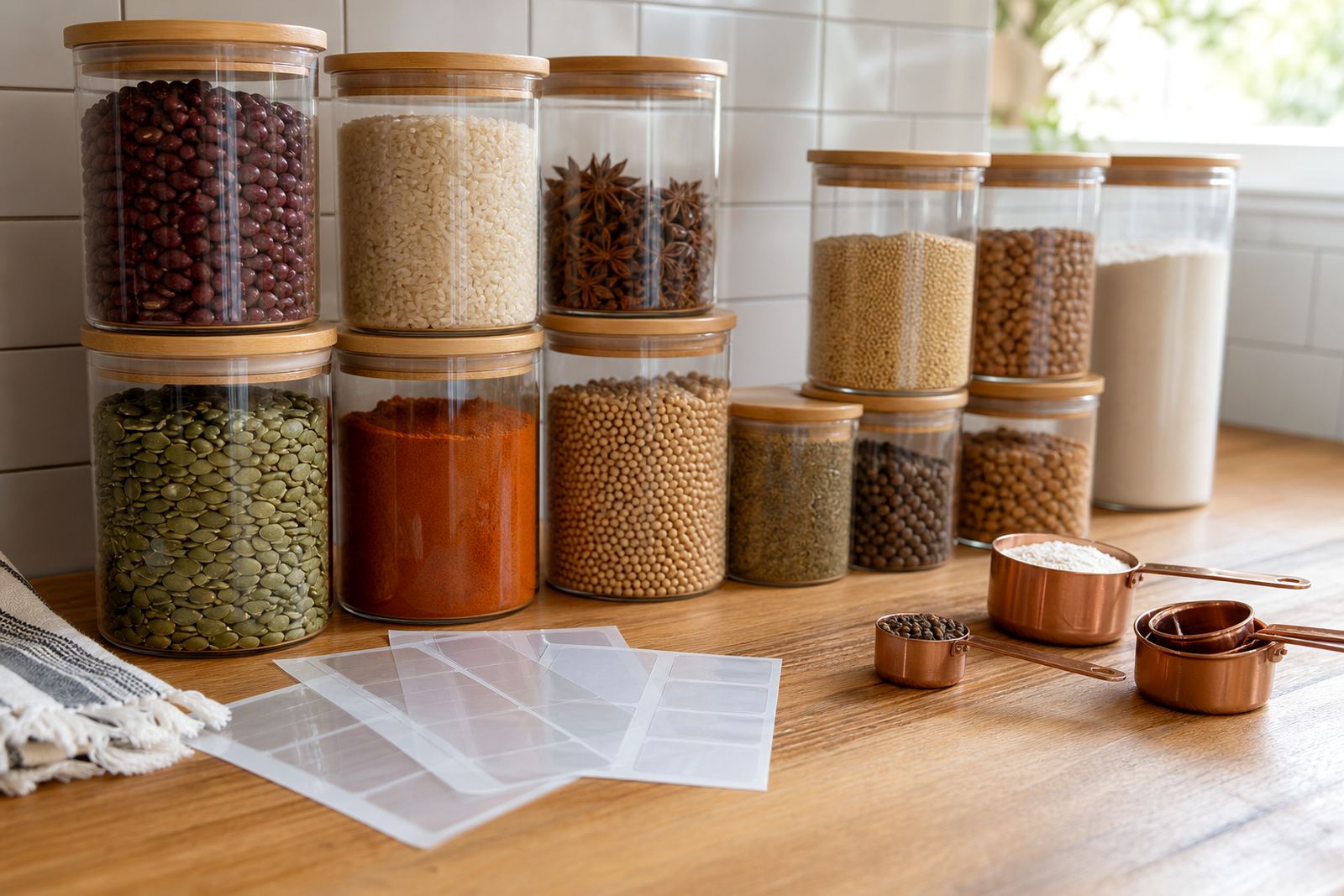
Clear label sheets are printable adhesive sheets made for labels that sit neatly on glass, plastic, metal and sealed containers. The clear base helps the printed artwork stand out without a visible white border, which suits pantry jars, spice bottles, bathroom bottles, candle jars and gift packaging where the surface colour should show through. On smooth surfaces, the result can look very clean, though the final appearance still depends on the print settings, artwork coverage and the colour beneath the label.
These sheets are used for personal organisation, kitchen storage, product samples, craft packaging and home decor projects. They are a practical choice when you want a label to blend into the surface rather than sit as a solid block of white. For best results, the container should be clean, dry and free of oil or dust before application.
Sizes and sheet choices that suit small batches
Clear label sheets are available in common sheet sizes for benchtop printing and hand cutting, with options that suit both detailed craft work and practical household labelling. Many customers work with A4 sheets because they fit standard printers and are easy to store flat in a dry room. Smaller sheets can suit test prints, sample sets and smaller label runs, while larger sheet formats are useful when you want to print several labels at once.
- A4 sheets for home printers and small production runs
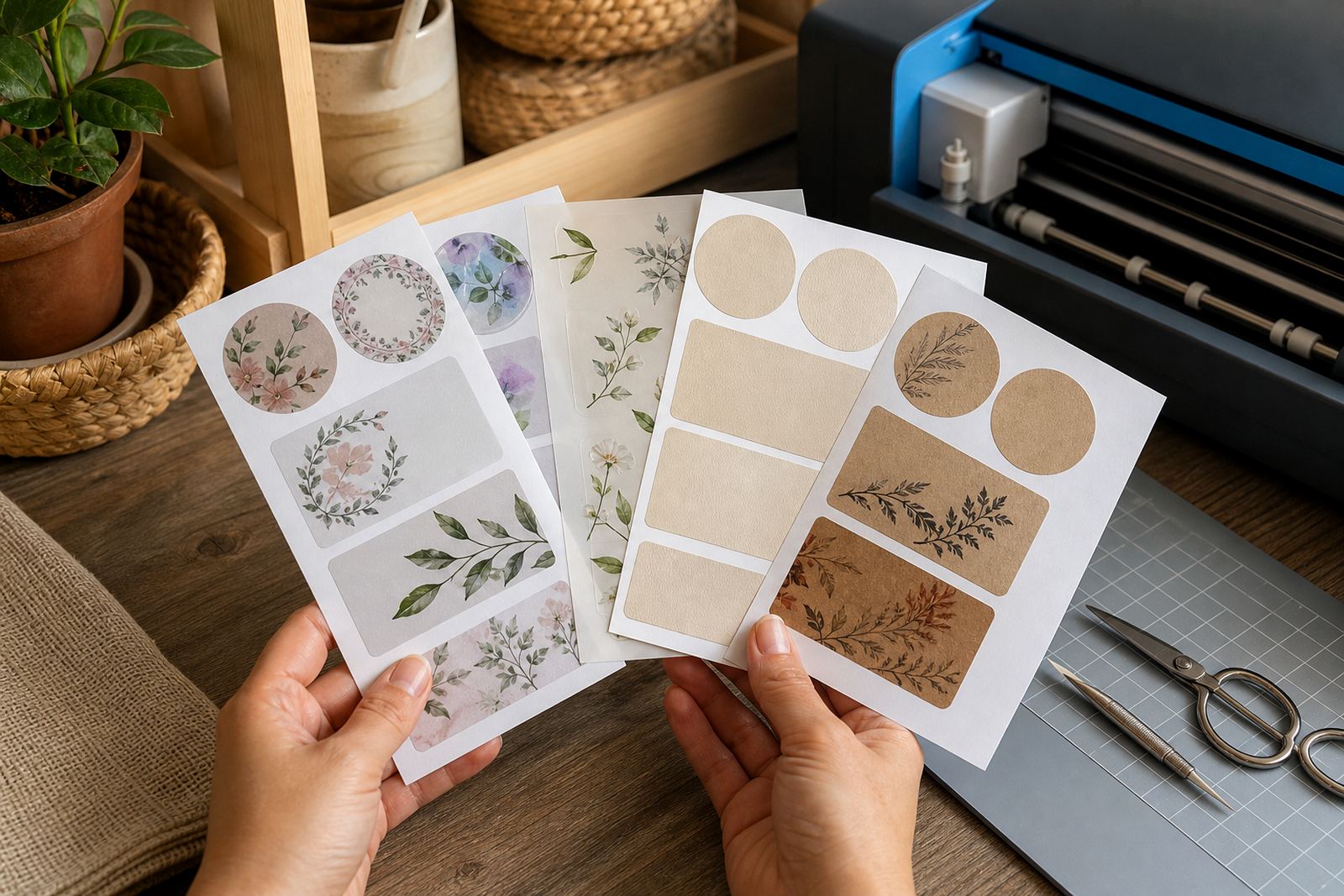
- Die-cut or blank sheet layouts for custom label shapes
- Gloss or matte clear finishes, depending on the look you need
- Sheets that can be cut by hand or with a craft cutter
When choosing a size, it helps to think about the label shape, the print area and the container diameter. Rounded jars, slim bottles and square tubs all need slightly different dimensions, and a little planning saves waste. If the label will wrap around a container, allow for overlap or a neat gap at the back.
Inkjet and laser printing, handled with care
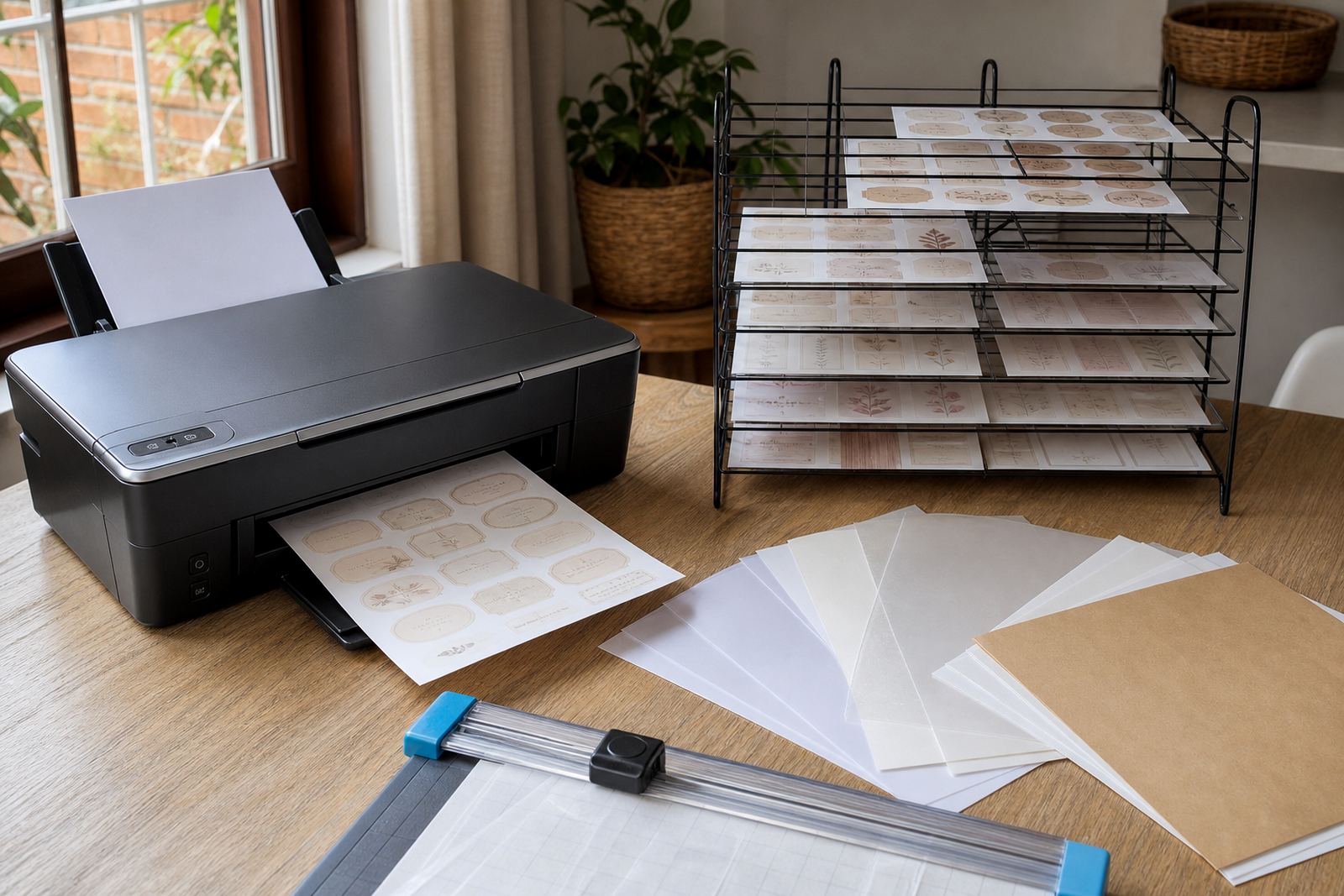
These sheets are supplied for printable use with suitable inkjet or laser settings, depending on the sheet type you order. Inkjet printing is often used for colour-rich home projects, while laser printing can suit sharper text and faster batch work in the right printer. The important part is matching the sheet to the printer type, because the coating and heat handling differ between the two systems.
For clear sheet printing, colour choice matters more than many people expect. Light colours can fade into the background on pale containers, while darker artwork usually shows better on transparent media. A white underlayer can help certain designs stand out, although that depends on the artwork and the printer setup. For craft cutters, the cut lines must be set cleanly so the backing is removed without lifting the printed face.
- Check printer compatibility before running the full batch
- Use the correct print mode for coated printable media
- Let fresh prints dry fully before handling or trimming
- Test the cut lines on one sheet before a larger run
Best uses around the kitchen, studio and laundry shelf
Clear label sheets work well wherever the container colour should remain visible. They suit pantry jars, spice bottles, seed packets, craft storage tubs, cleaning bottle labels and gift jars. In a Cape Town home, they are also useful for bathroom bottles and storage on pale shelving where a heavy label would look too strong.
These labels are also handy for small handmade product lines, especially when a maker wants the packaging to feel tidy without hiding the jar or pouch underneath. They can support simple branding, ingredient names, care notes and batch details, provided the printer settings are kept consistent. On textured, dusty or curved surfaces, adhesion can be less even, so smooth containers usually give the best finish.
Cutting, fitting and sticking the sheet cleanly
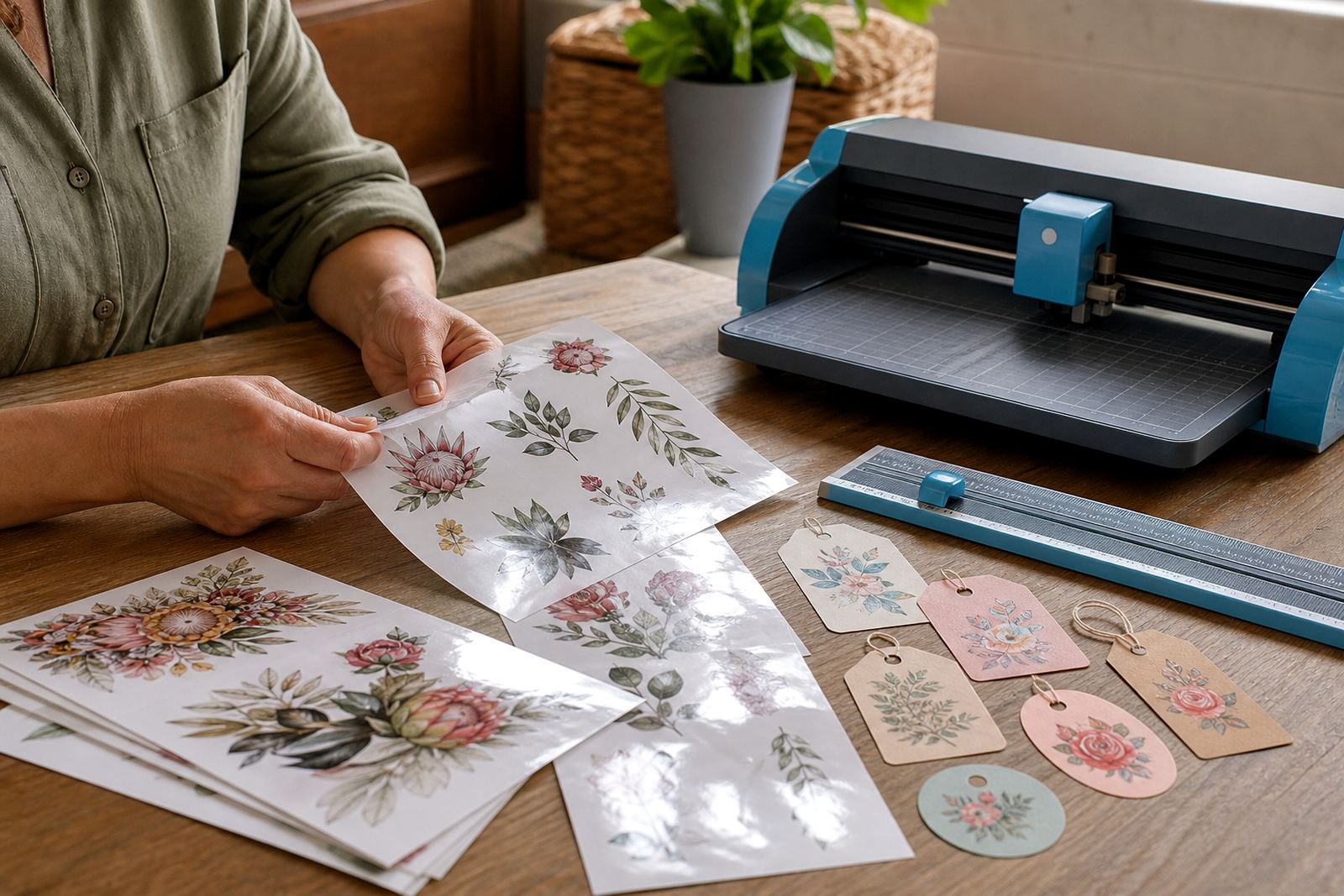
Clear label sheets can be trimmed by hand with scissors or a craft knife, or cut on a benchtop craft cutter when the artwork layout supports that method. Hand cutting works well for straight labels and quick home projects. A craft cutter is useful for repeated shapes, fine outlines and smaller label runs where consistency matters across several sheets.
Before fitting, the surface should be wiped clean and left dry. Press the label from the centre outward to reduce bubbles, then smooth the edges with firm finger pressure. On bottles and jars, curved surfaces may need slower application so the label does not crease. If the item will be washed, handled often or exposed to damp storage, test one label first to see how the finish behaves on that surface.
- Apply to smooth, dry and clean containers
- Use firm pressure around the edges and corners
- Avoid stretching the sheet during placement
- Store finished items away from heavy moisture where possible
Care details, storage and ordering notes
Clear label sheets should be stored flat in a dry indoor space, away from dust, direct sun and heavy humidity. In Durban or along the coast, sealed storage helps protect the sheets from moisture in the air, which can affect feeding through a printer. Keep unused sheets in their pack until needed, and avoid bending the corners because warped sheets can feed poorly.
When ordering, it helps to confirm the printer type, the sheet size, the finish you want and the container surface you will apply to. If you need a specific label shape, note the measurements carefully, including width, height and any corner radius. Also confirm whether the labels are for pantry use, gifting, bath products or general home organisation, because the intended use affects the finish and cut style.
- Printer type: inkjet or laser
- Sheet size: A4 or another required format
- Finish: matte, gloss, or fully clear appearance
- Use case: jars, bottles, storage tubs or craft packaging
Key facts
| Product type | Printable clear adhesive label sheets |
|---|---|
| Compatible printers | Inkjet or laser, depending on sheet type |
| Typical sizes | A4 and selected sheet formats |
| Finish | Transparent clear base with matte or gloss options |
| Cutting method | Hand cutting or craft cutter |
| Common uses | Jars, bottles, storage containers, gifts and craft packaging |