
Milnerton Brief: Weekly Planners With A Neat Write-On Finish
The client runs a small stationery line in Milnerton and wanted planner kits that could be sold as finished packs for weekly layouts. The brief called for matte sticker sheets that would take ink cleanly, stay easy to write on, and cut neatly on benchtop craft cutters without lifting at the corners.
The pack needed a tidy look for home organisers, teachers, and people setting up a month at a time. The request was for sheets that felt smooth in the hand, fed well through home printers, and still held a crisp edge after cutting by hand or with a cutter.
- Product type: matte printable sticker paper
- Use case: weekly planner kits and divider labels
- Cutting method: craft cutter and hand trimming
- Print method: inkjet and laser use checked against the final layout
Paper Choice And Print Behaviour On The Bench
Matte was the right call for this job because planner sheets need clear writing space and low glare under indoor light. The surface also suits headings, check boxes, habit trackers, and colour blocks without making the page feel shiny or slippery.
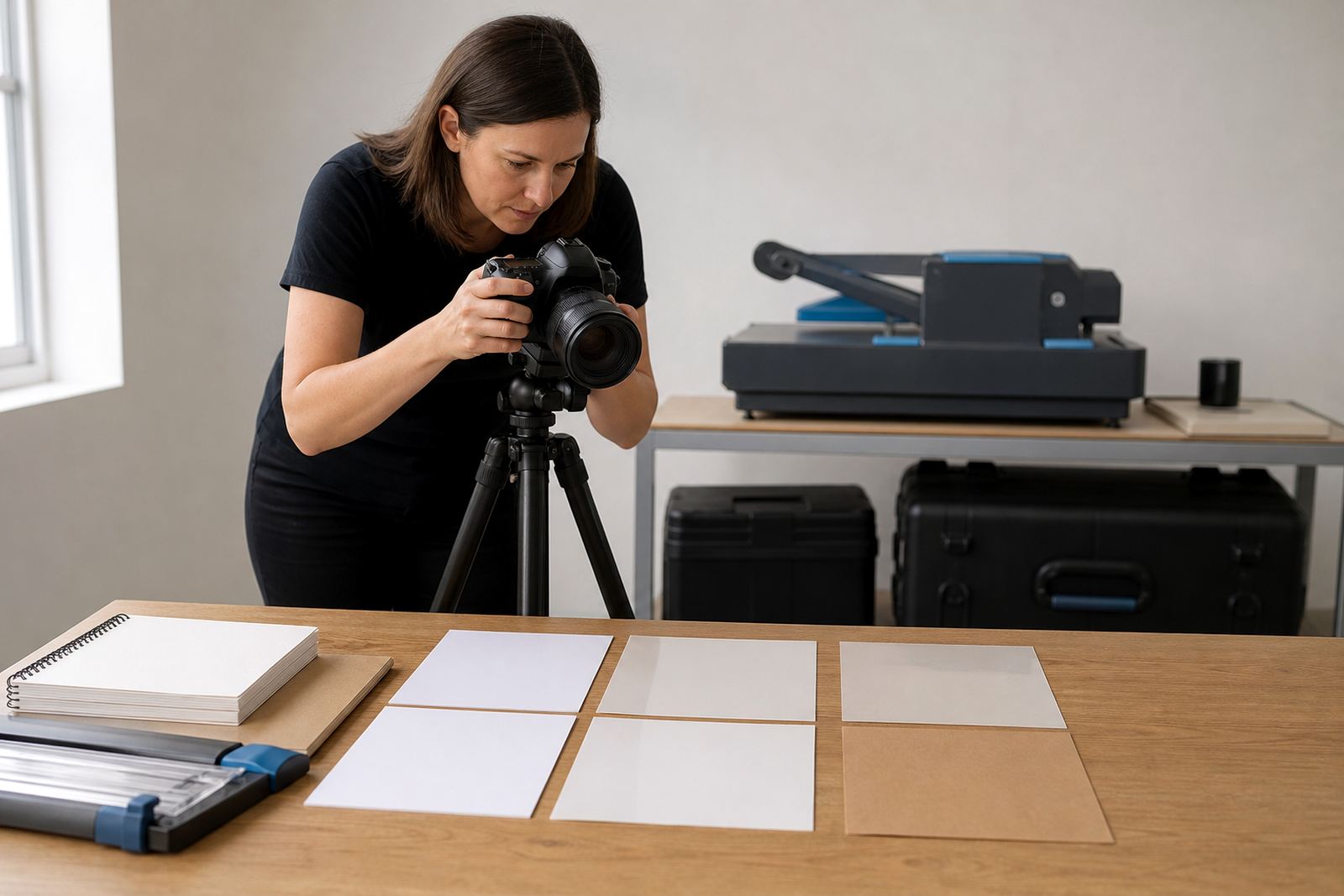
We also discussed the wider range for future pack runs. Gloss can sharpen colour for display labels, clear sheet works for see-through overlays, vinyl suits tougher labels, and kraft gives a softer natural look for folders or rustic organisers. For this project, matte stayed best for weekly use and easy pen marks.
- Matte for writing space and low glare
- Gloss for brighter colour on display labels
- Clear for overlay work and transparent effects
- Vinyl for stronger label use
- Kraft for a natural paper look
Cut Lines, Feed Direction, And Sheet Handling
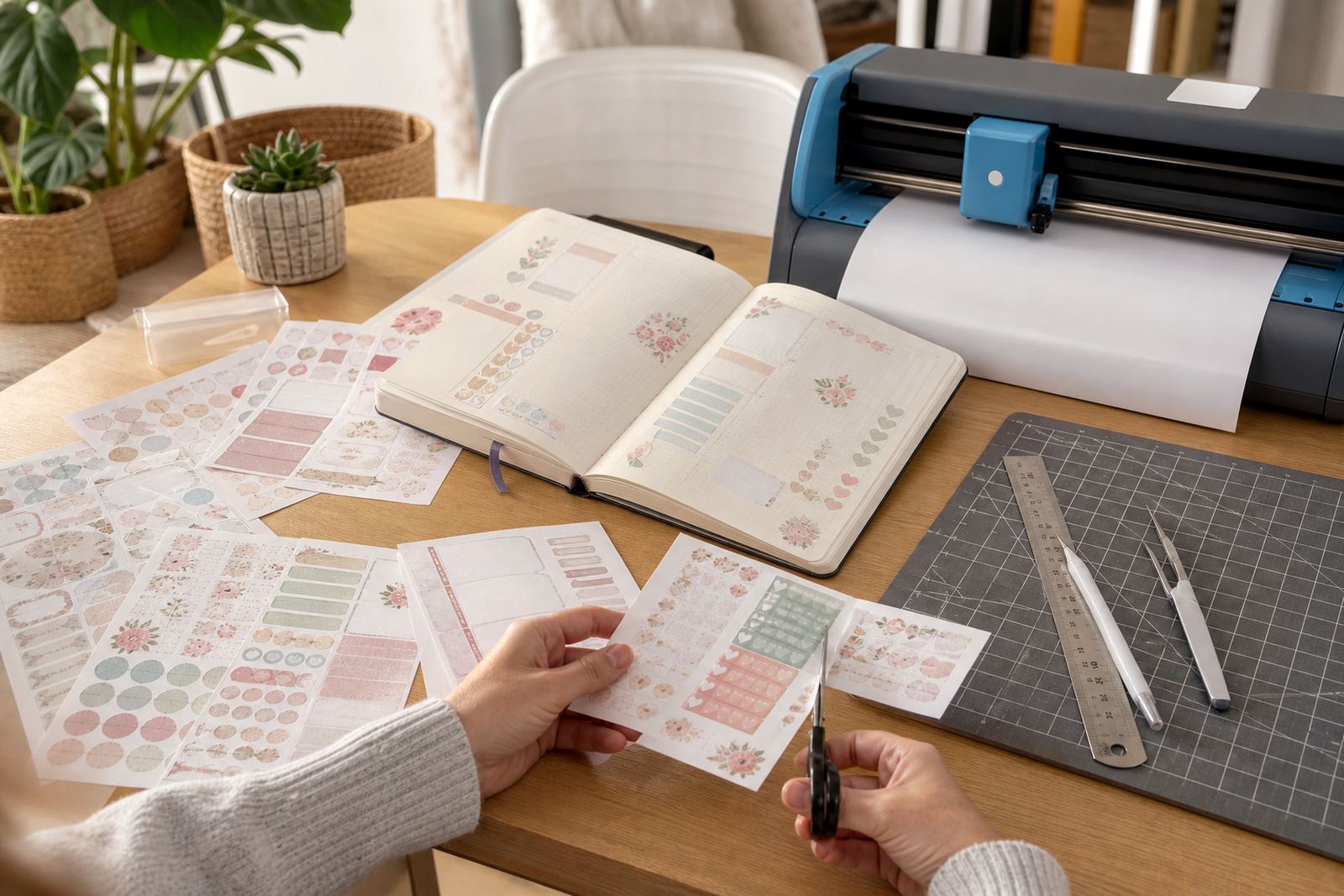
The sheets were set up for cutter-friendly spacing, with registration marks placed so the planner boxes could be trimmed cleanly. We kept the shapes simple enough for repeat use, because small labels and narrow tabs can snag if the cut path is too tight.
Sheet handling mattered too. Matte stock is easier to store flat, but it still needs protection from damp air, curled corners, and dust. In Cape Town, even coastal humidity can affect a stack that is left open on a work table, so the pack layout was planned for neat storage between print runs.
- Registration marks aligned for craft cutters
- Box spacing kept practical for repeat cuts
- Flat storage recommended to avoid curl
- Clean trimming possible with scissors or blade
What Was Supplied For The Planner Kits
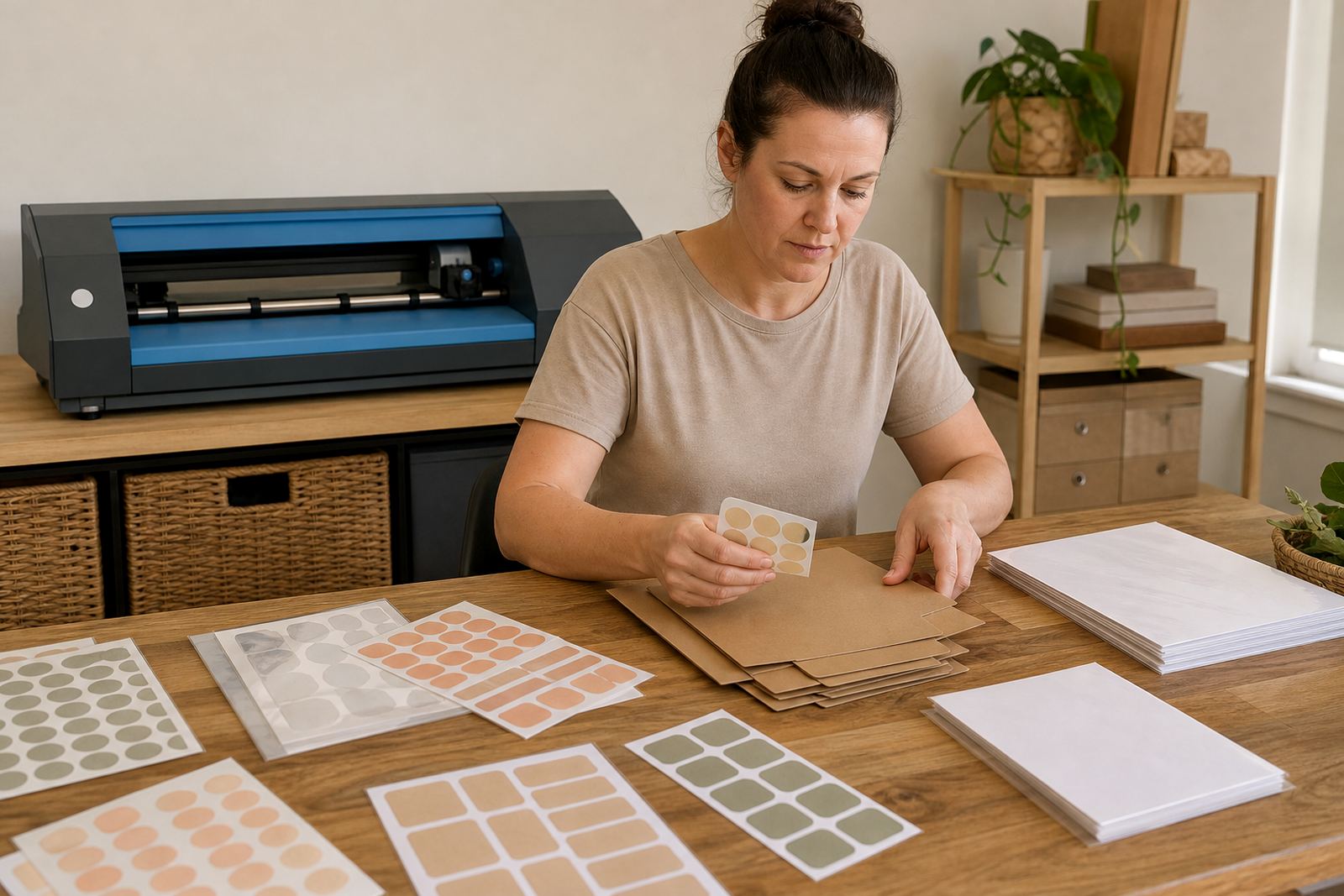
We supplied printable matte sheets in a format suitable for weekly planner inserts, labels, and small organising notes. The layout supported a mix of headings, dated blocks, and narrow note strips, so the maker could build a complete kit without changing paper type from sheet to sheet.
Inkjet printing was the main working method, and laser compatibility was checked for later production flexibility. That mattered because some customers run mixed print spaces, and a single stock line has to behave properly across more than one machine type. Colour test sheets were used to confirm that pale greys, soft blues, and darker schedule blocks still read clearly once printed.
- Matte planner sheets for weekly layouts
- Inkjet compatible surface for colour planning
- Laser compatibility checked for alternate use
- Colour test sheets for layout confirmation
- Suitable for labels, tabs, and trackers
Milnerton To Dispatch: Four Week Build Path
The project ran over four weeks from brief to dispatch-ready pack format. Week one covered sheet choice and layout sizing. Week two was used for print tests, cutter checks, and edge clean-up. Week three finalised the planner blocks and pack count. Week four moved into dispatch setup for delivery from Durbanville into the Cape Town route.
A few practical limits had to be worked around. The client needed a sheet size that fit common home printers, and the labels had to separate cleanly without tearing the backing. We kept the design neat rather than crowding too much detail into small spaces, which helped the weekly layout stay easy to read.
- Week 1: brief and sheet sizing
- Week 2: print tests and cutter checks
- Week 3: final layout and pack count
- Week 4: dispatch preparation and delivery routing
What Changed After The First Test Packs
The first test packs showed that the matte stock handled writing well, but the smallest note blocks needed a little more breathing room. After that adjustment, the planner sheets felt easier to use and the cut paths became calmer for the machine.
The finished run gave the maker a cleaner pack for local sale and a better fit for customers who like to plan by week and tick tasks off by hand. The sheets were also easier to bundle for delivery across South Africa, which helps when stock must move between Cape Town, Johannesburg, Durban, Pretoria and Bloemfontein without the corners getting tired.
- Improved spacing on small note blocks
- Cleaner cut paths after layout adjustment
- Better writing feel on the matte surface
- Stronger pack presentation for retail use
Repeatable Parts For The Next Planner Run
For a similar Milnerton planner job, we would keep the matte base, keep the box spacing generous, and keep the cutter marks simple. That combination held up well for printing, trimming, and packing, with no need for fancy finishing that would only complicate the run.
We would also keep the sheet handling advice in the job notes, especially for coastal storage and flat stacking. The team listed below handles the sort of support that matters on practical print stock: printer setting help, inkjet printing help, laser printing help, colour test help, smudge reduction help, paper jam help, craft cutter help, hand cutting help, clear sheet help, vinyl sheet help, sheet storage help, and sticker application help.
- Keep matte stock for write-on planner use
- Use roomy boxes for cleaner cutting
- Store sheets flat and dry
- Keep cutter marks easy to read
Key facts
| Client type | Milnerton stationery maker |
|---|---|
| Town | Milnerton, Cape Town |
| Product used | Matte printable sticker paper |
| Compatibility | Inkjet and laser |
| Cut method | Craft cutter and hand cutting |
| Project timeline | 4 weeks |