
Keep Sheets Flat, Not Bent At The Edges
Printable sticker paper stays easier to print and cut when it sits flat from the start. A curled edge can shift through a printer tray, catch in a craft cutter, or make hand cutting less accurate. Store full packs on a level shelf, inside a drawer, or in a rigid folder that keeps the stack pressed evenly.
If you remove a few sheets for a project, place the rest back with the edges aligned. Do not stand packs upright for long periods, because the lower edge can start to bow and the top sheets may lift. In Durbanville homes, where rooms can warm up during the day, flat storage also helps reduce curl from changing air conditions.
- Keep unopened packs lying flat
- Use a clean tray or box with firm sides
- Do not tuck loose sheets under heavy objects
- Align corners before closing the pack
Dry Storage Matters In Coastal Air
Sticker paper does not like damp cupboards, wet garage corners or open shelves near kitchen steam. In Cape Town and other coastal areas, humidity can reach the paper before you notice it, and that may soften the backing or affect the surface finish. A dry indoor cupboard works better than a place close to a sink, window ledge or laundry area.
When sheets are kept in a moist room, they may feed less smoothly through inkjet or laser printers and the edges can curl after cutting. If a pack feels cool or slightly clammy, leave it sealed in a dry room for a while before use. That small pause helps the sheets settle properly, especially when you are working on labels or gift tags.
- Store away from sinks and steam
- Keep packs off bare floors
- Leave a little space around the stack for airflow
- Use sealed storage for spare sheets in humid weather
Match Storage To The Finish You Bought
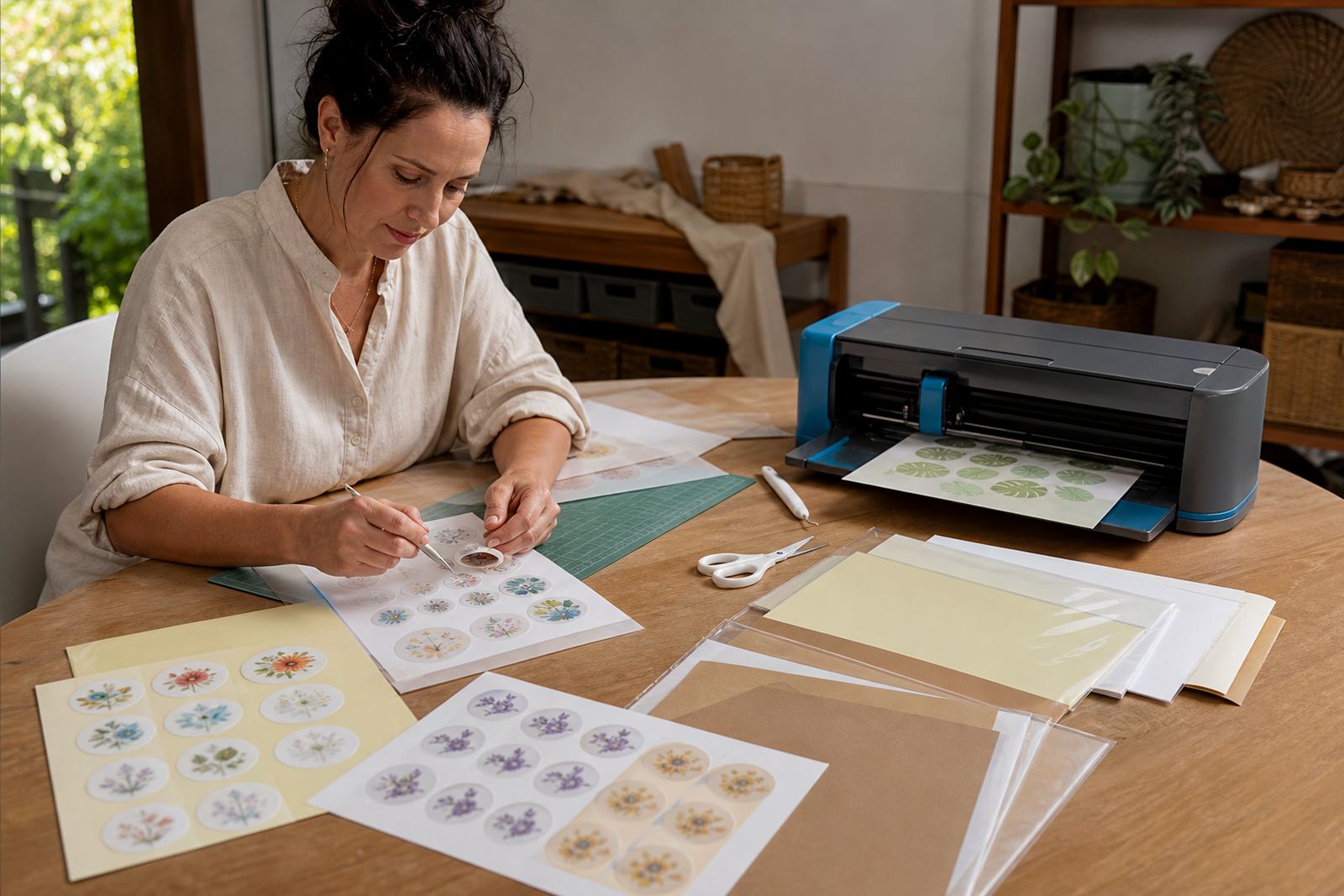
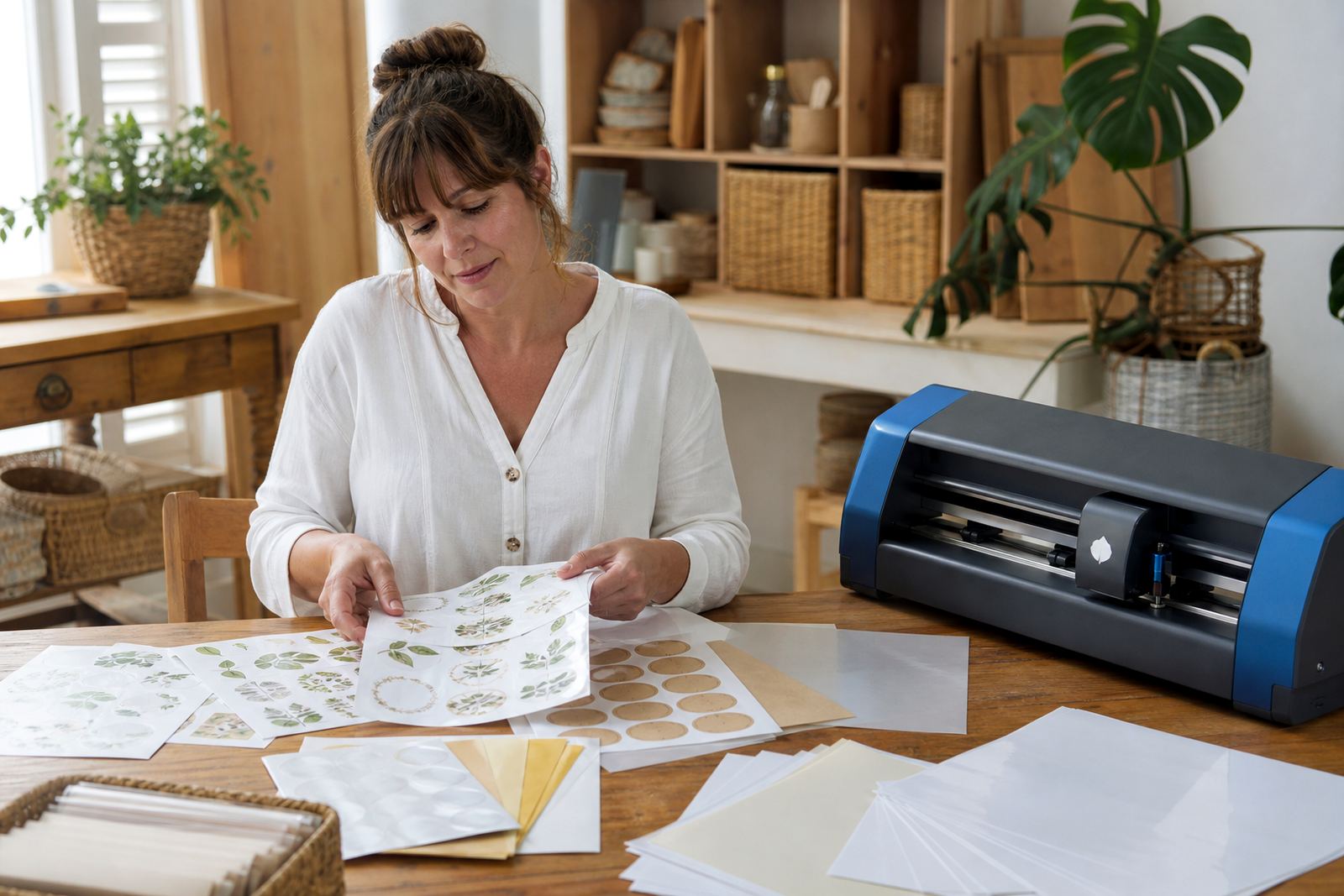
Different finishes need the same basic care, though each one shows damage in its own way. Matte sheets can pick up marks if they rub against rough surfaces. Gloss sheets show fingerprints and scratches more easily. Clear sheets should stay free from dust because specks stand out once printed or used on transparent jars and containers. Vinyl sheets need a clean, flat resting place so the backing stays neat for cutting and application. Kraft sheets can absorb moisture faster than coated papers, so they need a dry cupboard with no damp smells.
Keep similar finishes grouped together and mark the outer container clearly. That makes it easier to reach for the right sheet when you are printing labels, pantry stickers or custom project pieces. It also avoids mixing offcuts with full sheets, which can cause wasted time later on.
- Group matte, gloss, clear, vinyl and kraft separately
- Keep clear sheets covered while stored
- Seal kraft packs tightly after opening
- Use labels on containers so the finish is easy to spot
Protect The Print Side And Backing Paper
The print side needs to stay clean, and the backing paper needs to stay smooth. Handle sheets by the edges when possible, especially after opening a pack. Skin oils, dust and lint can mark the print face and make ink settle unevenly. If you use a craft cutter, keep spare sheets away from trimmings so the backing does not collect scraps.
Stack printed and unprinted sheets separately. Printed sheets should dry fully before they are stored, otherwise they may pick up marks from another page. If you are testing printer settings for colour or alignment, keep the test sheet on top and write the setting on the back so you can find it later without guessing. That little habit saves time when you need the same result for a second sheet.
- Hold sheets by the corners or edges
- Keep printed work apart from unused stock
- Let fresh prints dry before stacking
- Store test sheets with notes on the reverse side
Useful Habits For Cutting And Project Prep
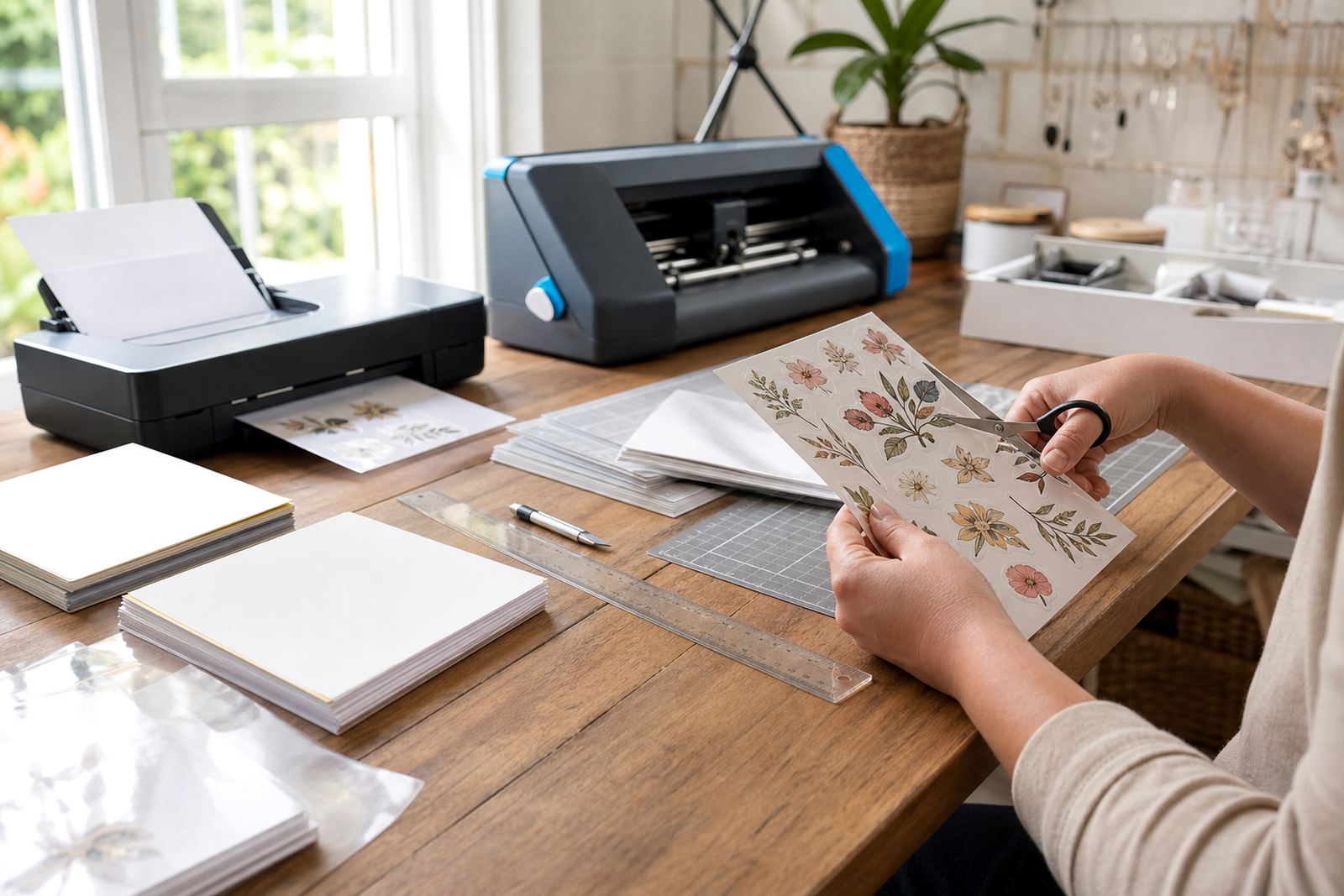
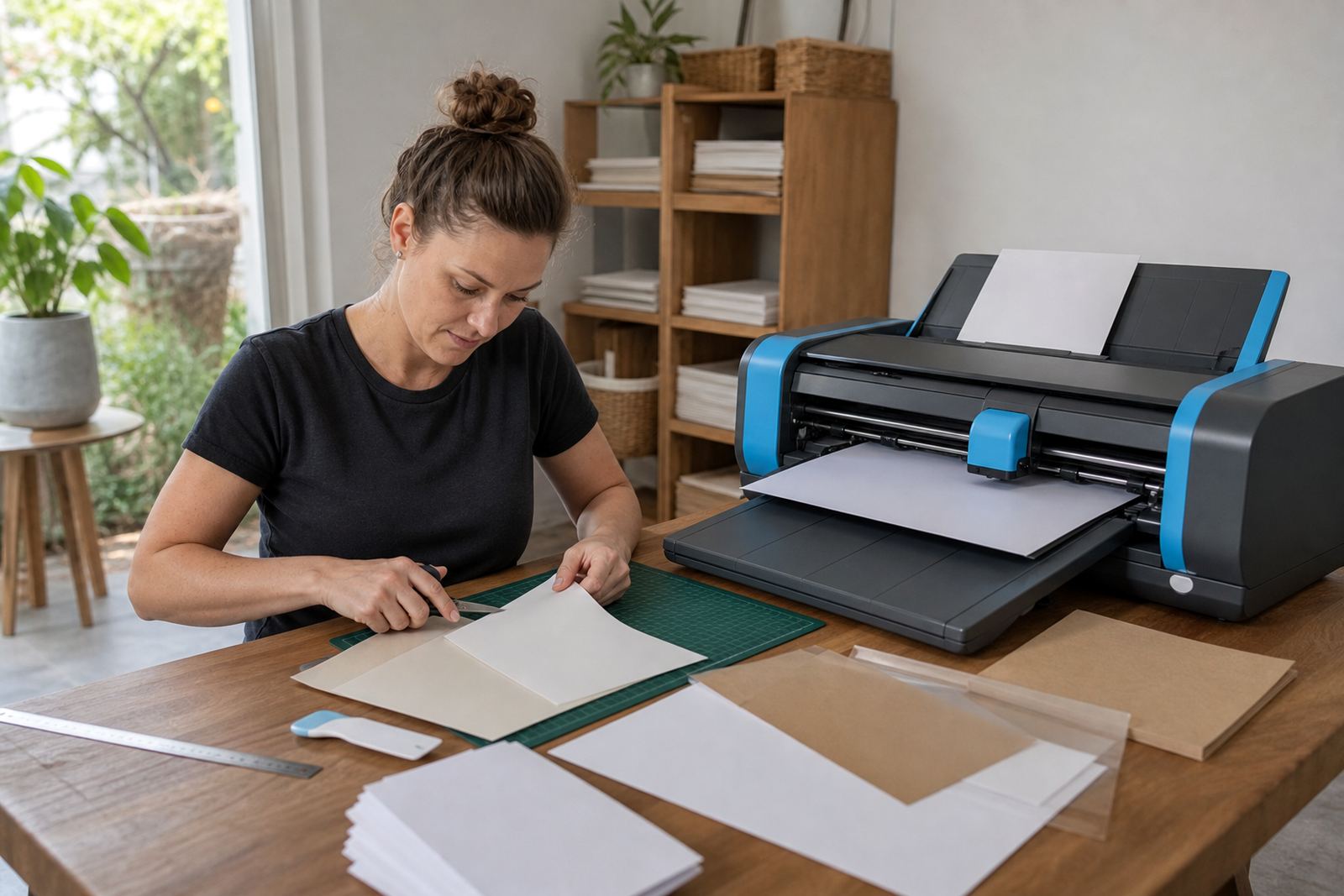
Good storage makes cutting cleaner, whether you trim by hand or use a craft cutter. Before starting, check that the sheet lies flat and the corners are not lifting. If a sheet has taken on a slight curve, place it under a clean book for a short while, then feed or cut it once it feels level again. Do not force a bowed sheet through a cutter mat because the feed can wander and the cut line may shift.
Keep scissors, craft knives, rulers and spare blades in the same project area so you are not moving papers around more than needed. That reduces scratches and keeps edges tidy. When you need to store partly used sheets, slide them back into the original pack or another rigid sleeve rather than folding them to fit. A folded sheet is hard to recover later.
- Flatten curled sheets before cutting
- Keep tools in one clean place
- Return offcuts to a sleeve or folder
- Do not fold sticker paper for storage
When A Sheet Has Sat For A While
Sheets that have been stored for a long time usually need a quick check before printing. Look for dust on the top page, curled corners, or a change in feel from the pack below it. Wipe dust away with a clean dry cloth rather than a wet one. If a pack has been opened and closed many times, inspect the edges of the backing paper because repeated handling can roughen the corners a bit.
For home organisers, labels and gift projects, it helps to keep the most used sheets near the front of the cupboard. Reserve the back of the shelf for full packs and special finishes. That way the paper you reach for most often stays easy to find, and the newer stock is less likely to get bent or forgotten. A tidy stack also makes colour checks and printer setup feel less fiddly.
- Check for dust, curl and rough edges before use
- Wipe with a dry cloth only
- Keep active stock near the front
- Use older sheets first if they have been opened