
Start With the Project You Want to Make
Different projects need different sticker paper. A pantry label needs clean print quality and a surface that handles handling, while gift tags, jar labels and decor pieces may need a finish that suits the look you want. If you are working on home organisation, craft packs or personalised gifts, it helps to say where the sticker will be used and what surface it will sit on.
When you send through your details, include the size of the design, how many sheets you need and whether the sticker will be cut by hand or with a craft cutter. That makes it easier to match the paper type to the job without guesswork.
- Labels for jars, bottles, tins or folders
- Custom stickers for gifts, events or school projects
- Short runs for home use or small craft batches
Matte, Gloss, Clear, Vinyl and Kraft Sheets
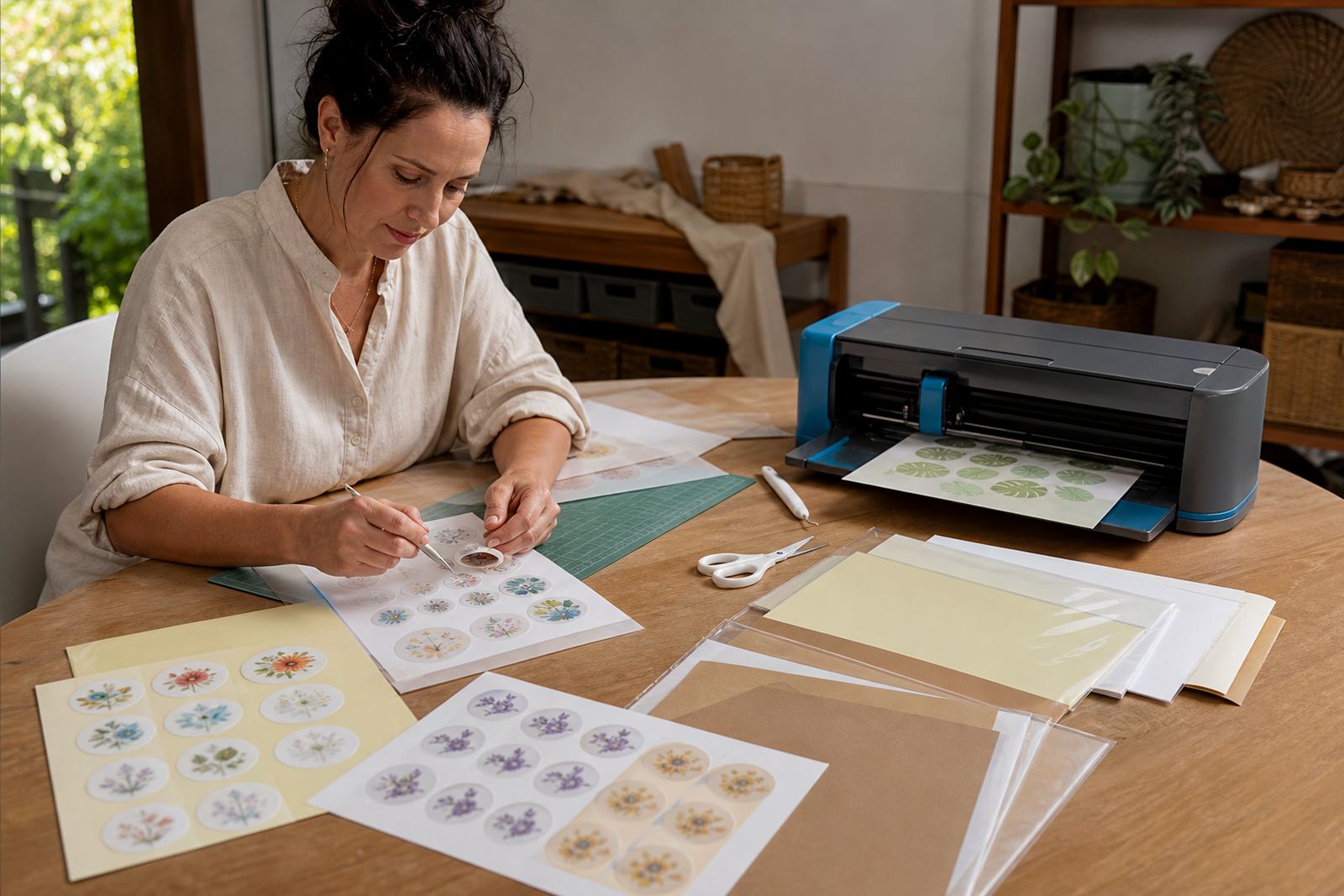
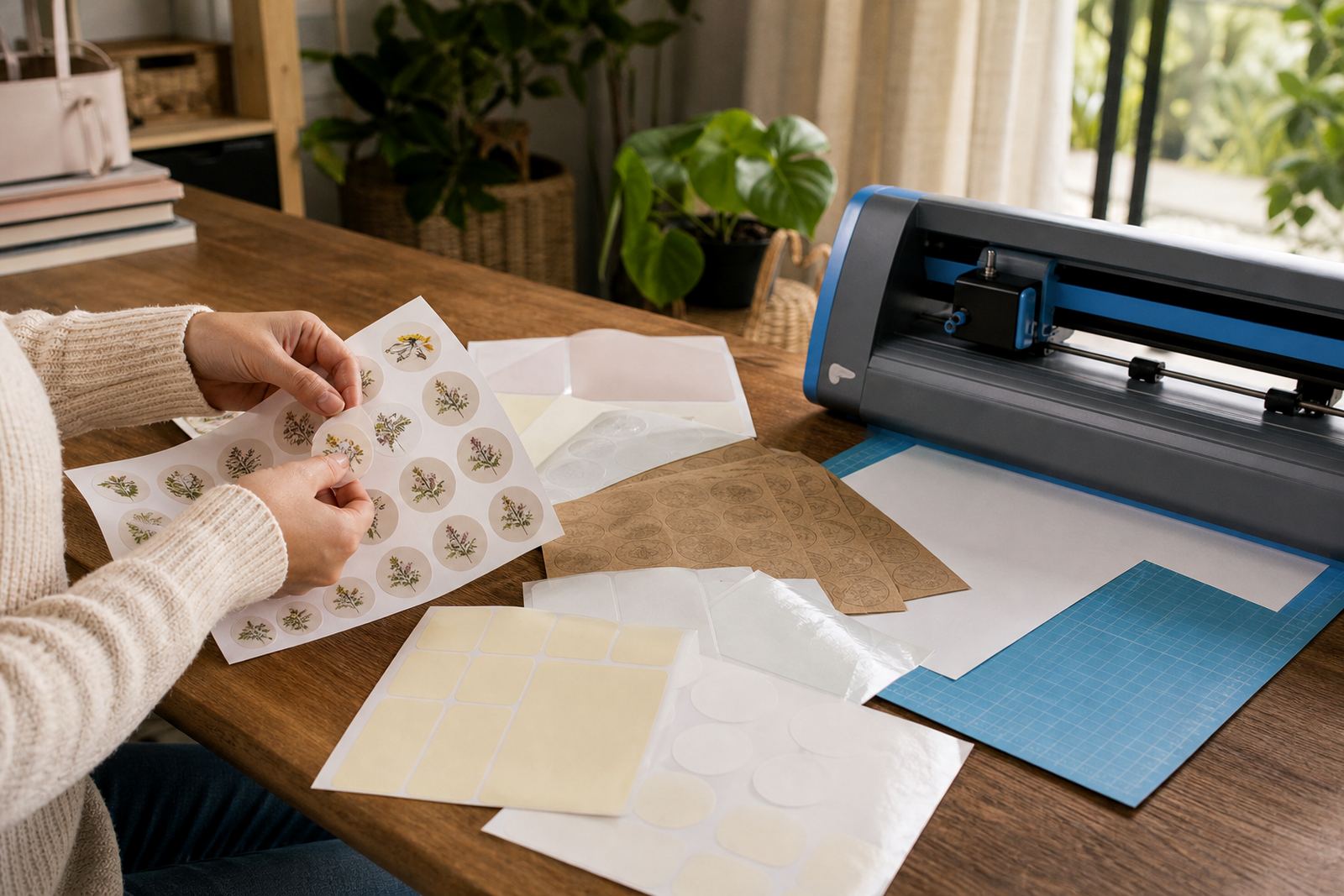
Matte sticker paper gives a soft finish that is easy to write on and works well for organised shelves, storage labels and simple craft work. Gloss sheets have a brighter surface that suits colour images and decorative stickers. Clear sheets are useful when you want the background to disappear on glass, plastic or smooth containers, while vinyl sheets are often chosen for stronger handling and a more durable feel. Kraft sticker paper gives a warm, natural look for handmade labels and rustic projects.
If you are unsure which finish fits your job, mention the final surface and the look you are after. A gloss label on a clear jar reads differently from a matte label on a paper box, and the wrong finish can change how colours or text show up.
- Matte for writing, filing and home organisation
- Gloss for brighter colour and decorative use
- Clear for a low-visibility background
- Vinyl for tougher handling and more exposed items
- Kraft for a handmade, natural style
Printer Match Matters Before You Print
Printable sticker paper needs to match the printer in your home or studio. Inkjet sheets and laser sheets are made differently, so it is worth checking the printer type before you order. Inkjet paper is designed to take liquid ink without smearing too quickly, while laser paper is made to handle heat from a laser printer. Using the wrong sheet can affect print quality, feeding and the finish on the final sticker.
If you are doing colour tests or printing at home for the first time, it helps to test one sheet before moving to the full batch. That gives you a chance to check colour balance, alignment and drying before you commit the whole stack.
- Confirm whether the printer is inkjet or laser
- Check the paper size and sheet orientation
- Test colour, margins and feed direction
- Use the correct print settings for sticker stock
Cut By Hand or Use a Craft Cutter
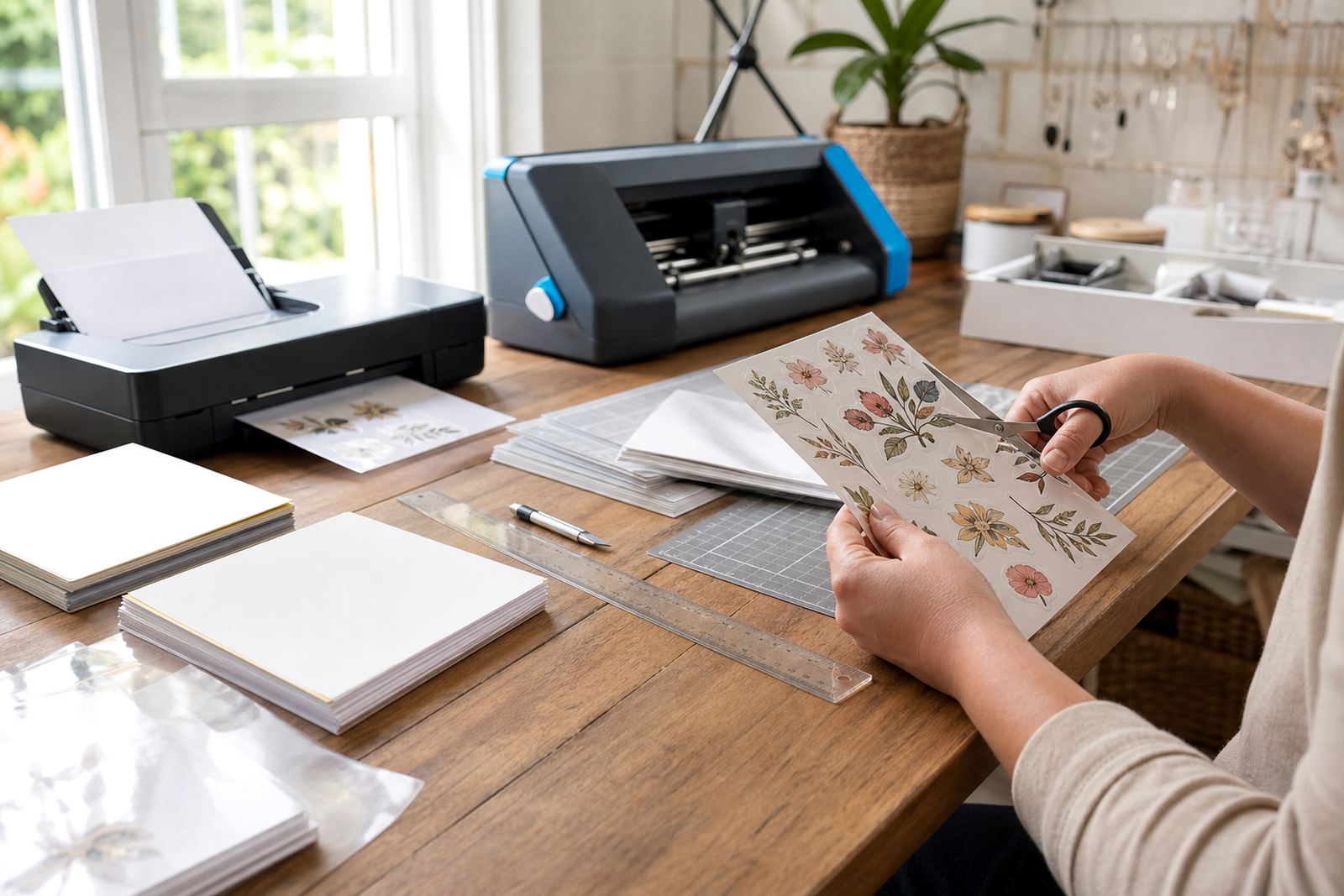
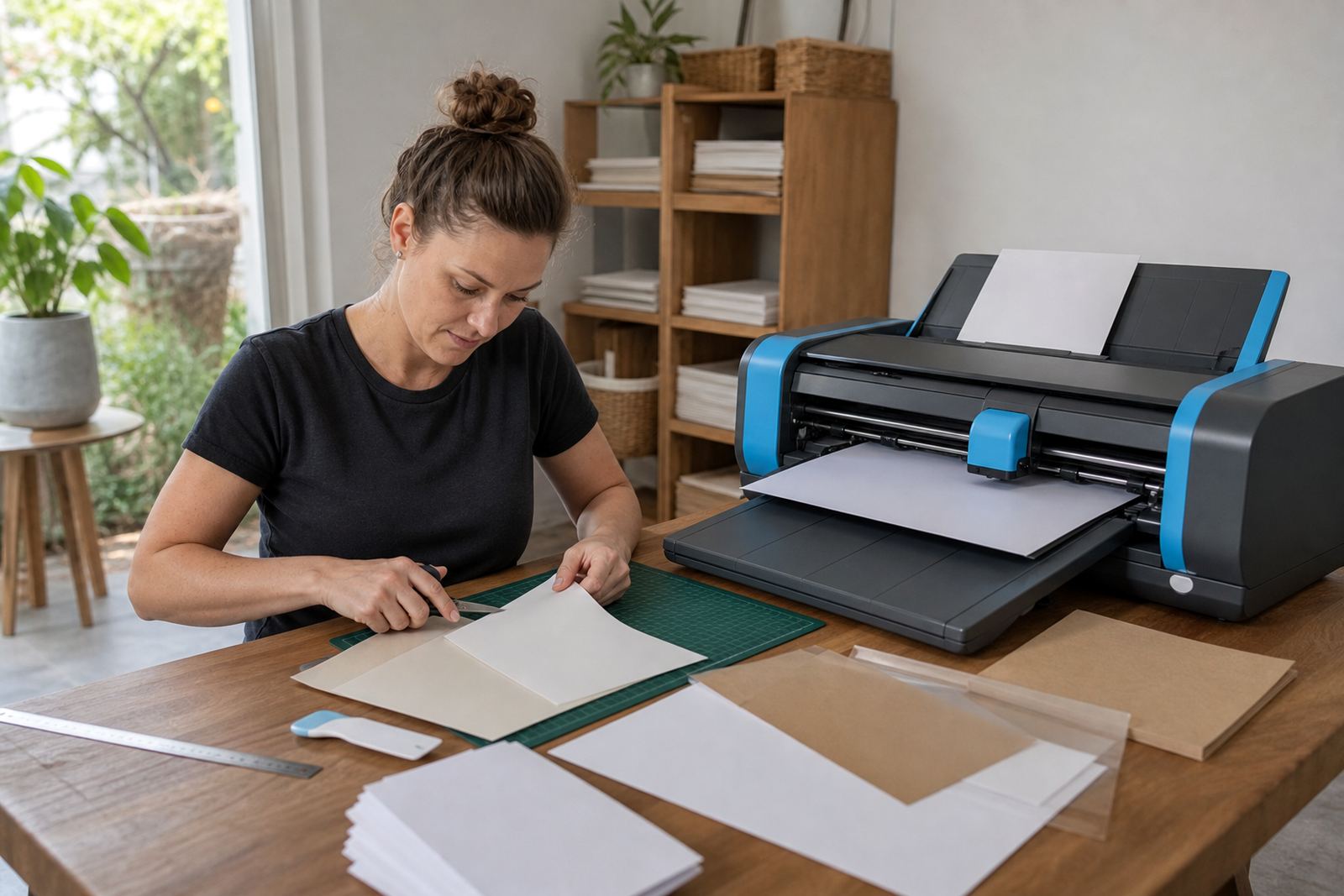
Some customers cut stickers by hand with scissors or a craft knife, especially for labels with simple shapes. Others use a craft cutter for repeat designs, circles, squares or detailed outlines. If your artwork has small corners or fine text, the cutting method matters as much as the print finish. Good cut lines and clean spacing make the final sheet much easier to work with.
For craft cutters, the blade depth, pressure and mat grip may need adjusting for the sheet type. For hand cutting, it helps to leave a little border around each design so the edges stay neat. If you are making a batch for markets, gifts or classroom use, say how you plan to cut the sheets and the team can guide you on the better match.
- Hand cutting suits simple shapes and low volume work
- Craft cutters suit repeated shapes and detailed layouts
- Leave enough border for clean trimming
Care, Storage and Smudge Control
Sticker paper performs better when it is stored flat in a dry place and handled with clean hands. Durban humidity can affect paper if it is left open on a shelf, especially near windows or damp rooms. For inkjet printing, allow the print to dry before stacking the sheets. If you are using light colours or heavy ink coverage, smudge control becomes more important.
Keep sheets in their wrapper or folder until you need them. If a printed sheet curls slightly, flatten it under a clean stack of paper for a short while before cutting. That helps the sheet feed more evenly and keeps the edges tidy.
- Store flat in a dry area
- Keep unused sheets sealed or covered
- Let printed sheets dry before handling
- Avoid bending corners during storage
How to Ask for Help on a Sticker Paper Order
When you send your enquiry through the contact form, include the project type, printer type, finish you are considering and whether you need help with application or cutting. If you are not sure, describe the surface the sticker will stick to and the kind of look you want. That gives the team enough detail to point you toward a suitable sheet for your work.
The support team in Durbanville works with crafters and home makers across Cape Town, Johannesburg, Durban, Pretoria and Bloemfontein, as well as Stellenbosch and Paarl. Clear details make the process easier, and it helps to mention if you need guidance on printer settings, clear sheets, vinyl sheets, or sheet storage too.
- Project type and final use
- Printer type and paper size
- Finish preference and cut method
- Any help needed with application or storage