
Labels that make ten parcels feel like one range
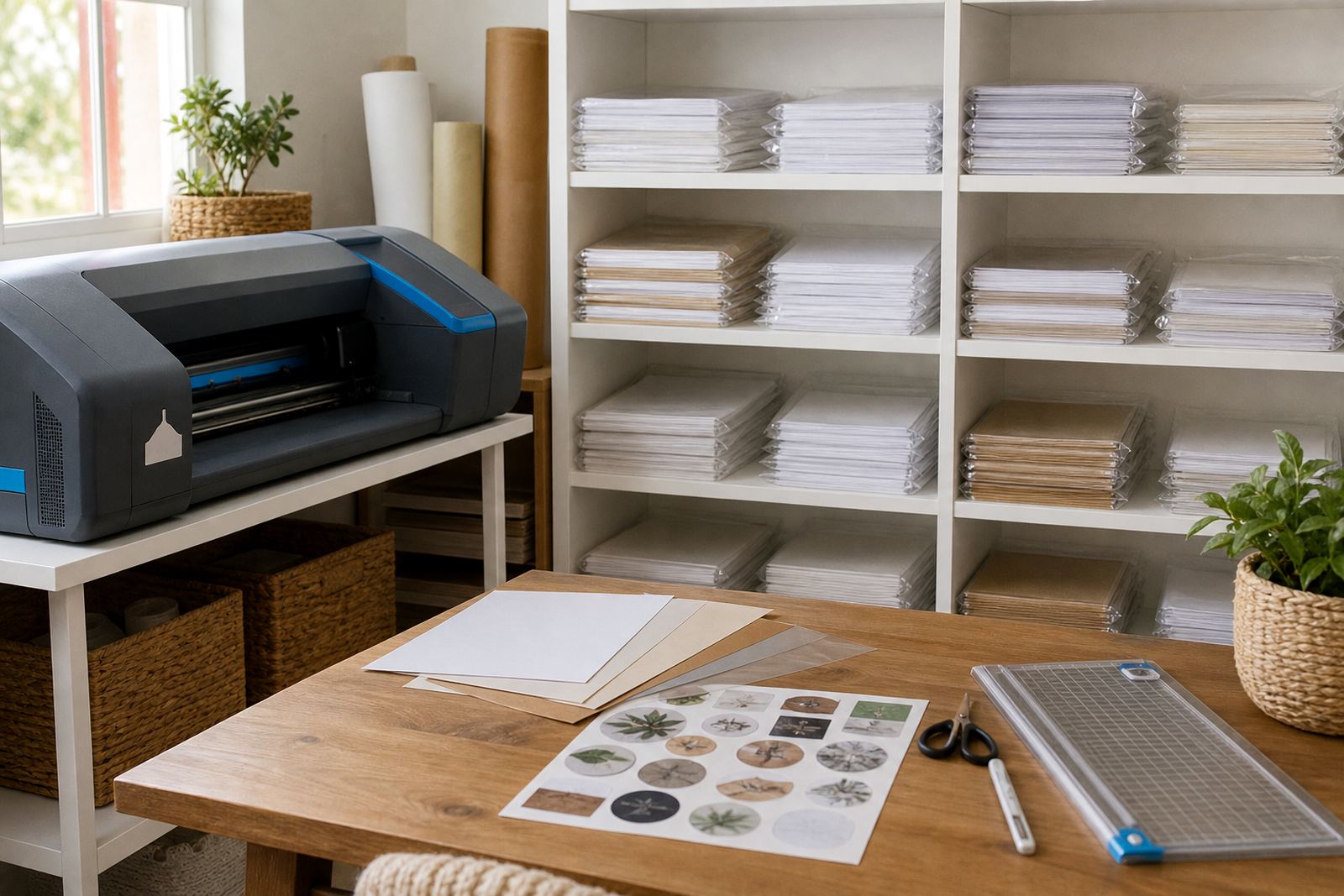
When you are packing a few preserves, hand-poured soaps or gift boxes, the finish on the label does a lot of the visual work. A matte sheet gives a softer look for bakery jars and pantry items, while gloss suits bright colours and bold names that need a cleaner shine. Clear sticker paper can disappear onto glass or plastic, which helps when the container itself should stay visible. Kraft-style printable sheets work well for a more earthy handmade look, especially on honey jars, spice tins and paper envelopes.
Small batches need labels that stay consistent from the first pack to the last. If you print a set of twenty and the colour shifts halfway through, the shelf starts to look untidy. Keeping one file, one paper type and one print setting helps each item carry the same tone. That matters whether the packs go to a market table in Durbanville or to family in Johannesburg.
- Matte for a calm handwritten feel
- Gloss for stronger colour and sharper contrast
- Clear for glass, plastic and see-through packaging
- Vinyl for tougher handling and more moisture exposure
- Kraft for a natural handmade finish
Inkjet and laser sheets do not behave the same
The printer matters as much as the design. Inkjet compatible sheets are made for liquid inks that need to settle into the surface, while laser compatible sheets handle heat and toner differently. A sheet made for one type should be used on that machine only, because the coating and heat response are not the same. Using the right sheet saves time and cuts down on smudging, curling and wasted stock.
For home makers in Cape Town, where coastal humidity can affect paper storage, keeping sheets flat in a sealed folder helps them feed properly. In hotter inland areas, paper left near a window or in a car can warp before it even reaches the printer. Clean storage and the correct printer setting make a noticeable difference on small runs, especially when the pack needs a neat finish for gifts or resale.
- Check the sheet type before printing
- Match printer settings to the chosen finish
- Print a colour test before a full run
- Allow ink to dry before handling inkjet sheets
Cutting by hand or with a craft cutter
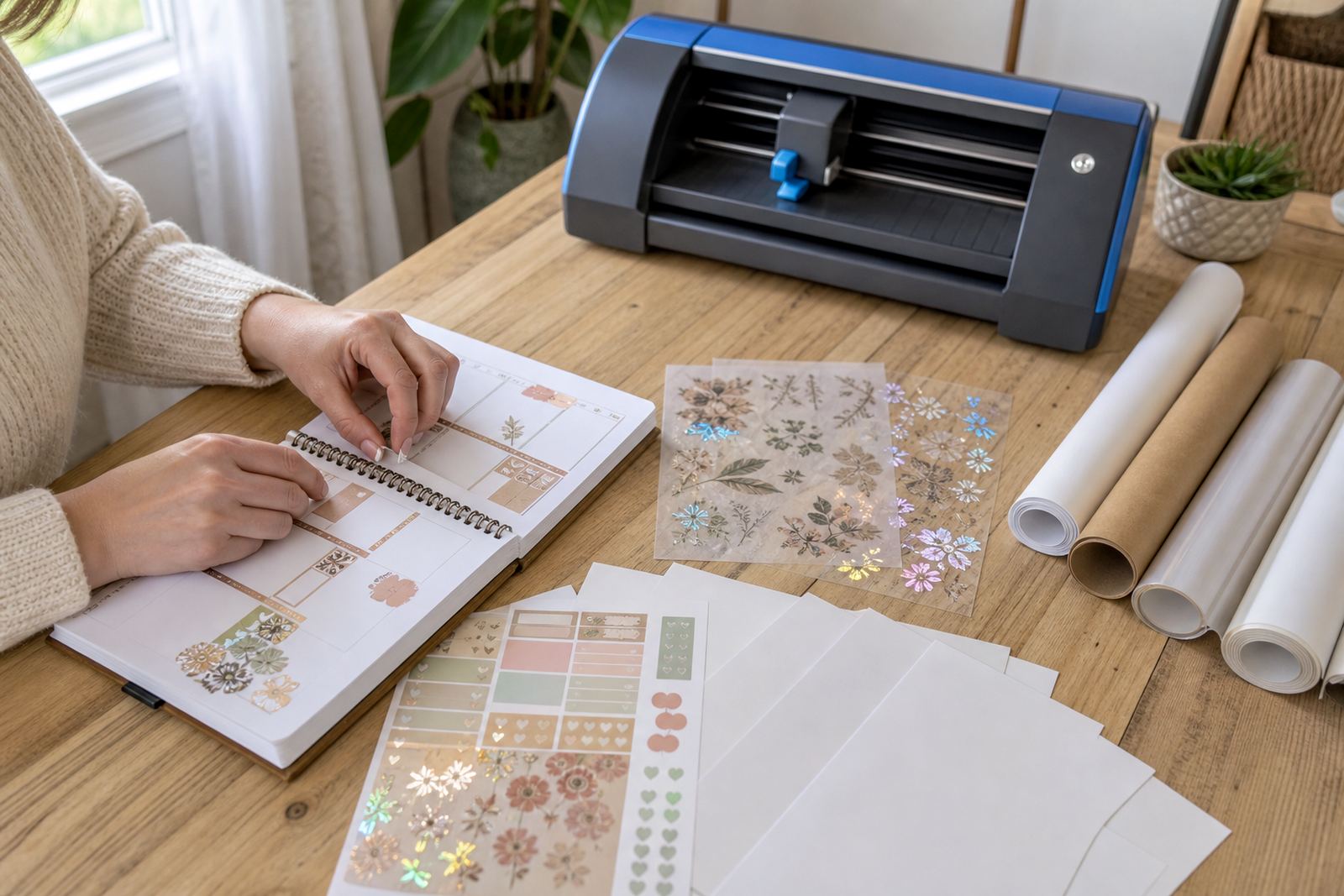
Small-batch packaging often starts with a few sheets and a pair of scissors. Hand cutting works well for square labels, short runs and simple shapes, especially when the design needs only a clean border. A craft cutter is useful when the labels have rounded corners, repeat shapes or detailed edges that need more accuracy. Both approaches can work, but the design should suit the tool.
For hand cut labels, leave enough margin around the artwork so the edge does not wander into the text. With a cutter, set the blade carefully and test a small section first. Sticky sheets that are too thick can lift at the corners if the cut is too deep, while thin stock may tear if the pressure is high. A little care at this stage keeps the packs looking finished instead of hurried.
- Use a ruler and sharp blade for straight edges
- Keep corner radius consistent across the batch
- Test one sheet before cutting the full set
- Store cut labels flat so they do not curl
A local kitchen table example from Durbanville
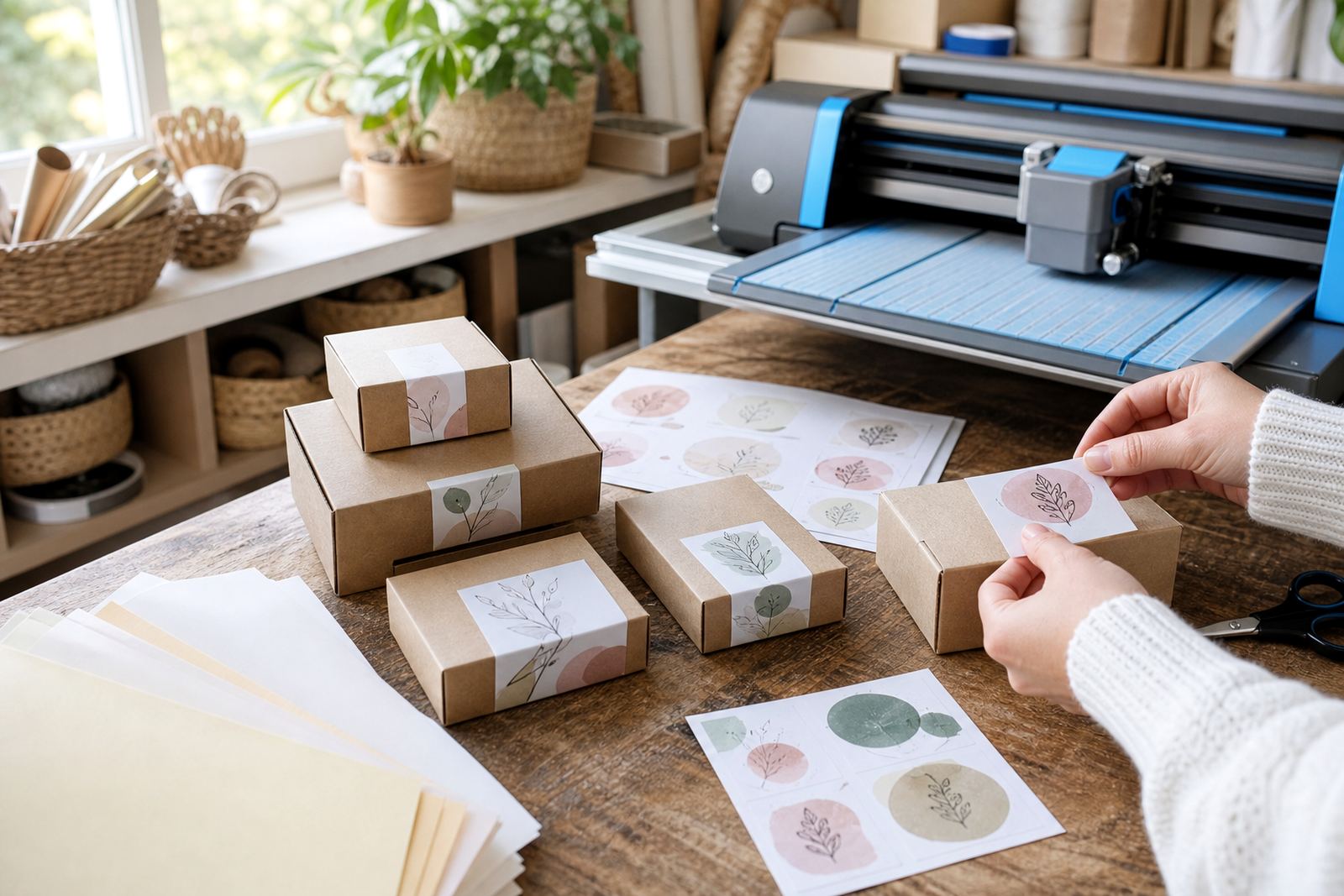
A home baker in Durbanville might pack shortbread, rusks and jam for weekend orders. The jars and boxes may all be different sizes, but the labels can still carry the same typeface, colour band and product name. That keeps the table display tidy and helps the pack feel intentional. If the same labels are used for pantry gifts and market sales, the brand look stays steady without a large print run.
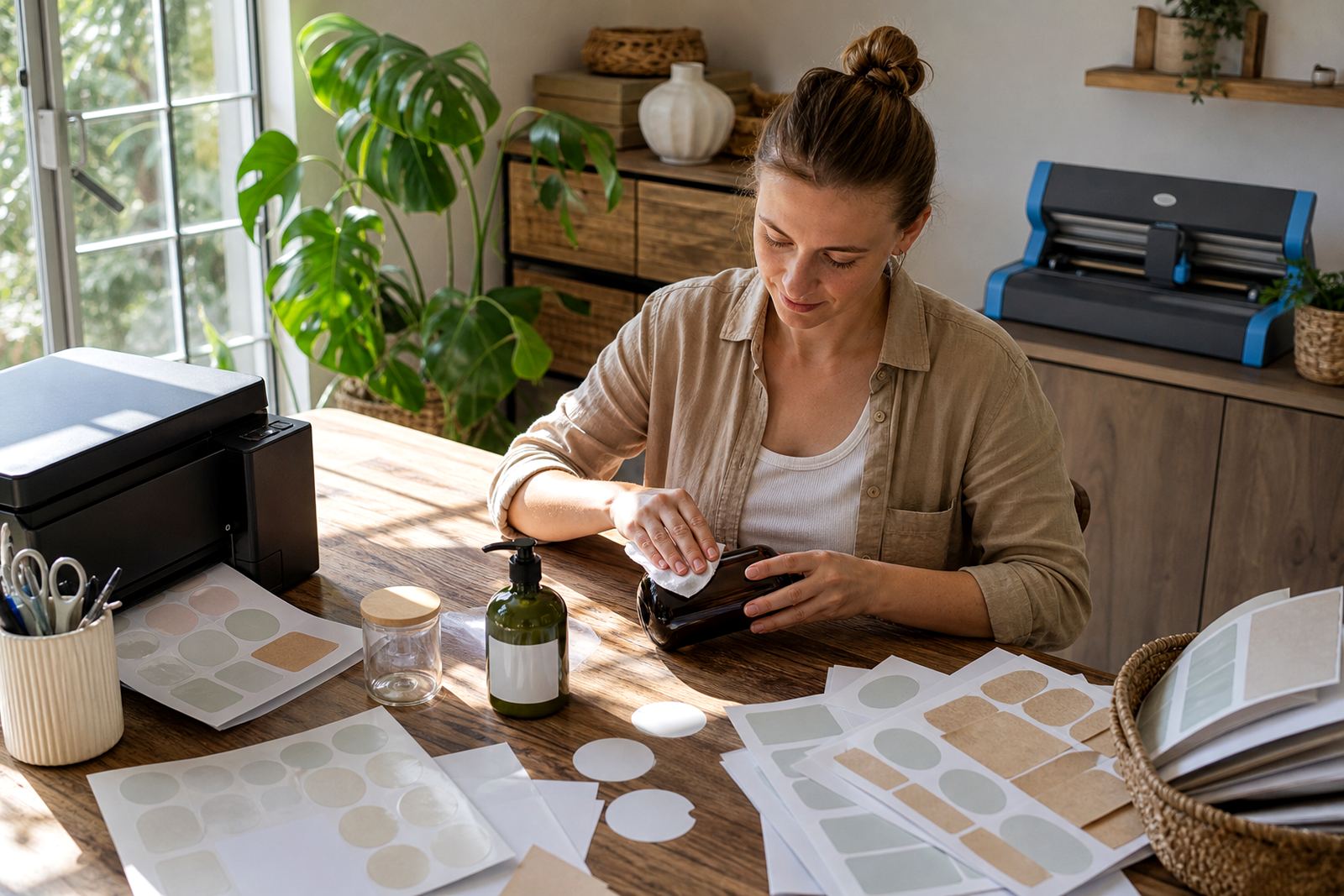
For a small batch, the order of work matters. Print the labels first, let the sheet settle, then trim or cut and only after that apply them to clean dry packaging. On glass jars, make sure the surface is free of oil or dust. On kraft bags, press the label down evenly from the centre outward so it sits flat. A label that lifts at the edge can make the whole pack feel unfinished.
When the batch is going to different towns, a readable label helps. A cake tin posted to Pretoria, a spice mix sent to Bloemfontein or a gift pack collected in Stellenbosch all need the same clear name and date. That is where practical packaging earns its place.
Small details that keep labels looking neat
Printing well is only part of the process. How the sheets are packed, handled and applied also affects the finished labels. Keep unused sheets somewhere cool and dry, and do not tuck them into a drawer or stack them beneath other supplies. If damp air gets to a sheet, the corners can lift and the printer may struggle to feed it neatly. That may seem minor until you are part-way through a run and every label starts drifting out of place.
StickerPaper supplies printable sticker paper for crafters and home makers who want a cleaner finish for labels, tags and packaging details. The practical side matters here: the right sheet for the right printer, the right cut for the shape and the right finish for the container. That is usually enough to turn a mixed pile of jars and boxes into one tidy set.
- Wipe containers before applying labels
- Let fresh prints settle before trimming
- Keep one master file for future orders
- Store unused sheets in a flat stack
Packing that still looks good after the sale
Small-batch packaging has to do its job at the table, in transit and on the shelf at home. A well-chosen label helps the product stay recognisable after handling, delivery and storage. For soaps, jams, candles or dry goods, the surface finish should suit the item itself. Clear sheets can keep a glass jar visible, while matte or kraft sheets can make the pack feel more handcrafted and calm.
For makers selling online across South Africa, neat packaging also helps with repeat recognition. A customer in Durban may open a parcel and know at once which flavour or scent they ordered. A customer in Bloemfontein may store the item in a pantry and still read the label months later. That is the practical value of a label that prints well, cuts cleanly and stays in place.