
Envelope sets that need a neater finish
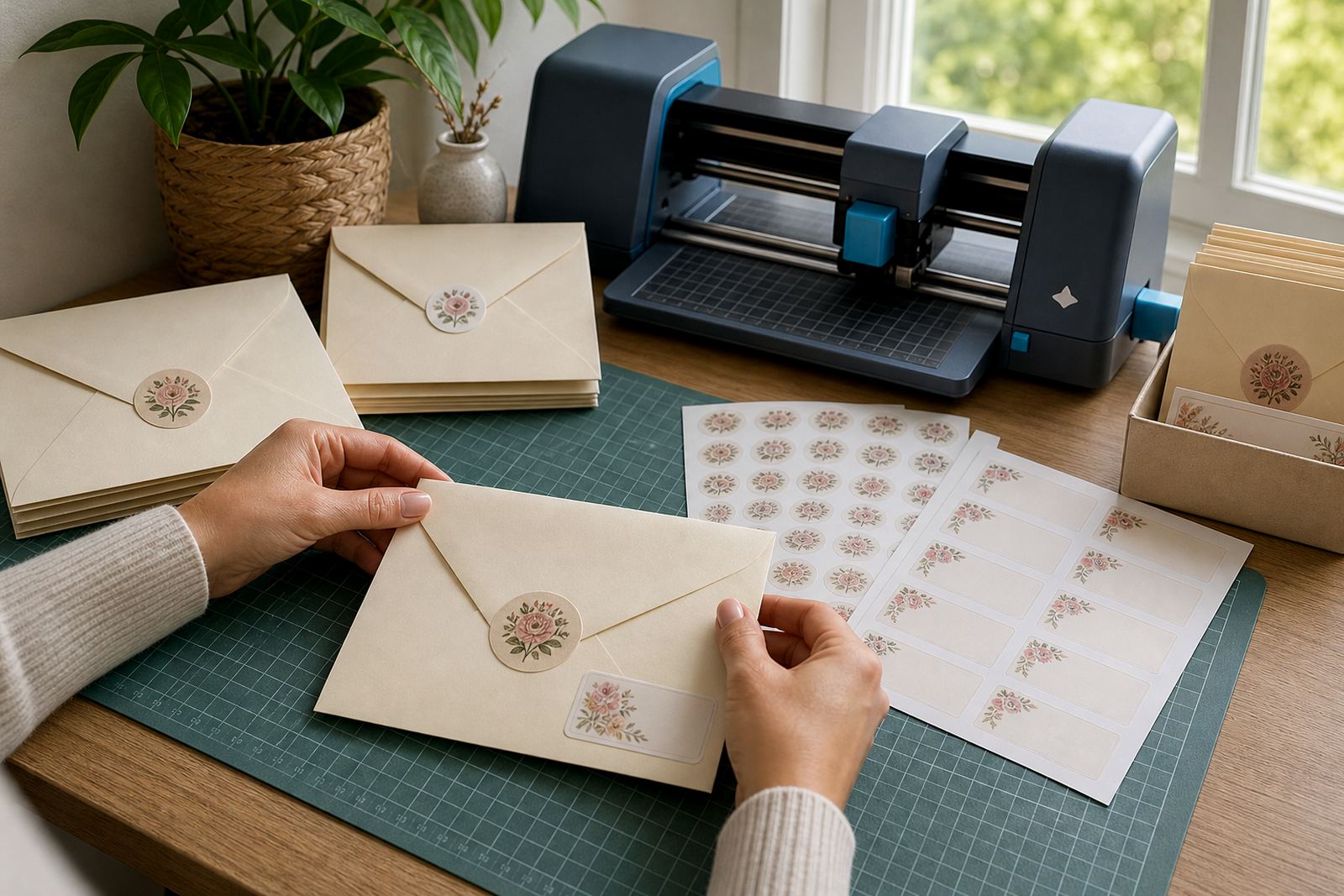
Personalised envelopes usually start with a mixed set of jobs. A wedding invite may need a return address on the back flap, the main address on the front and a seal sticker to finish the fold. Gift packets, thank-you notes and small business mailers often need the same treatment, only in different sizes and paper colours. In Durbanville and the wider Cape Town area, many crafters work on short runs for family events, school functions and small home businesses, so the paper has to be easy to print and cut without waste.
Printable sticker paper gives you that control. Matte sheets suit handwritten style artwork and clear black text. Gloss sheets suit brighter artwork, but they can show fingerprints more easily if the envelope is handled a lot. Clear sheets help when you want the envelope colour or pattern to stay visible under the design. Vinyl sheets suit addresses and seals that must handle moisture, while kraft sheets work well for rustic themes, parcel wraps and plain brown envelopes.
- Address labels for wedding invitations
- Seal stickers for the back flap
- Return labels for posted gifts
- Small logo marks for home businesses
Paper types that suit different envelope styles
The paper finish changes how the envelope reads in the hand. Matte gives a softer look and is often the easiest finish for text-heavy labels. It is a useful choice for hand-cut squares, circles and long address strips. Gloss is better when colour artwork needs a brighter surface, though the ink needs proper drying time before stacking or trimming. Clear sticker paper works best on light envelope stock where the label should almost disappear at the edges. Vinyl is the firmer option for envelopes that may be posted in damp weather, handled often or stored in a busy office cupboard.
Kraft has its own place in envelope work. It suits earthy wedding themes, parcel-style gift sleeves and stationery that leans more natural than formal. The printed colour will look different on kraft than on white stock, so test the design first if you want pale lettering or soft pastels. For envelope seals, a small circle or oval on matte or clear stock often gives the cleanest result, while larger address panels usually work better on matte or vinyl if the mail is moving through a lot of hands.
- Matte for tidy text and hand finishing
- Gloss for brighter artwork and colour
- Clear for a low-visibility label edge
- Vinyl for firmer handling and posted items
- Kraft for natural and rustic envelopes
Printer setup that keeps addresses readable
Printable sticker paper for envelopes needs the printer setting matched to the sheet type. Inkjet users need the correct media setting so the ink lands cleanly and dries properly. Laser users need to check that the sheet is marked for laser use before printing, because the fuser heat changes how the adhesive and face stock behave. A small colour test on one sheet can save a full pack when you are printing names, script fonts or fine border lines.
For envelope labels, text size matters as much as paper choice. Tiny lettering can blur on glossy stock if the printer lays down too much ink. Thick borders can shift if the sheet feeds slightly off-centre. If a design needs a crest, monogram or floral edge, leave enough quiet space around the address block so the main text stays easy to read. That matters for posted invitations, where the post code and street line need to stand out at a glance.
- Use the correct media setting for the printer type
- Run a single sheet test before the full batch
- Keep fonts large enough for postal reading
- Leave margin space around decorative artwork
Planning the layout before the first sheet is printed
Envelope work goes more smoothly when the layout is measured first. A long envelope, a square envelope and a small gift envelope do not use the same label shape. Measure the flat panel, then allow a small edge gap so the label does not crowd the folds or sealing line. If you are making a return address sticker, keep the text block compact. If you are making a front address panel, leave room for the stamp area and any decorative corner marks.
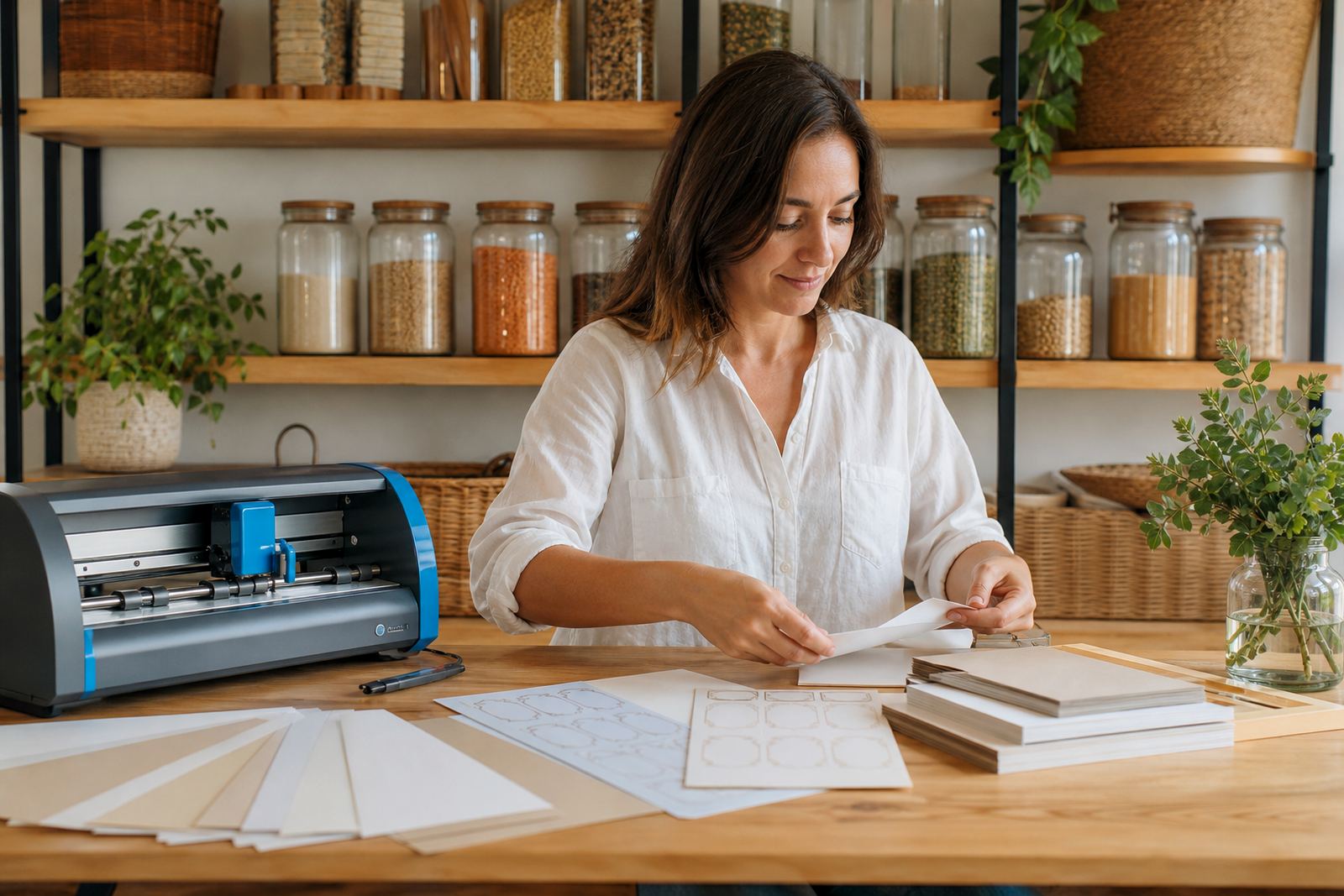
For craft cutters, the cut line should sit just inside the printed edge when the artwork has a border. For hand cutting, a metal ruler, sharp blade and a clean cutting mat help keep the corners straight. Rounded corners can look neater on seals and address blocks, while square cuts work well for formal invitations. Many home makers in Cape Town, Johannesburg and Pretoria use the same sheet for both address labels and seal stickers, then cut the smaller pieces separately so the page gives better value.
- Measure the envelope panel before setting the artwork
- Leave room for folds, flaps and stamp space
- Use rounded corners for seals where possible
- Keep address blocks compact and readable
Common mistakes that show up on envelope runs
The most common mistake is printing too close to the edge of the sheet. When the label is trimmed, a thin slice of text can disappear or the border can look uneven. Another problem is picking a finish that fights the design. Fine script on the wrong glossy sheet can look crowded, while a pale design on kraft may disappear more than expected. Smudging can also happen if the print is touched too soon, especially when the stack is lifted straight after printing.
Cutting errors usually come from rushing. A craft cutter needs clean registration and a flat sheet, while hand cutting needs steady pressure and a fresh blade. If the label is going onto a sealed invitation, the adhesive should be pressed down smoothly from the centre outward so no bubbles sit at the fold. For posted gifts, a poorly aligned return label can make the envelope look hurried, even when the wording is correct. Small details matter on wedding sets and on everyday mailing jobs.
- Do not crowd text against the sheet edge
- Match the finish to the design style
- Leave drying time before stacking printed sheets
- Press seals down evenly over the flap
Budget ranges for home makers and small stationery runs
Personalised envelopes can be done on a modest budget or on a larger stationery run, depending on how many sheets you need and which finish you pick. For small home projects, a pack of printable sticker paper, some cutting time and a few test sheets may keep the spend fairly tight. Once you move into larger invitation sets or repeated business mailers, the cost goes up with sheet count, finishing preferences and the amount of trial printing needed.
As a working guide, many home makers budget about R150 to R350 for a small envelope project using a limited number of sheets and simple cuts. Mid-size runs with mixed labels and seal stickers often sit around R350 to R900. Larger sets for weddings, school events or recurring posted gifts can move higher, especially if you want multiple shapes, clear sheets and a stronger finish like vinyl. The best value usually comes from using one paper type for the address labels and a second type only where the envelope needs extra durability or a specific look.
- Small runs often suit a tight, sheet-based budget
- Mixed sets cost more when shapes and finishes vary
- Vinyl and clear sheets can lift the total spend
- Test sheets help avoid waste on full batches
Delivery patterns for envelope projects across South Africa
Personalised envelope jobs often move between the lounge table, the craft room and the printer corner, so sheet storage matters too. Keep the paper flat, dry and away from direct sunlight, especially in humid coastal conditions around Cape Town and Durban. If sheets curl, printing and cutting become harder, and the label may not sit straight on the envelope. A simple folder or box helps keep the sheet edges clean before use.
StickerPaper supplies printable sticker paper online for crafters and home makers in Durbanville, Cape Town and across South Africa, including Johannesburg, Durban, Pretoria and Bloemfontein. Orders also go out to Stellenbosch and Paarl, where many envelope projects are tied to events, gift packaging and home stationery. For anyone working through regular invite batches or posted gift sets, the right sheet choice can save a lot of fiddly trimming later.
- Store sheets flat in a dry indoor space
- Protect paper from curling in humid weather
- Keep spare sheets ready for corrections
- Match the finish to the envelope stock