
When every exercise book looks the same
School book labels are usually needed when a child has several exercise books, readers, subject files and stationery items that all travel between home and school. In practice, the label has to stay legible after being handled often, packed into a bag, and rubbed by other books in a pile. For younger learners, a clear name and class detail can matter more than decoration, while older learners often want a cleaner layout with one or two lines only.
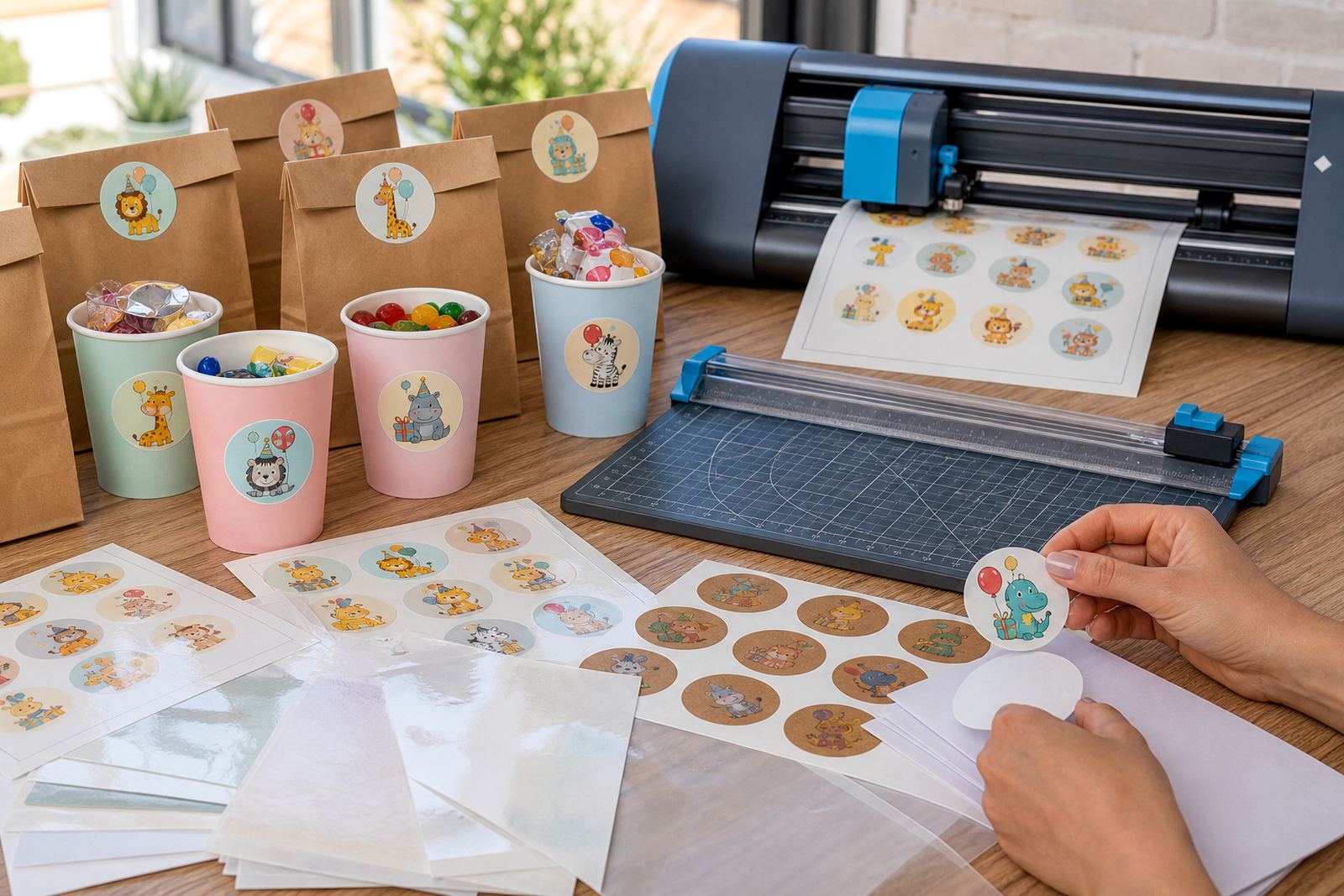
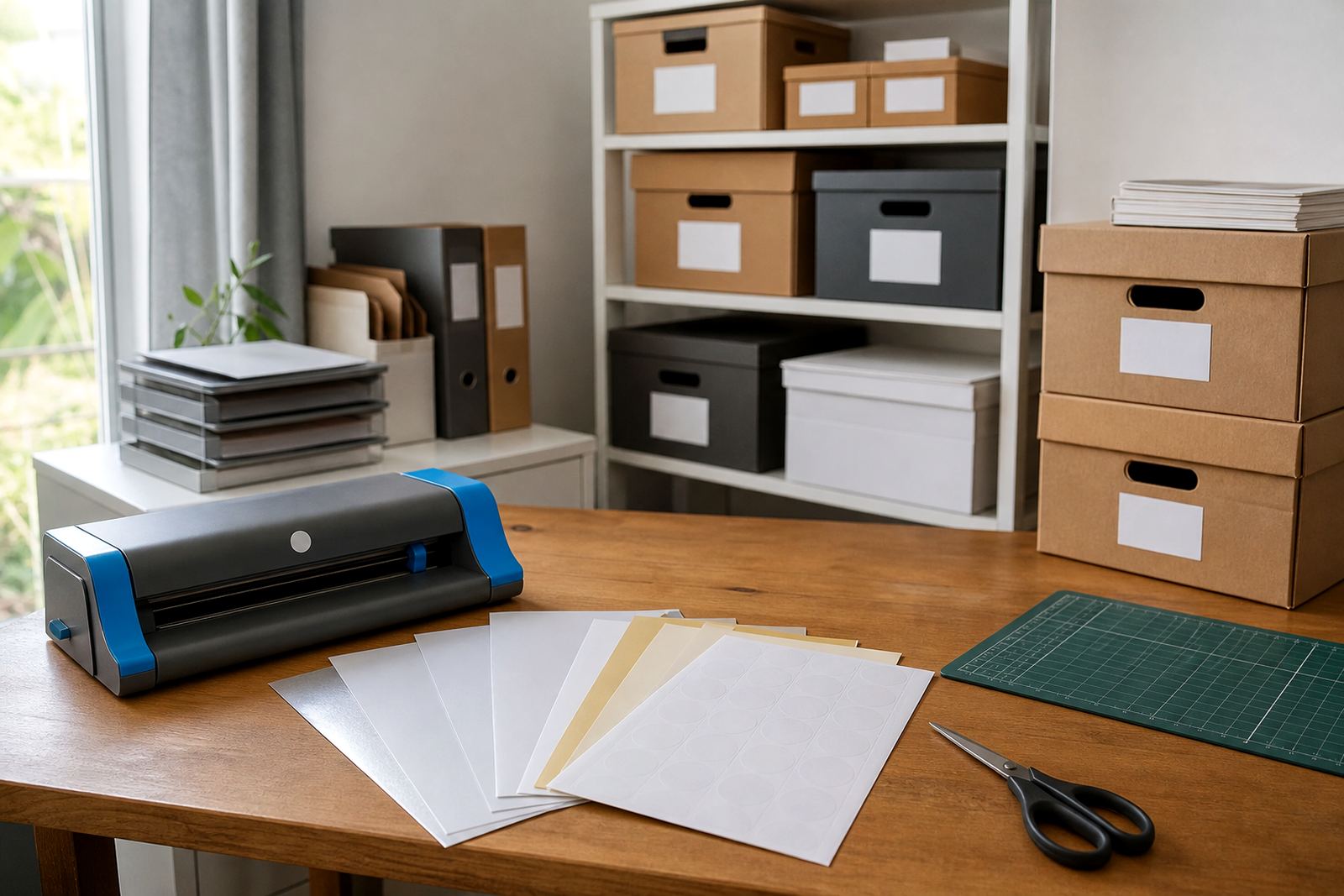
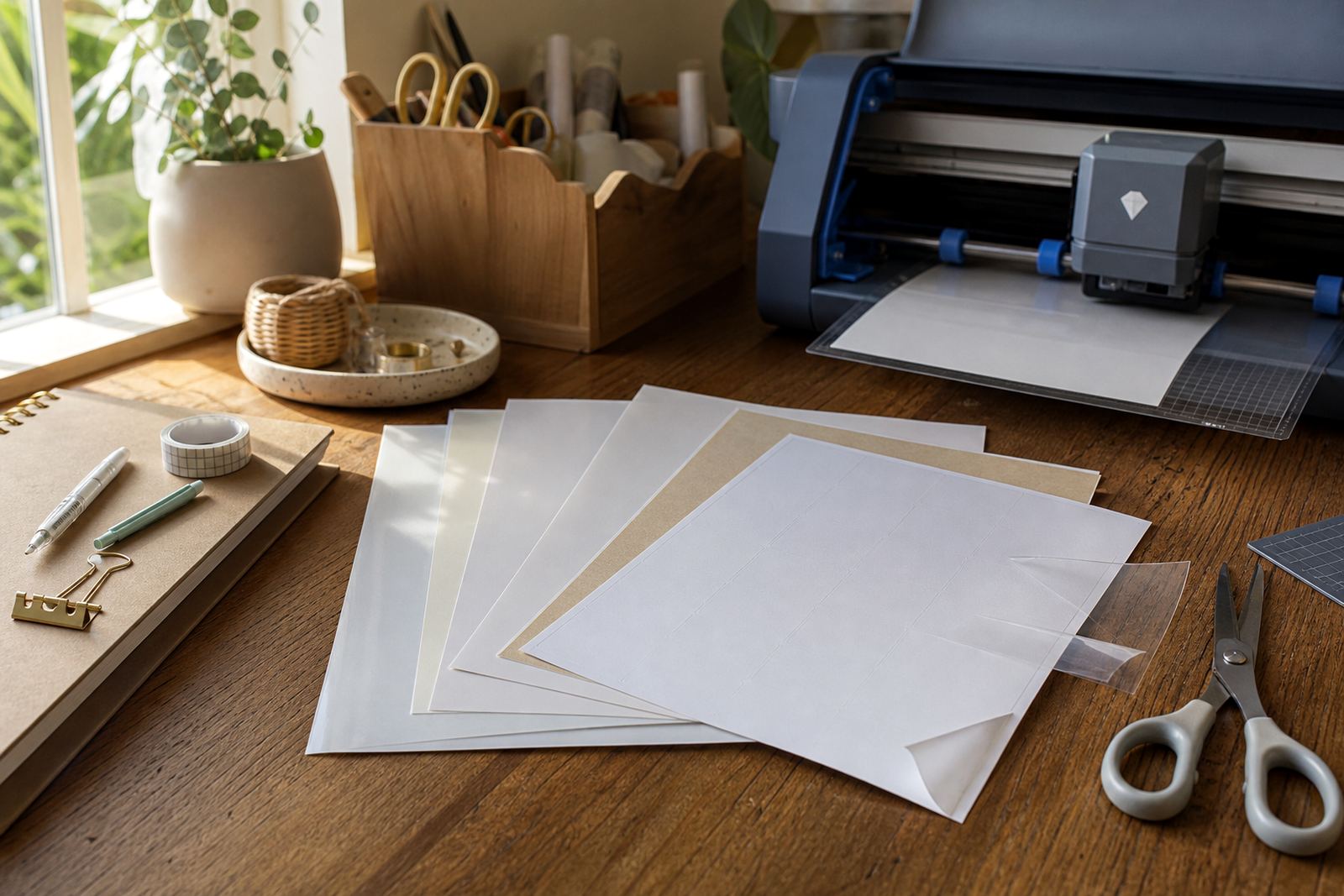
Matte sheets suit handwriting and pencil notes if you are testing layouts, while gloss gives a brighter look for full-colour labels. Clear sheets work well on coloured covers if the print area is planned carefully, and vinyl is useful where the label may face moisture from lunch bags or damp hands. Kraft gives a more natural look for folders, journal covers and simple subject tags.
- Books with plastic covers usually need stronger adhesion and neat trimming.
- Loose stationery labels can be smaller, but still need readable type.
- Folders and files benefit from wider labels with a clean margin.
Paper finish choices for school use
The finish changes how the label reads under classroom light and how it handles daily use. Matte paper reduces glare, which helps names stay visible in bright rooms and on sunny verandas. Gloss gives richer colour, though fingerprints show more easily if small children handle the books often. Clear sheets are useful when you want the cover colour to show through, especially on pastel books or branded folders.
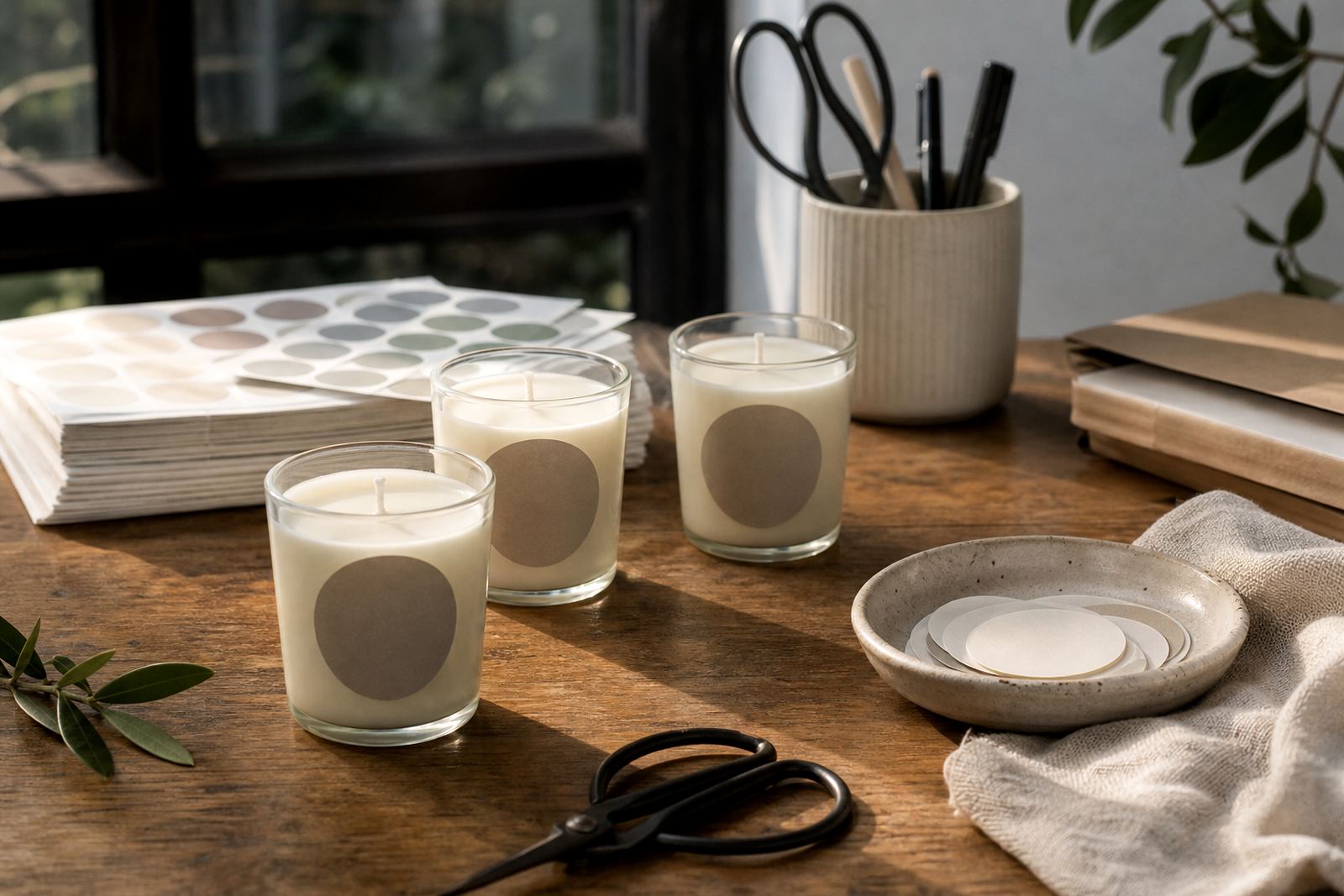
Vinyl suits tougher use, especially where a label may be wiped with a slightly damp cloth. Kraft is a practical choice for home organisers, project folders and reading logs, where the look can be softer and more natural. For school packs, many parents mix finishes instead of using only one type for every item.
- Matte: easy to read and simple to write on before printing.
- Gloss: brighter colour for names, icons and subject blocks.
- Clear: neat on coloured covers and transparent containers.
- Vinyl: better for harder handling and frequent touching.
Inkjet, laser and the label sheet that fits
Printer compatibility matters more than many people expect. Inkjet printers need sticker paper made for ink absorption, otherwise the print can smear or look patchy. Laser printers use heat, so the sheet must be suitable for that process and able to handle it without curling or lifting. If the wrong sheet is used, the result can be dull, uneven or difficult to cut cleanly.
For homes in Durbanville, Cape Town and nearby areas, the usual setup is a small benchtop printer, a pair of scissors, and maybe a craft cutter for repeated shapes. School labels are often printed in batches, so it helps to keep the same page size and label layout from term to term. A test page on plain paper first can save a full sheet, especially if margins or scale need a small adjustment.
- Inkjet sheets are better where colour images or softer tones are needed.
- Laser sheets suit sharper text and quicker handling after printing.
- Always match the sheet type to the printer, not the other way around.
Layouts that work on lunch tins and readers
A good school label is easy to read at arm’s length and still tidy on a small item. The most useful layouts keep the learner name large, then add surname, class or subject beneath it. For younger children, a simple icon can help them spot the right book quickly, but the main text still needs to be the biggest part of the label. For older learners, a plain name block with a small border often looks better than a crowded design.
When planning the page, leave enough space around the text so that cutting does not trim into the name. If you are printing several label types on one sheet, group them by use so you do not mix subject labels with container labels. The shape should also match the item. A long narrow strip suits rulers or file spines, while a square or rounded rectangle works better on book covers and stationery boxes.
- Use large text for names, smaller text for class details.
- Keep one design for books, another for small stationery items.
- Rounded corners can help labels last longer on bagged books.
Cutting, sticking and keeping labels neat
School labels can be cut by hand with scissors or with a craft cutter if you are doing larger sets. Hand cutting works well for short lists and personal projects, but a cutter gives more uniform edges when many books need the same size label. Whichever method is used, clean edges matter because frayed corners catch on book covers and bags.
Surface prep is often overlooked. A cover should be dry, clean and free of dust before the label goes on. Press from the centre outward so air bubbles do not sit under the print, and avoid placing labels too close to a book edge where they can lift. On textured covers, a slightly larger label with firmer pressure tends to hold better. In coastal areas like Cape Town, a label that has been allowed to cure properly after printing can behave better in humid air.
- Cut with a fresh blade or sharp scissors for cleaner edges.
- Let printed sheets settle before trimming and applying.
- Press labels firmly, especially near corners and edges.
What families usually spend in Rand
Budget depends on sheet type, finish and how many labels are needed for a full school pack. A small home set for a few books and stationery items can start at around R120 to R220, especially if the labels are basic and printed in simple layouts. A larger pack for several subjects, readers and spare items may fall between R250 and R450. If you want specialty finishes such as clear or vinyl, the price usually sits higher than a plain matte sheet.
It also helps to think in terms of use, not only sheet count. A pack that covers all books, files, lunch items and a few spare labels often works out better than buying single sheets in a rush. Delivery across South Africa, including Johannesburg, Durban, Pretoria and Bloemfontein, makes it easier to keep one format going through the school year without scrambling for a different paper type mid term.
- Basic matte packs are often the most affordable entry point.
- Mixed packs suit families with several children or subjects.
- Stronger finishes can save time when labels are handled often.
Small errors that waste a good label sheet
The most common mistakes are simple ones. Printing at the wrong scale can make the label too small for a book cover, while dense artwork can crowd the name until it becomes hard to read. Another issue is using too much ink on a sheet that is not suited to it, which can lead to smudging or slow drying. Some people also cut too close to the text and leave no margin, so the edge looks untidy once the label is applied.
When helping with printer setting help, colour test help and sticker application help, the usual advice is to test one sheet before running a full batch. That applies to school books as much as it does to home files or craft tubs. A neat label does not have to be fancy, but it should be easy to read, fit the item and stay in place through the term.
- Avoid overcrowding a label with too many lines of text.
- Check printer settings before using a full pack of sheets.
- Keep spare labels aside for books that change subjects mid year.