
A Pretoria parcel table that needed neater closing seals
The brief came from a private seller in Pretoria putting together parcels for home goods sold online. The packing was already careful, but the finish at the end of each parcel felt plain, so the client wanted printed sticker seals for box flaps and insert labels for the inside of each parcel. The aim was to make the package look orderly when it was opened, while keeping the labels easy to print at home on a standard benchtop printer.
The work needed to suit a home setup, not a production line. That meant sheets that would feed cleanly, hold type without feathering, and cut neatly with scissors or a small craft cutter. The client also wanted a paper choice that would not curl badly in Pretoria’s dry inland conditions, especially after the sheets had sat in a room for a few days before printing.
- Client type: private home seller
- Town: Pretoria
- Use case: parcel seals and insert labels
- Printing method: at home on a benchtop printer
Paper finish choices for seals, inserts and label fronts
We put forward a small set of printable sticker paper types that suit this kind of job. Matte sheets gave the most natural look for insert labels with text blocks, care notes and order details. Gloss sheets gave brighter colour on small logos and decorative seals, while clear sheets worked where the background of the box or envelope needed to show through. Vinyl sheets were useful where a label might get handled often, and kraft sheets gave a more handmade finish for paper wraps and insert cards.
For this Pretoria job, the strongest fit was a matte sheet for the inserts and a gloss finish for the seal labels. That pairing kept the inside text easy to read and gave the closing seal a slightly more polished face without looking overdone. The client wanted the labels to stay practical too, so we kept the layout simple with enough margin for hand cutting.
- Matte for readable text and notes
- Gloss for stronger colour on seals
- Clear for see-through label work
- Vinyl for heavier handling
- Kraft for a paper finish with a softer look
Inkjet, laser and the print handling that mattered
The printer side mattered just as much as the label finish. The client needed stock that could be used in a normal home office printer, with the option to print the same job on inkjet or laser equipment if needed later. We checked the sheet handling, advised on print direction, and kept the artwork spacing suitable for either printer type. That helped avoid smudging on fresh ink and reduced the chance of toner cracking on folded or heavily handled pieces.
Because the labels were meant for parcels, not files, the cut line and adhesive edges had to stay tidy. We set the seals with enough border to peel cleanly from the backing sheet, and the insert labels were sized so the text stayed centred after trimming. The client was also reminded to let printed sheets rest before stacking, especially in a warm room, so the adhesive and ink could settle properly.
- Compatible with inkjet and laser printing
- Set with clean margins for hand cutting
- Space left for peel tabs and seal edges
- Layout kept simple for home printing
What we supplied and how the sheets were set up
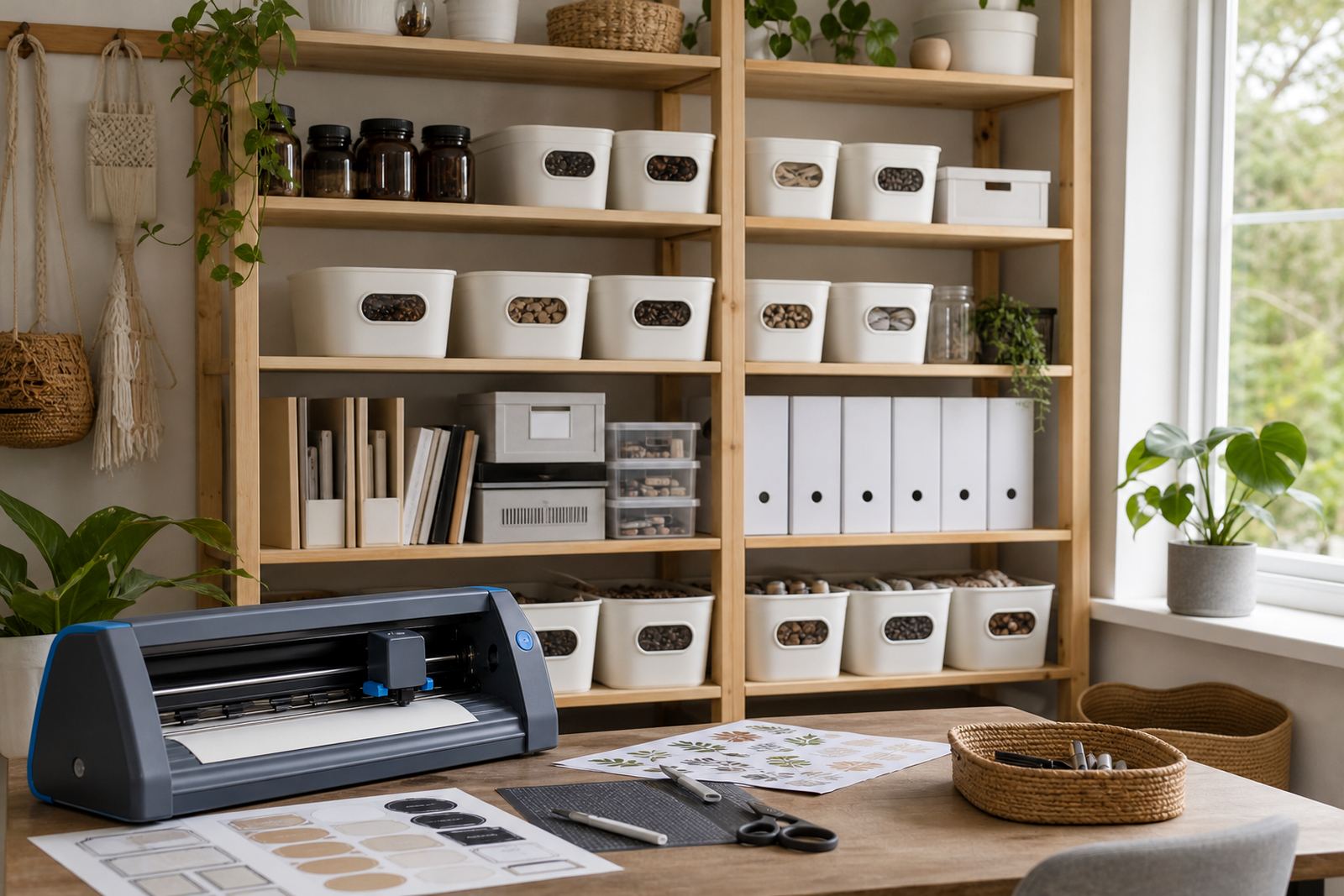
We supplied printable sticker paper in sheet format, prepared for small batch printing and manual finishing. The order included label sheets for the outer seal marks and insert sheets for the inside cards. The client wanted a neat finish without fussy trimming, so we kept the page count modest and the artwork repeat straight and easy to follow. The sizing was set around common home-printer paper handling, with no unusual cuts or awkward narrow strips.
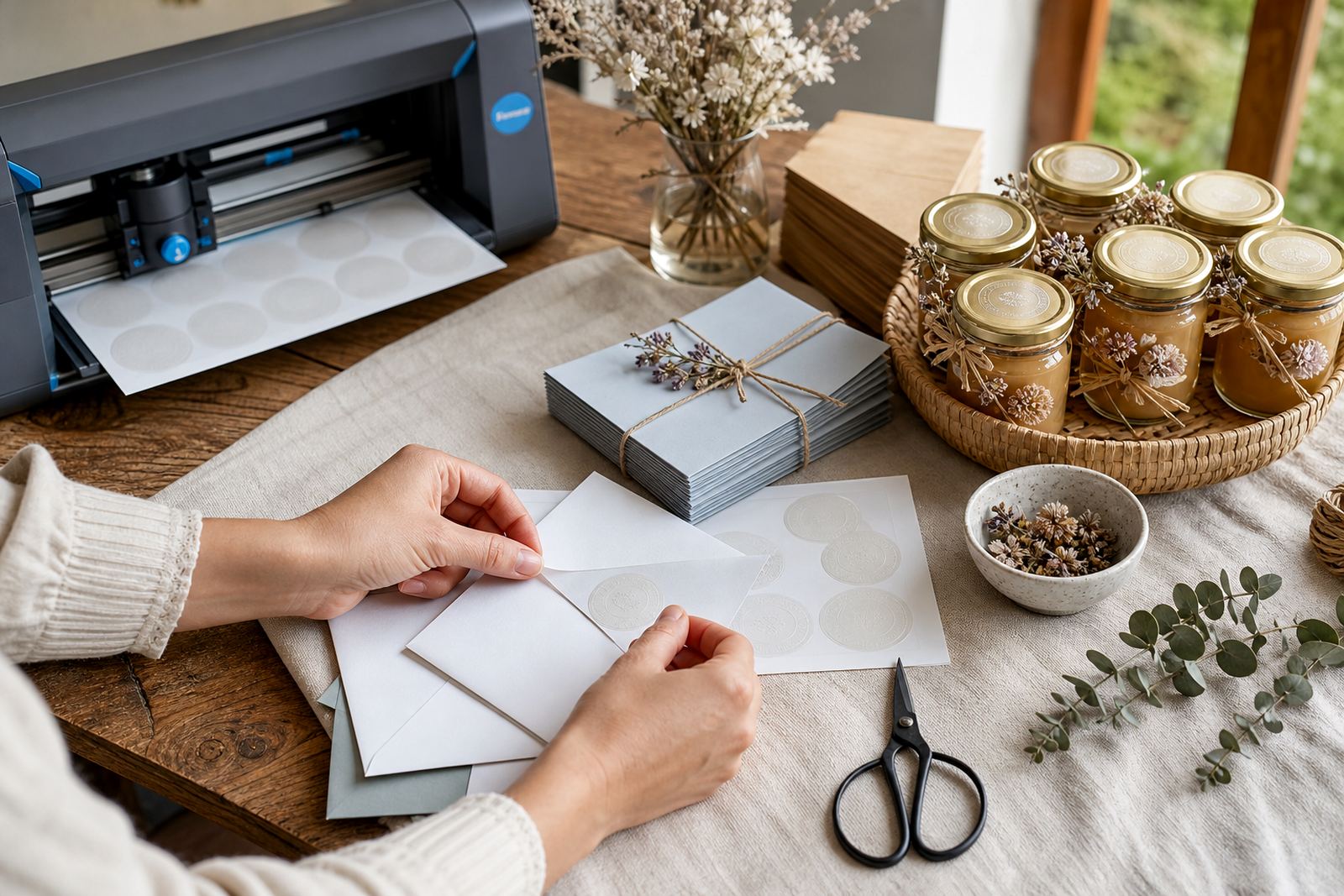
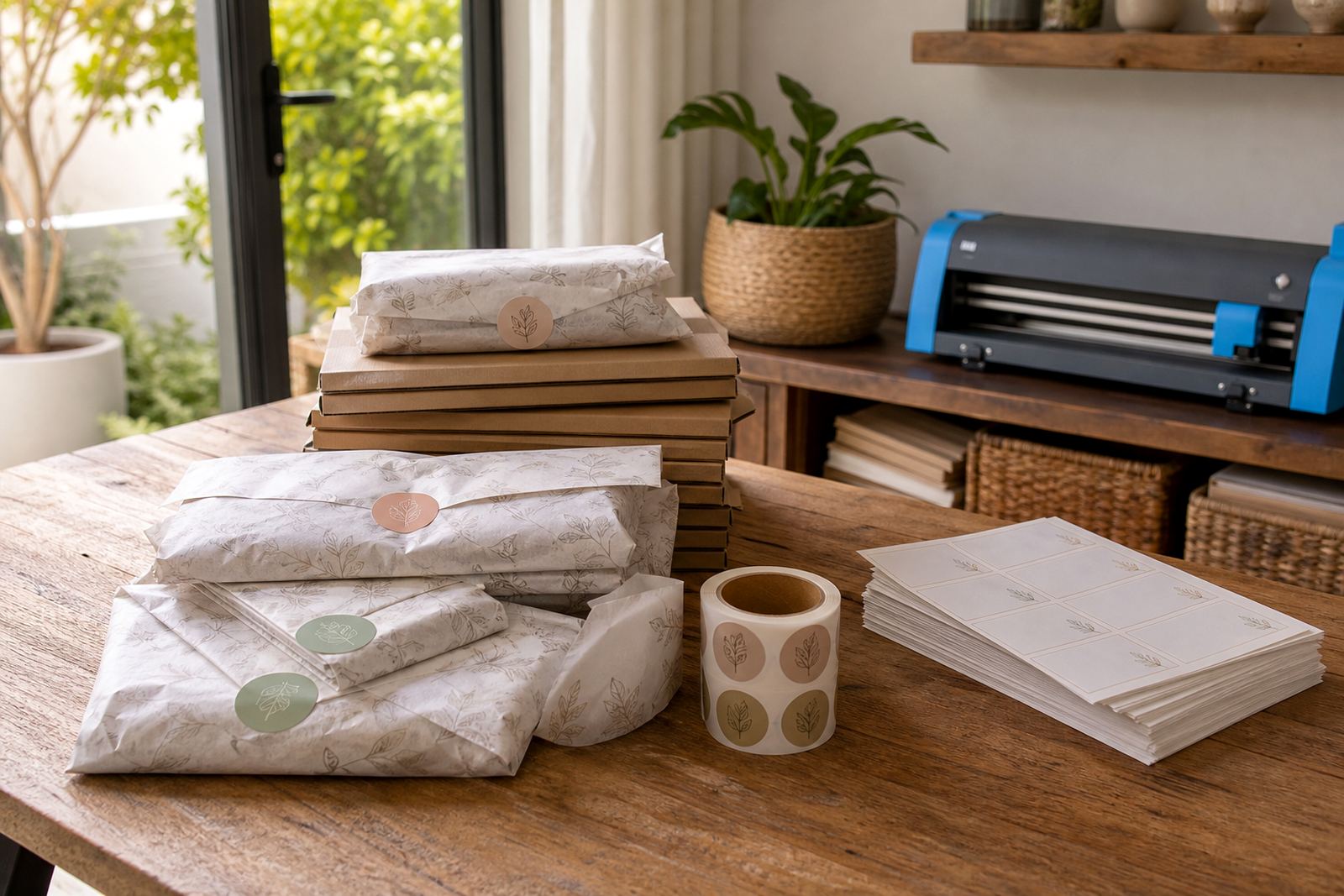
The seals were laid out to suit box flaps, fold-over wraps and envelope closures. The insert labels carried the seller name, parcel note and a short thank-you line, leaving space for handwriting where needed. We also included advice on sheet storage, because sticker paper kept flat prints better than sheets that had been left in a humid room or bent in a drawer. Durbanville has its own coastal moisture to think about, and Pretoria has dry heat, so we kept the handling notes practical for both ends of the country.
- Sheet format for home printing
- Seals sized for parcel closures
- Insert labels for inside the pack
- Storage notes included for flat handling
- Artwork left room for handwriting
Two weeks from brief to packed parcels
The project ran over two weeks, allowing space for the layout to be checked, the test prints to be reviewed, and the final sheet choice to be confirmed. The first week focused on measuring the parcels and setting the seal sizes. The second week covered the final print run and pack-up use, with a small test batch used first so the client could see how the labels behaved on the real parcel stock. That kept waste low and gave a clear read on colour, cut lines and peel quality.
Once the sheets were in use, the seller could close parcels with a cleaner front face and place the insert labels in a way that made the opening feel more considered. It did not change the parcel contents, but it did change the way the package landed on the table. The result was a neater handover and less time spent fixing corners or redoing labels that had shifted during packing.
- Week 1: parcel sizes and label layout
- Week 2: test prints and final use
- Small batch first to reduce waste
- Cleaner closure on outer parcel seals
Practical points we would keep for another Pretoria parcel job
For a similar home seller, we would keep the same mix of a readable matte insert and a sharper outer seal finish. That combination suited the job because it gave the inside note a calm, clear look while the outside seal carried the stronger visual detail. We would also keep the label sizes simple, since standard box flaps and folded inserts do not need complicated shapes to look finished. A straight edge and a well placed margin usually do the work.
We would keep the artwork light on dense blocks of colour too, especially where the sheets are being printed at home. That helps reduce smudge risk and keeps the edges crisper after cutting. The best result in this kind of project comes from small details that stay consistent: flat storage, careful feeding, and a layout that matches the way the parcels are actually folded on the packing table.
- Keep the insert readable at a glance
- Use a seal layout that matches the flap size
- Leave margin for safe hand cutting
- Avoid heavy full-sheet colour blocks
- Store sheets flat before printing
Key facts
| Project type | Pretoria shipping seals and insert labels |
|---|---|
| Client | Private home seller |
| Sheet finishes | Matte and gloss |
| Printer compatibility | Inkjet and laser |
| Cutting method | Hand cutting and craft cutter ready |
| Delivery area | Pretoria, with South African delivery from Durbanville, Cape Town |