
Jar labels that keep the pantry easy to read
Pantry jars work best when the label matches the job. Flour, sugar, rice, coffee and stock powder each need clear wording, and a finish that still reads well under kitchen light. Matte sticker paper gives a softer look on glass and plastic, while gloss can suit brighter labels where wipe-down cleaning matters. Clear sheets are useful when you want the container to show through, especially on neat spice jars and tall storage tubs.
For Durban kitchens near the coast, moisture can gather on containers more often than people expect. A dry cloth before application helps the adhesive grip properly, and a firm press along the edges keeps the corners down. If the jar will be handled every day, simple block lettering usually lasts longer in practice than a crowded layout with too many colours.
- Use short names that are easy to read from a distance.
- Leave a small margin so the edges do not lift easily.
- Match the label size to the lid or front panel.
- Keep the wording consistent across every jar in the row.
Study folders that stay sorted through the term
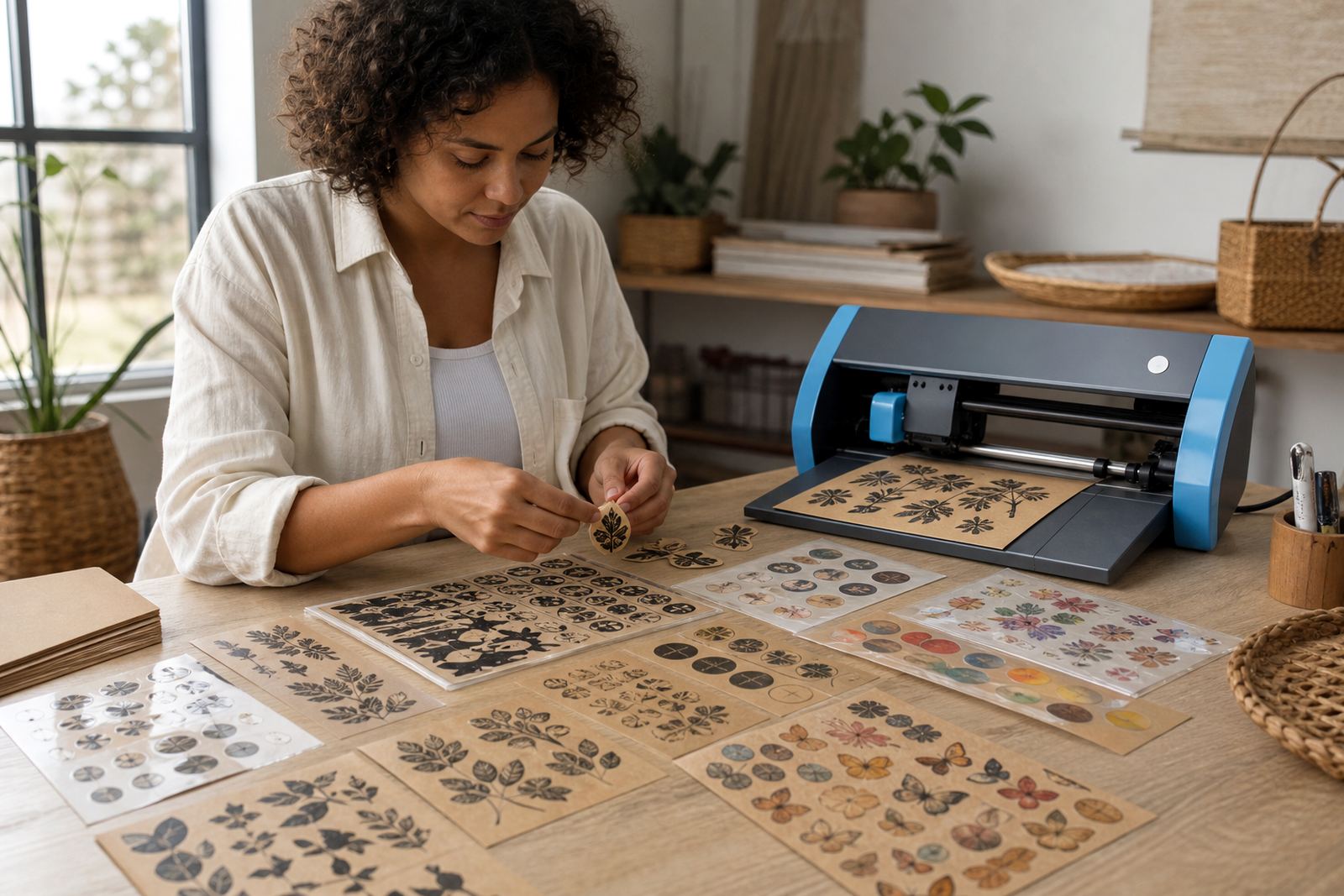
A study shelf works better when each file has a clear place and a clear label. Printable sticker paper is useful for subject dividers, homework folders, stationery boxes and document sleeves. Matte finishes reduce glare under a lamp, which makes labels easier to scan during a rushed morning. Kraft stock can also suit a quieter, more natural look on book covers, archive boxes and storage trays.
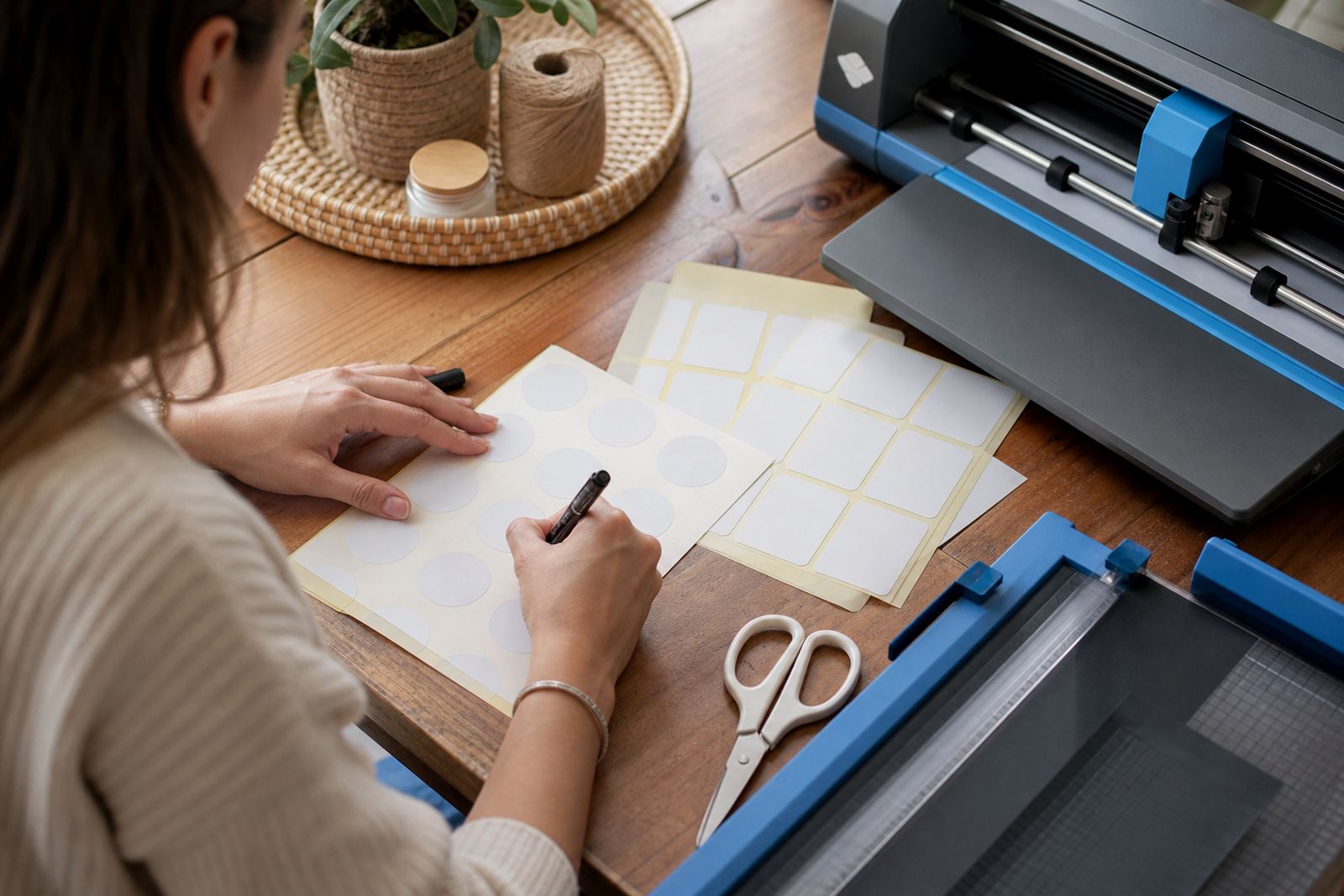
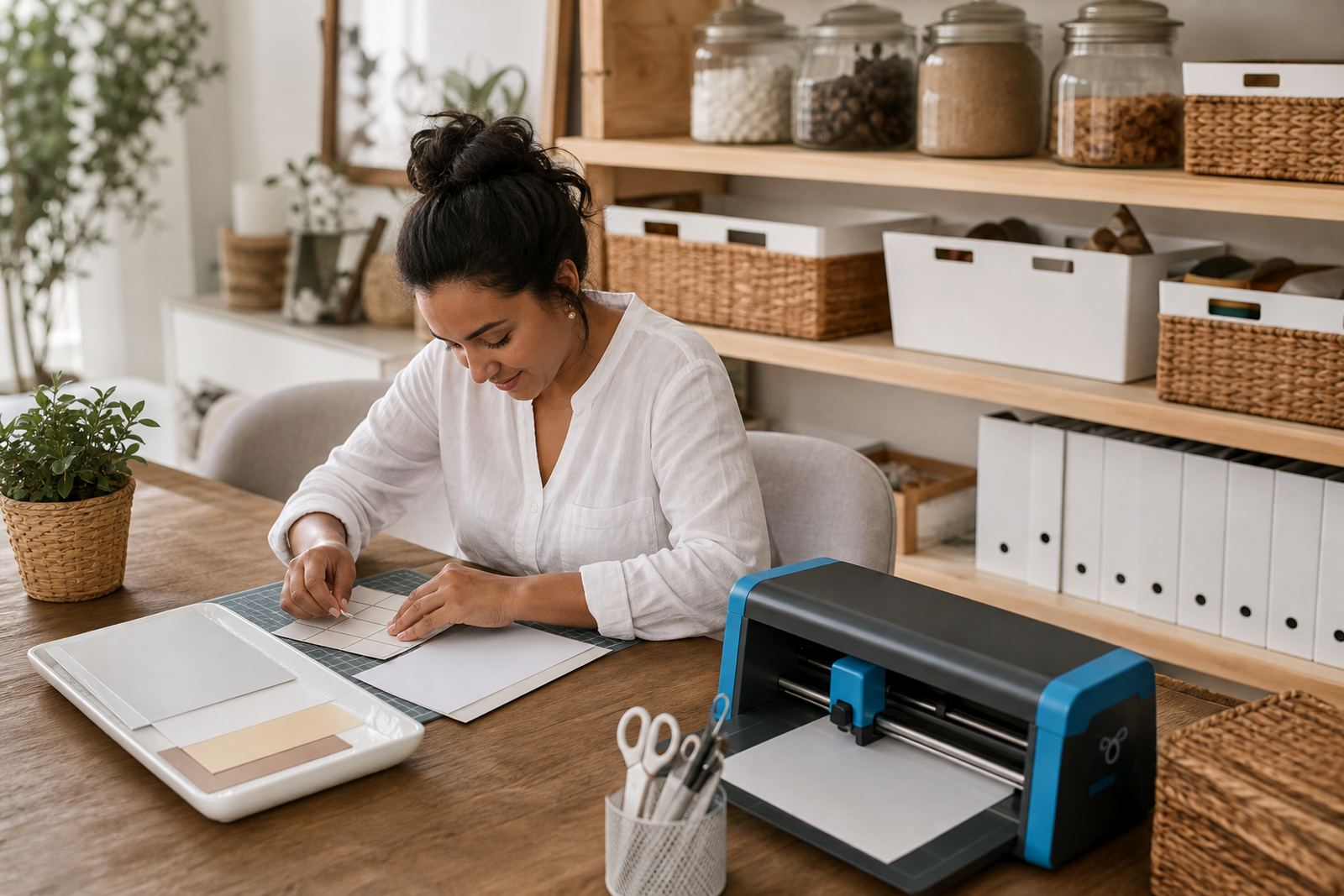
When pages are handled often, the cut matters almost as much as the print. Straight cuts are quick and tidy, while a craft cutter helps with repeated shapes or small icons. Hand cutting still works well for larger labels, provided the blade is sharp and the paper is allowed to settle flat before cutting. That small bit of care makes the labels sit neater on shelves and ring binders.
- Keep one label style for subjects and another for supplies.
- Use slightly larger text for boxes that sit on higher shelves.
- Store spare sheets flat, away from damp cupboards.
- Test one label on a hidden spot before doing the full set.
Laundry room labels that handle moisture and movement
Laundry spaces need labels that can take splashes, steam and frequent handling. Detergent tubs, peg baskets, stain spray bottles and cloth bins all benefit from clear naming. Vinyl sticker paper is a practical option where the surface may be touched often, because it tends to cope better with movement and cleaning than lighter decorative stock. Clear labels also work well on white bottles and refill containers.
In many Cape Town homes, the laundry area shares space with a passage, garage or back stoep. That means labels often need to look orderly from more than one angle. A larger font helps, and a simple layout makes it easier to find what you need while your hands are busy. If the room is warm and slightly damp, let the print dry properly before trimming or stacking the sheets.
- Label decant bottles before filling them fully.
- Place labels on smooth, dry surfaces for better grip.
- Use water resistant wording only where it is needed most.
- Keep the same label height across all bottles and tubs.
Kitchen drawers, lunch tins and the small things in between
Small storage is often where the whole house feels untidy. Drawer dividers, lunch tins, clip jars and tea boxes all benefit from labels that tell the truth at a glance. Gloss sticker paper can make colour blocks stand out neatly on pale containers, while matte keeps the finish more understated in a busy kitchen. If you label by category, such as snacks, baking or breakfast, the room becomes easier to pack away at night.
Many families in Durbanville and Stellenbosch keep a mix of plastic, metal and glass containers in the same cupboard. That is where printable sticker paper earns its place, because the same sheet can be cut for several surfaces. For curved tins, smaller labels sit flatter than large ones, and rounded corners reduce lifting at the edges. A careful press from the middle outward helps the adhesive settle cleanly.
Useful labels for kitchen storage often include:
- dry goods and baking ingredients
- snack tins and lunchbox containers
- tea, coffee and sugar canisters
- freezer bags and meal prep tubs
Craft rooms need labels that tell supplies apart fast
Craft rooms fill up quickly with paper, tape, ribbons, beads, stickers and tools. Labelled boxes save time when a project is underway and the table is already covered. Clear sheets work well for see-through organisers, while kraft labels suit cardboard storage and neutral shelving. When you are sorting by colour, size or material, the label itself can carry part of the system, not just the name.
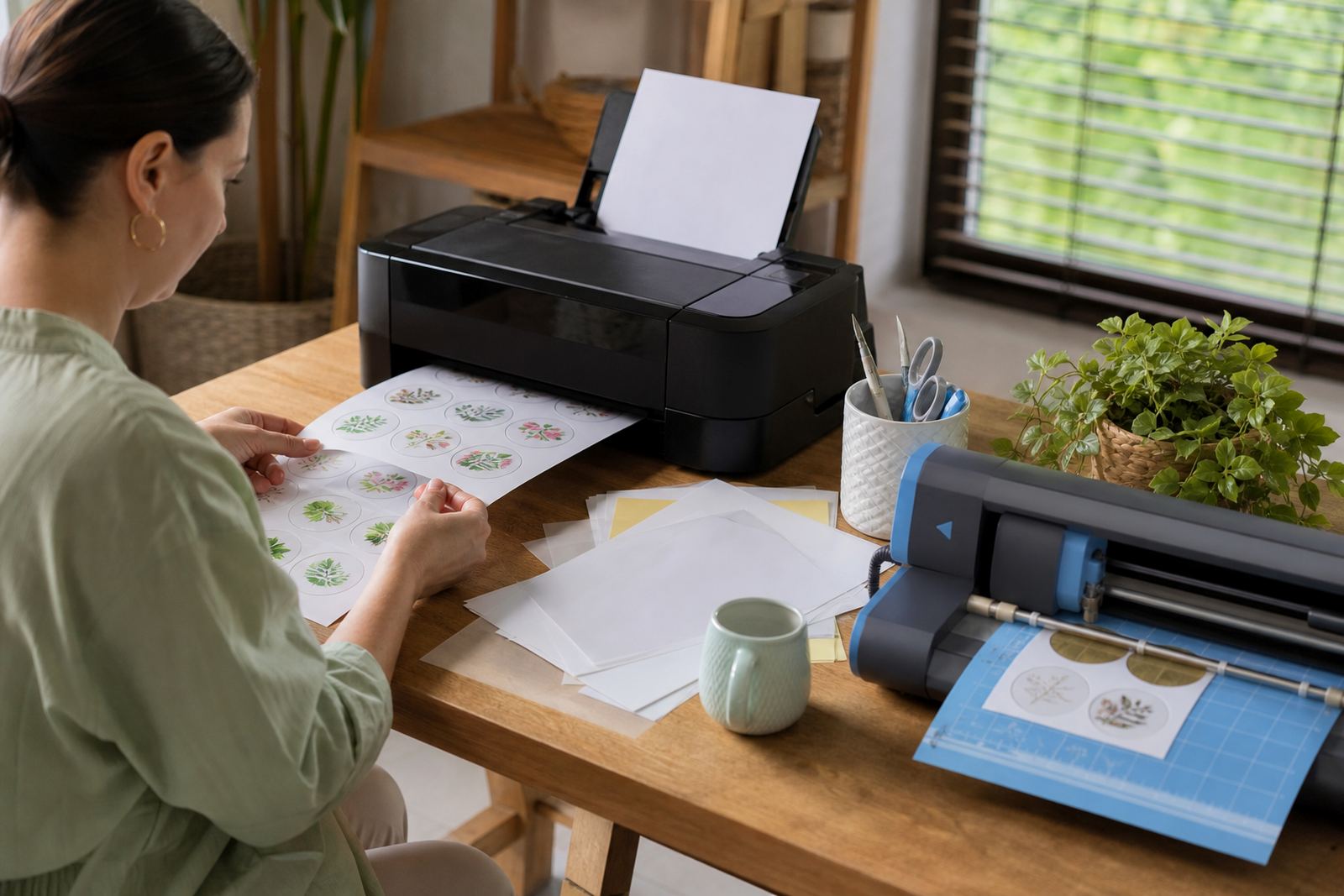
For crafters using inkjet or laser printers, the best result comes from matching the sheet to the machine and keeping settings steady. A test print on ordinary paper helps confirm spacing before the final sheet is used. If the cutter is being used, check that the blade suits the material and that the mat is clean enough to hold the sheet properly. Sharp corners look neat, but rounded edges often last better on containers that are picked up often.
- Group materials by use, not only by colour.
- Mark storage tubs for offcuts, tools and finished items.
- Keep one style for permanent storage and another for temporary kits.
- Store extra sheets where they will stay flat and dry.
A Durbanville example from a family storage refresh
A practical home project in Durbanville might start with a pantry cupboard, two study shelves and one laundry cabinet. The family may print matte labels for jars, clear labels for white bottles and kraft labels for archive boxes. That mix keeps the look calm, while still making each container easy to identify. The labels can be cut by hand for large items and with a craft cutter for repeat sets like spice jars or homework folders.
What usually matters most is not decoration, but consistency. When the same font, size and spacing are used across the house, cupboards feel calmer and the wrong item is less likely to be put back in the wrong place. That matters in homes where school mornings, meal prep and laundry all happen at the same time. A little planning in the printing stage can save a lot of searching later on.
If the household wants a tidy, low-fuss system, the label set should match the room and the surface. A smooth bottle needs a different finish from a cardboard box, and a kitchen tin needs more grip than a folder on a shelf. That is where printable sticker paper gives home makers enough flexibility without making the job complicated.