Matte Labels For A Calm Pantry Shelf
Matte sticker paper suits jars that need a soft, readable finish. It cuts glare under kitchen lights, so ingredient names, dates and batch notes stay easy to read on a crowded shelf. For spice jars, tea jars and dry goods in Durbanville homes, matte gives a neat, paper-like look that feels familiar and tidy.
This finish works well when the label carries quite a lot of information. You can print a recipe note, a storage instruction, or a simple line drawing without the shine taking over. On wide-mouth jars and slim herb bottles, matte sits comfortably in both modern and homely settings.
- Best for handwritten-style labels and block text
- Useful where strong light would reflect off gloss
- Easy to cut by hand, but also suits craft cutters
Gloss Sheets For Jars That Need A Polish
Gloss labels give jars a brighter, more finished appearance. The surface reflects light and brings out colour well, which suits preserves, honey, sauces and gift jars. If a shelf carries mixed jar sizes, gloss helps each label stand out without looking heavy.
In a Cape Town kitchen where jars are stored near a sunny window, gloss can look very smart, though the reflections may make small text harder to read. That is the trade-off. For labels with a logo, a bold product name or strong colour blocks, gloss usually gives the best visual lift.
- Good for jam jars, pantry gifts and display shelves
- Colours often appear brighter on this surface
- Needs careful smoothing to avoid trapped bubbles
Clear Labels For A Minimal Jar Look
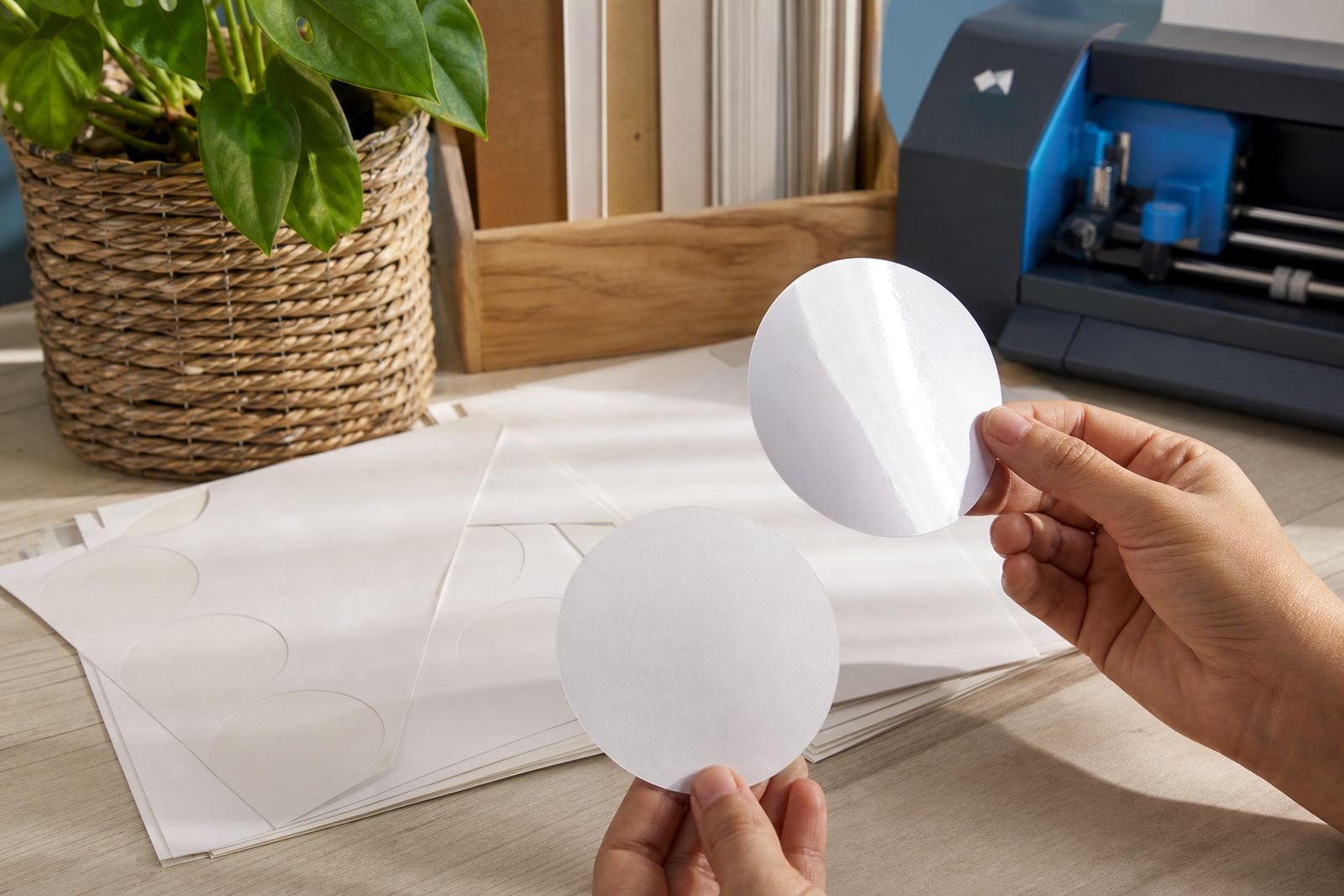
Clear sticker paper is useful when the jar itself should remain visible. It suits glass jars filled with granola, seeds, bath salts or coloured sweets. The label can look almost printed directly onto the jar, which keeps the design light and simple.
Clear sheets work best on clean glass and on jars with a plain shape. On darker contents, the printed area can carry the message without hiding the product inside. For small-batch makers in Pretoria or Stellenbosch, clear labels often help a handcrafted product feel cleaner and more refined.
- Best on clear glass with a thoroughly clean surface
- Works well for minimal branding and simple ingredients
- Needs careful alignment because the edges show more clearly
When Vinyl Makes More Sense For Jar Use
Vinyl sticker paper suits jars that will be handled often or placed in busier areas. It gives a tougher feel than standard paper and can suit storage jars in a home workshop, refill station or utility shelf. On jars that may be wiped regularly, vinyl offers extra staying power without looking bulky.
For home makers in Durban or coastal parts of the Western Cape, humidity can matter too. A label that lifts at the corners is a nuisance, especially on glass jars kept in a warm kitchen. Vinyl is often the better pick where handling is frequent and the jar must keep its neat finish.
- Practical for jars that are moved, wiped or reused
- Useful in humid kitchens and near sink areas
- Also suits freezer-ready or chilled storage labels
Kraft Labels For Rustic Pantry And Gift Jars
Kraft sticker paper brings a natural, earthy look that suits homemade jams, spice blends and gift jars. It works well for labels with brown paper twine, simple black text or hand-drawn marks. The finish feels less polished, but that is often the appeal for rustic products.
If you are putting together gift jars for a market table in Bloemfontein or a home pantry in Paarl, kraft can make the whole set feel cohesive. It is best when the design stays simple and the print has enough contrast. Heavy colour backgrounds usually fight the look of the paper, so keep the artwork clean.
- Good for rustic food labels and handmade gifts
- Pairs well with black text and simple graphics
- Looks best when the design keeps plenty of space
Matching Finish To Inkjet Or Laser Printing
The finish you pick should suit the printer you plan to use. Inkjet printing is common for home crafters and works well when the sheet is made for ink to absorb properly. Laser printing needs paper that can handle heat cleanly, without curling or dulling the print.
For jar labels, print tests matter more than people expect. A clear label with pale text may look fine on screen, but the real jar and room lighting change the result. Test a small set first, then check colour, drying and fit before committing to a full batch.
- Inkjet sheets suit coloured artwork and home printing
- Laser sheets are better where crisp text matters most
- Always test a few labels before full production
Cutting, Sticking And Keeping Jar Labels Neat
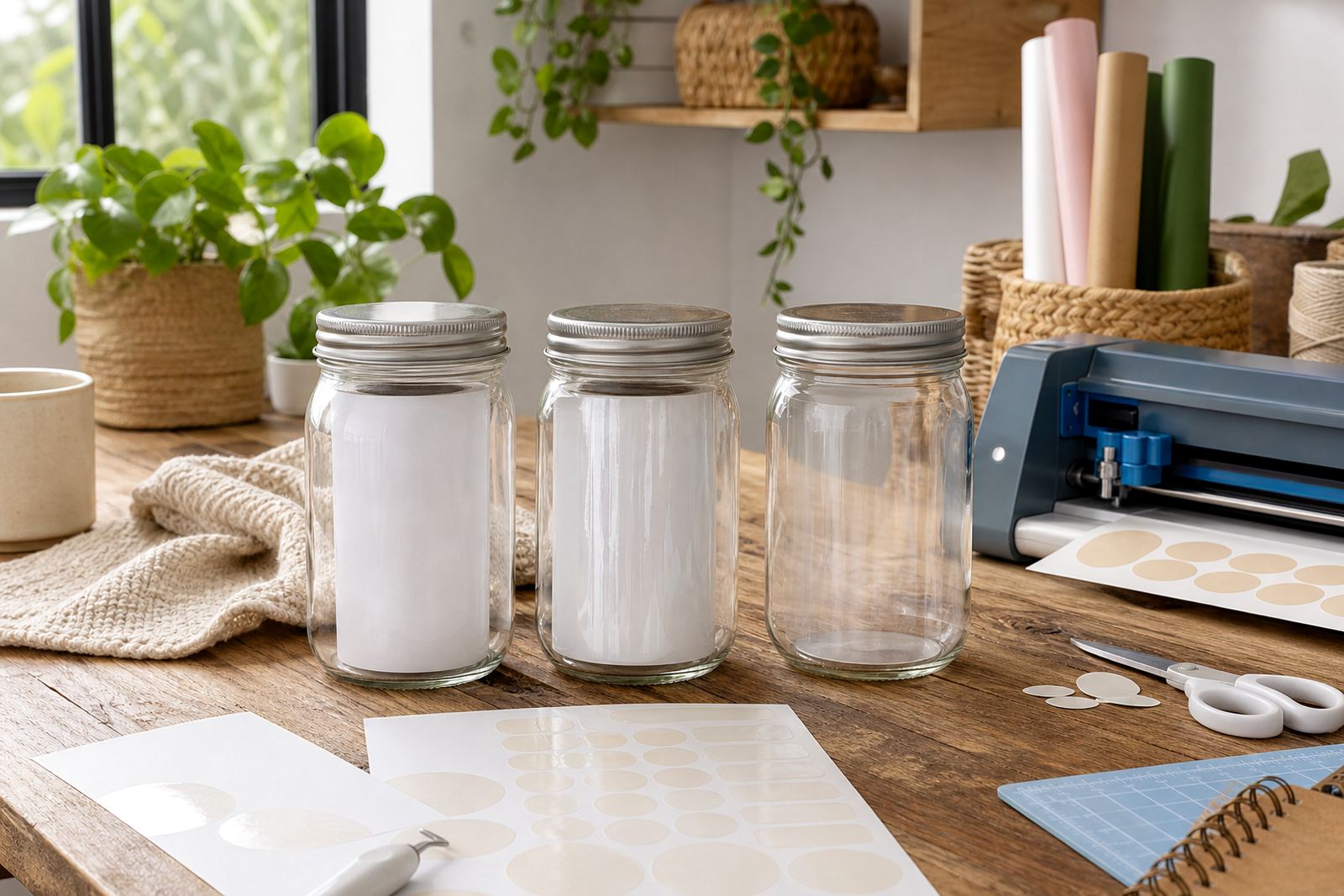
Jar labels can be cut by hand with a sharp blade or scissors, or with a craft cutter for repeated shapes. Rounded corners often help labels stay looking tidy, especially on curved glass. Straight edges work too, but they show flaws more easily if the jar is held at an angle.
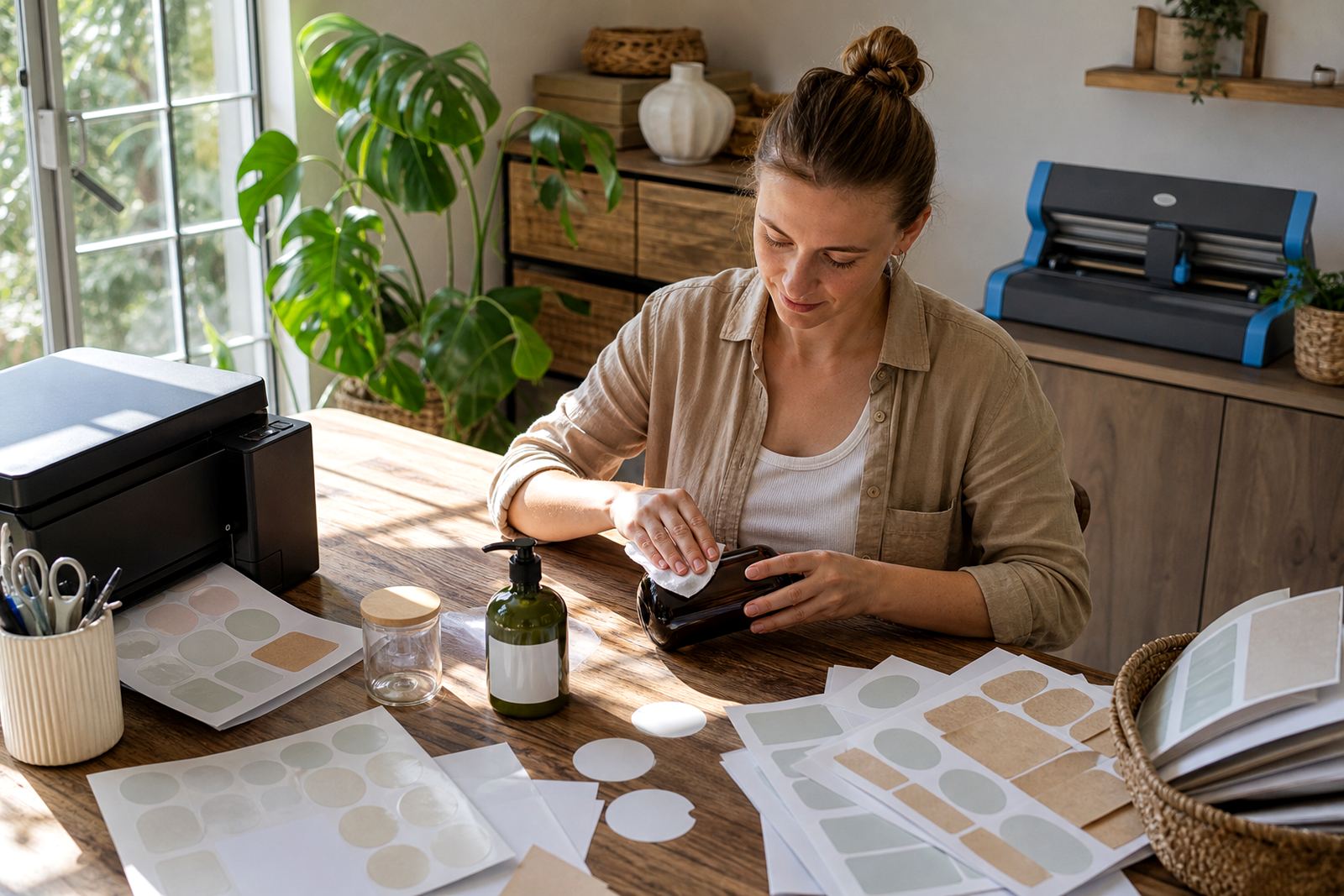
Before sticking, wipe the jar with a clean dry cloth and make sure the glass is free of grease. Press from the centre outward to push out trapped air. If a label is being applied to a jar that was washed recently, let the surface dry properly first, because a little moisture can spoil the bond.
- Round corners help on curved jar sides
- Clean, dry glass gives a better hold
- Light pressure from the centre reduces bubbles
In Durbanville, a small preserve maker may print matte labels for chilli jam, then use gloss on a gift batch for holiday orders. That mix works well when the pantry jars stay in the kitchen and the gift jars go out to customers. The best finish is the one that suits the jar, the light and the job at hand.