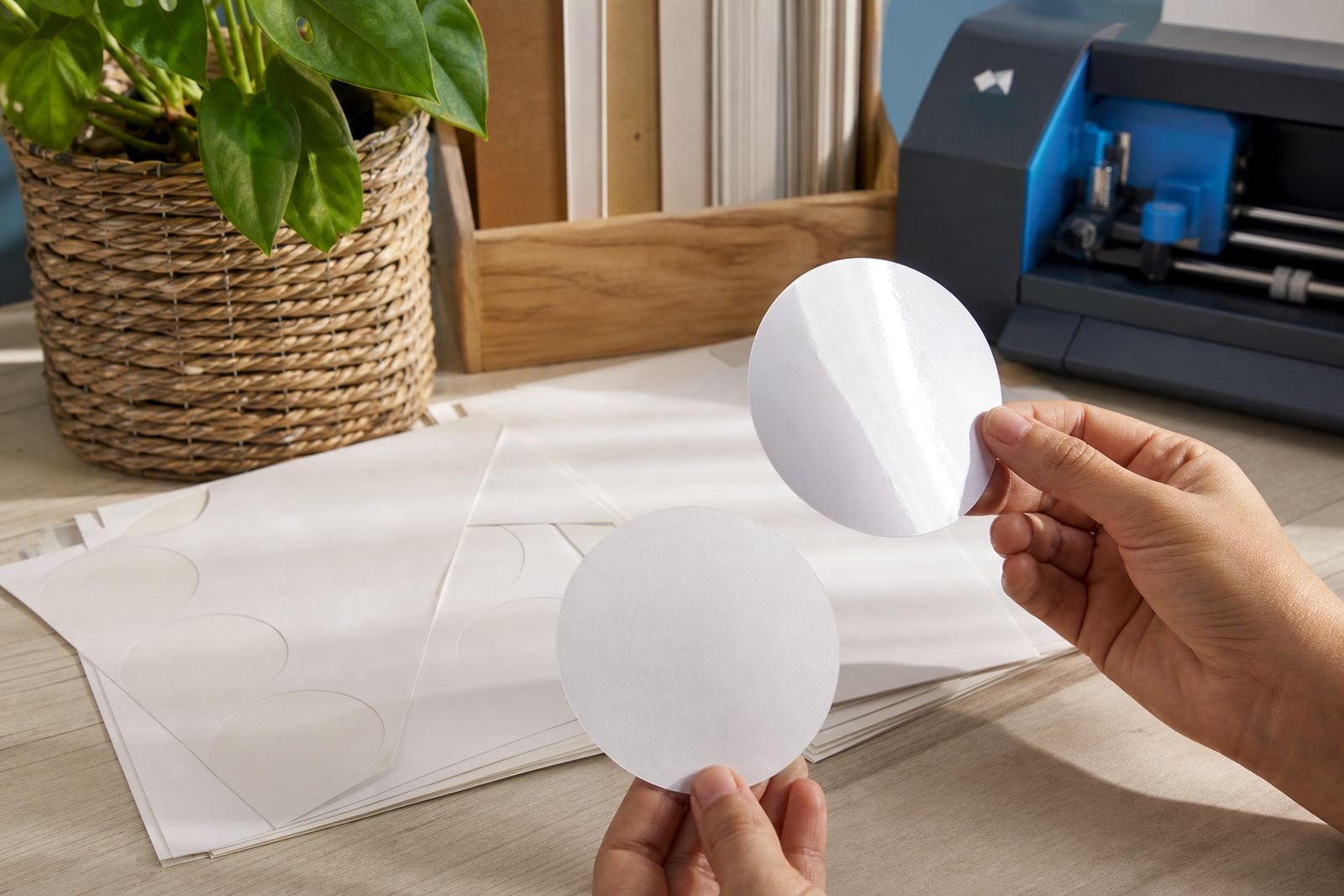
Two finishes, two very different jobs
Matte sticker paper has a soft, low sheen surface that feels calmer on the eye. Gloss has a smoother, shinier face that reflects more light and makes colour look sharper on the page. For crafters in Durbanville or a home organiser in Pretoria, that change in surface can make a real difference to the final result.
When you are choosing between them, think about how the sticker will be used. If the label needs to be written on by hand, matte usually gives a friendlier surface. If the sticker is meant to stand out on a gift box, file label or pantry jar, gloss can give it more pop.
- Matte suits notes, ingredient labels and handwriting.
- Gloss suits bright graphics, logos and decorative labels.
- Both can work well for home projects when matched to the task.
Where matte earns its place
Matte sticker paper is often the easier choice for labels that will be written on after printing. Pen and pencil sit more naturally on the surface, and the writing is usually easier to read under kitchen lights or in a storeroom. That makes matte handy for spice jars, freezer tubs, school folders and storage bins in busy homes.
It also gives a quieter look that suits careful organising. If you prefer a neat, practical finish rather than shine, matte can help the label blend into the container and keep the information clear. In Cape Town homes where daylight is strong, that reduced reflection can be easier on the eyes too.
- Better for handwriting and quick notes.
- Less glare under bright light.
- Works well for clean, understated home labels.
Where gloss makes colour work harder
Gloss sticker paper is the better match when you want colour to look lively. Photos, bold shapes, bright blocks and decorative designs often appear richer on gloss because the finish helps the ink sit with more shine. That can be useful for personalised gifts, party packs and product labels where appearance matters as much as information.
The same shine that helps the colour can also make writing slightly harder to read, especially if light catches the surface. In a sunny Durban kitchen or a room with overhead lighting, the reflection can be noticeable. If you plan to write on the label, test the pen first and let the ink dry properly before handling the sheet.
- Best for colourful artwork and strong visual contrast.
- Useful for gift labels and display pieces.
- Needs a little more care when writing on top.
Ink, cutters and the finish you pick
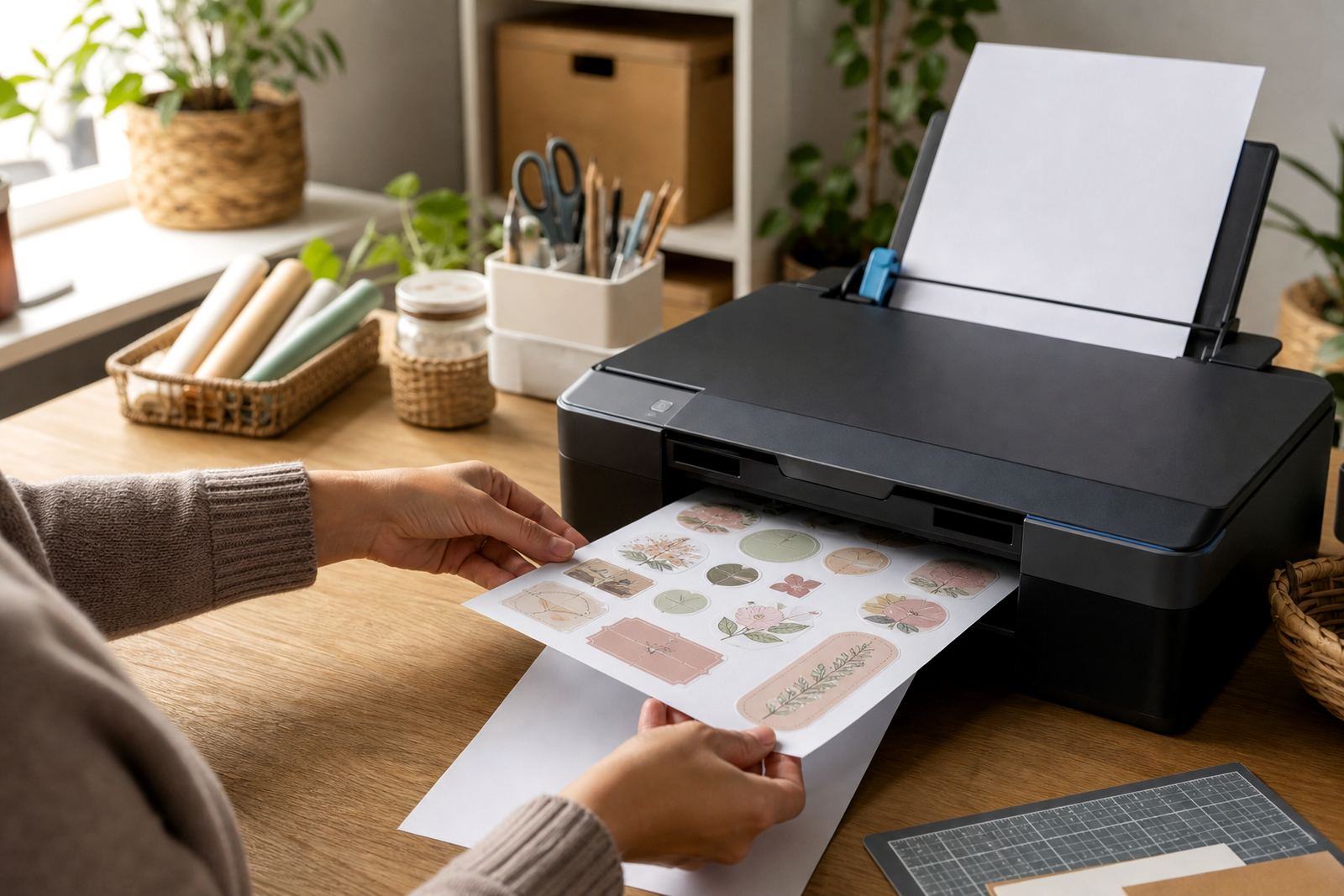
Both matte and gloss sticker paper can be used with inkjet or laser printing, but the finish changes how the print behaves. Inkjet ink often sits better on matte when you want quick writing and less shine. Gloss can give a brighter result, although the surface may need a little more drying time depending on the ink and coverage. Laser printing can produce crisp text on either finish, with gloss often showing stronger contrast on graphics.
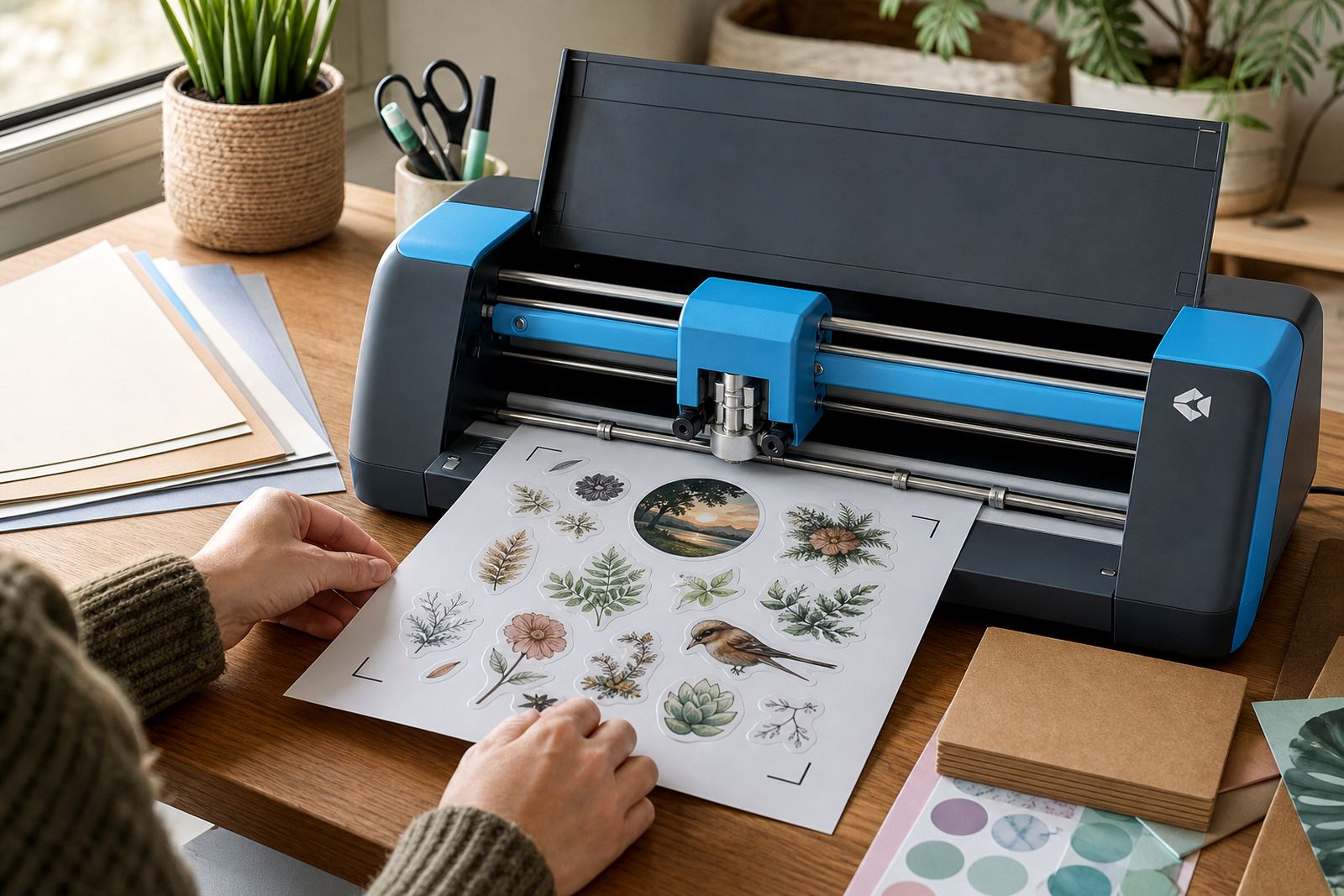
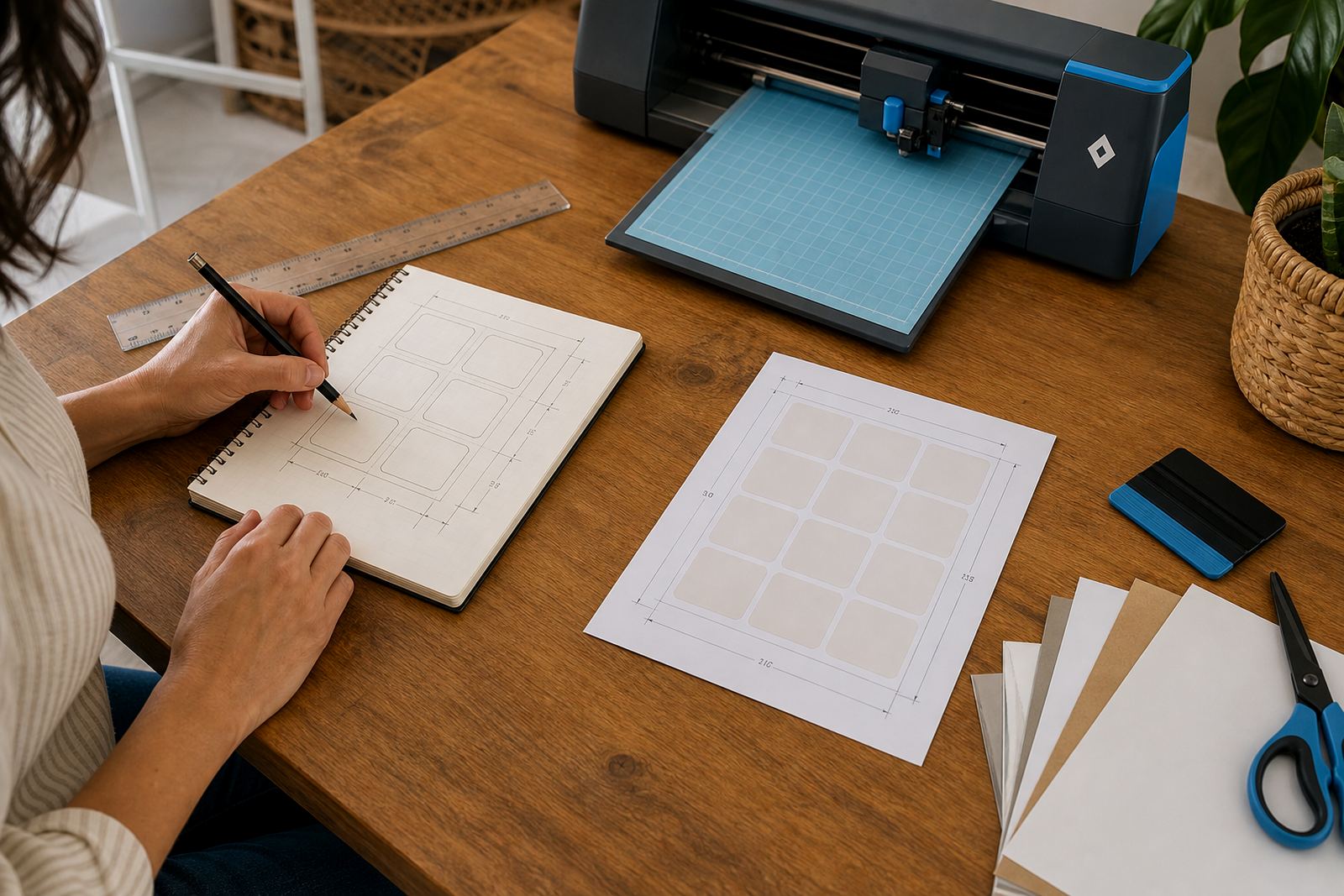
Cutting by hand works on both types if the blade is sharp and the sheet is supported on a clean surface. Craft cutters also handle both finishes well, but tidy registration and correct blade pressure matter. A sheet that is too slick or too soft can shift during cutting, so a careful test cut helps before a larger run.
- Inkjet users often favour matte for writing and drying ease.
- Laser printing can suit either finish for crisp labels.
- Hand cutting needs a steady ruler and a fresh blade.
How the same design changes from one finish to the next
A design that looks gentle on matte can feel much brighter on gloss. Pale colours may seem softer on matte, while deep blues, reds and greens often stand out more on gloss. If the label carries fine text, matte can give it a calmer appearance, but gloss can sharpen the contrast and make it feel more premium.
For a Durbanville maker packing homemade soap or pantry jars, the choice can come down to the story the label tells. A kraft style label can feel earthy and warm, matte feels organised and quiet, while gloss gives a cleaner finish with more visual energy. None of these options is better in every case, only better for the job in front of you.
- Matte softens colour and reduces shine.
- Gloss deepens colour and catches the eye.
- Kraft feels natural, while clear and vinyl suit other label uses.
A local label choice that makes sense at home
A home baker in Stellenbosch might use matte for ingredient jars and gloss for thank-you stickers on gift boxes. The jars need clear writing and easy reading, while the gift stickers need a stronger visual finish. That split approach often saves time because each finish does the job it is best at.
Storage matters too. Sticker paper should be kept flat, away from moisture and direct heat, especially in coastal areas where humidity can affect the sheet edge. If the sheet curls or picks up dust, the cut line and print quality can suffer. A clean cupboard drawer or sealed sleeve is usually enough for the average home maker.
- Use matte for practical labelling.
- Use gloss for presentation pieces.
- Keep sheets flat and dry for cleaner printing.
A quick way to decide before you print
If you want to write on the label, start with matte. If you want the colour to carry the design, start with gloss. That single decision often narrows the rest of the job, whether you are labelling bathroom jars in Bloemfontein or putting finishing stickers on party favours in Johannesburg.
Many crafters keep both finishes on hand because each one solves a different problem. Matte is practical and easy to read, gloss is lively and polished. Once the project is clear, the finish usually picks itself, and the rest of the work becomes a matter of good print settings and careful cutting.