
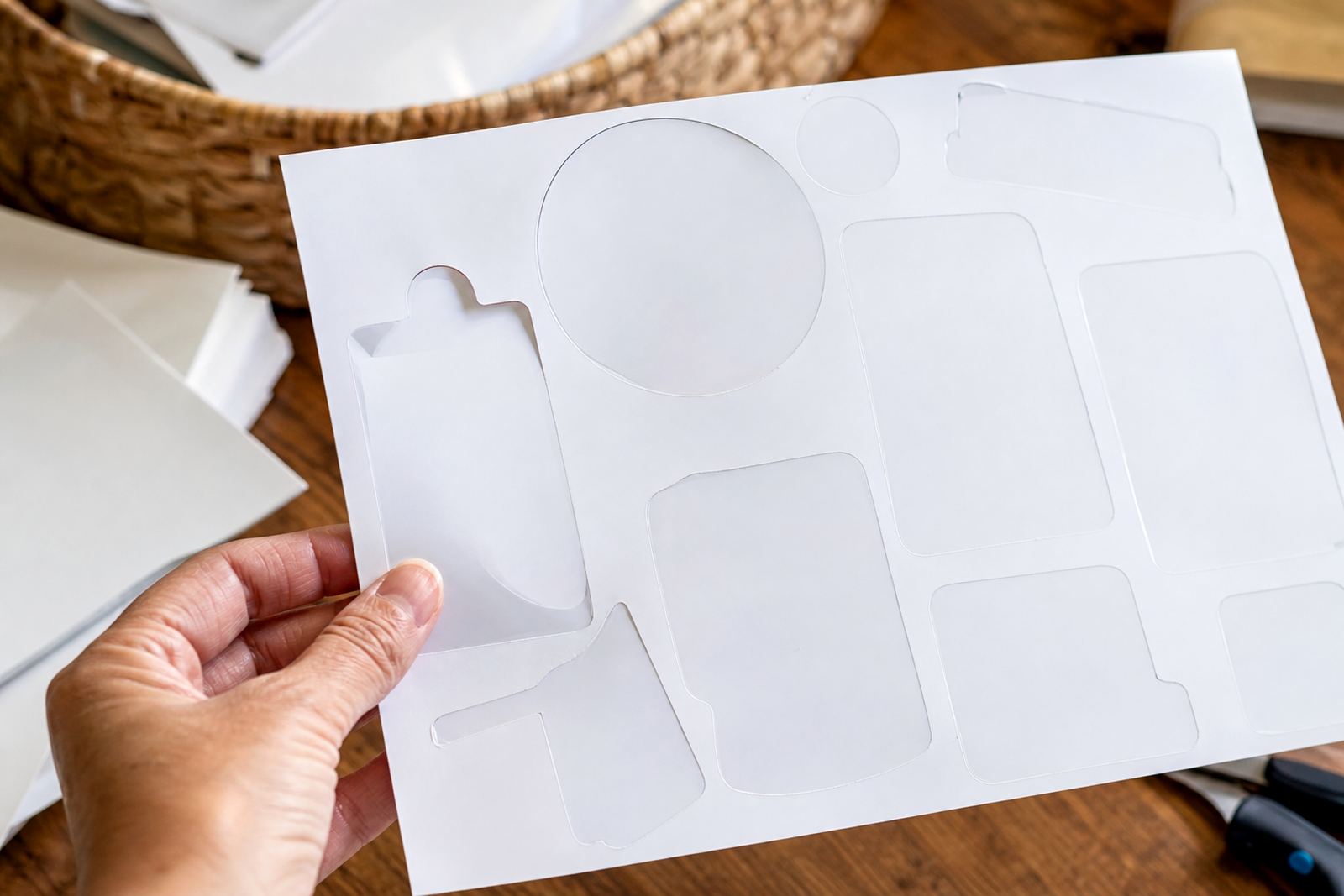
What a kiss cut actually leaves behind
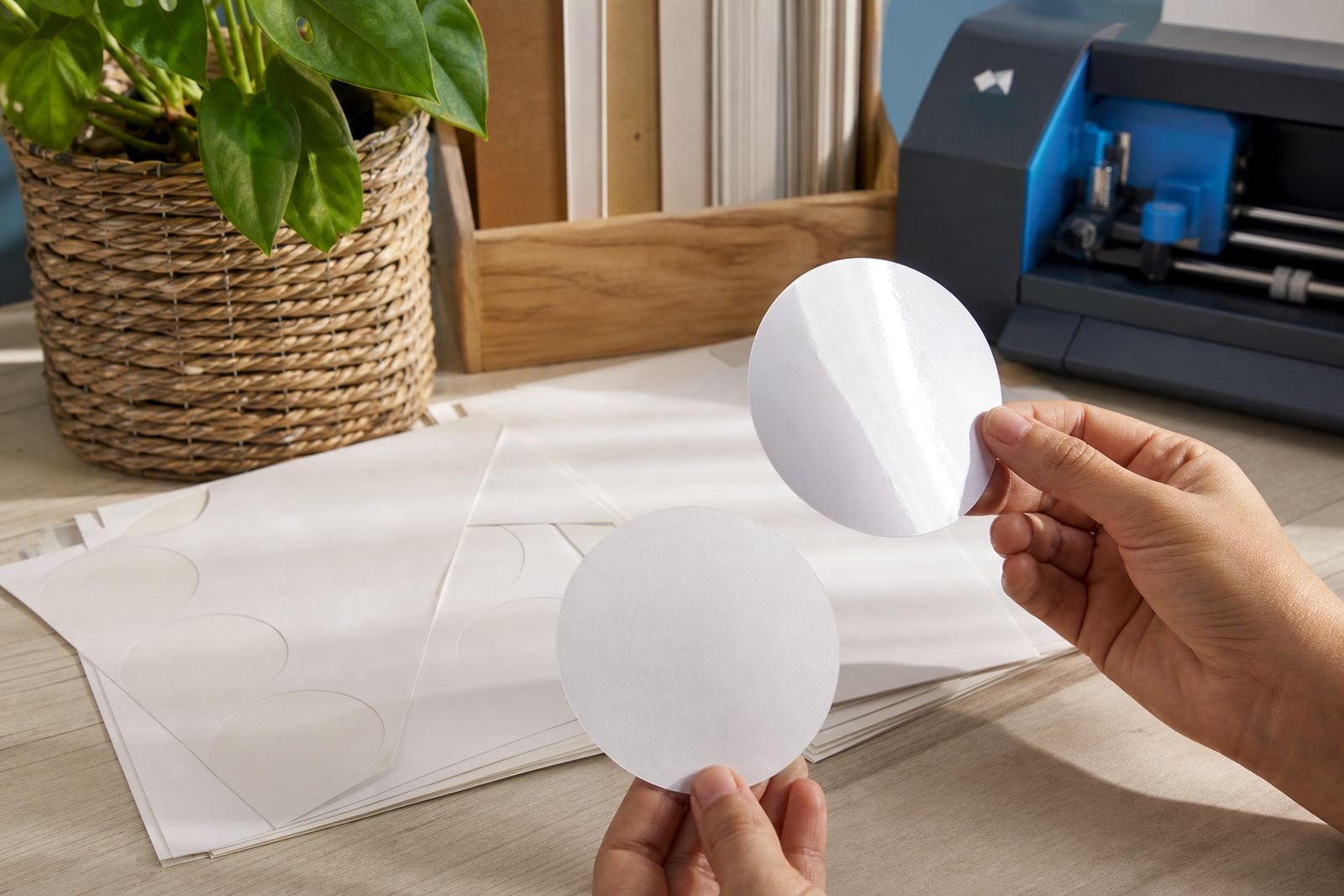
A kiss cut only reaches through the printed sticker face, not the full backing sheet. The cut follows the shape you want, while the liner keeps each piece together until you are ready to lift it off.
That matters when you are making planner labels, pantry names, gift tags, or small product stickers. The sheet still holds its shape in your hand, so the pieces do not curl up or scatter across the table.
In Durbanville homes and small craft rooms, that extra control is useful when a sheet needs to travel in a folder, a drawer, or a packing box. The cut line should feel easy to peel, but firm enough that the sticker stays in place until you separate it.
Where kiss cuts help most in everyday making
Kiss cuts suit projects where one sheet carries many small stickers. They are common for home labels, address labels, diary tabs, reward stickers, and party favours. The backing stays intact, so the full sheet can be printed, sorted, and stored without loose pieces sliding around.
- Labels for jars, tins, and cupboard tubs
- Small logo stickers for packaging and inserts
- Gift seals for envelopes and boxes
- Planner icons, notes, and calendar markers
- Craft sheets that need clean, removable pieces
For a home maker in Cape Town, that can mean printing a full A4 sheet of kitchen labels on a Sunday, then trimming the sheet into sections for later use. It also helps when you are making sets for a school project or a market stall, because each sheet stays neat and easy to count.
Matte, gloss, clear, vinyl, and kraft behave differently
Sticker paper finish changes how a kiss cut feels and how the final label looks. Matte paper gives a softer print finish and works well for handwriting or quiet household labels. Gloss gives stronger colour and a brighter face, which can suit product packs and decorative work.
Clear sticker sheet is useful when you want the background to show through, especially on glass jars or bottles. Vinyl stock is handy for a tougher label surface, while kraft gives a paper look that suits rustic gift wraps and simple home organisation. Each type needs a little different care when you are peeling the sticker from the liner.
- Matte for neat writing and less reflection
- Gloss for sharper colour and brighter artwork
- Clear for see-through labelling on smooth surfaces
- Vinyl for labels that need a harder wearing face
- Kraft for a natural paper finish on gifts and storage
If a kitchen in Durban has steamy cupboards, a vinyl or clear label may suit some uses better than plain paper. For dry indoor storage, matte and kraft can look tidy and print well, especially when the design is simple.
Inkjet and laser printers need the right match
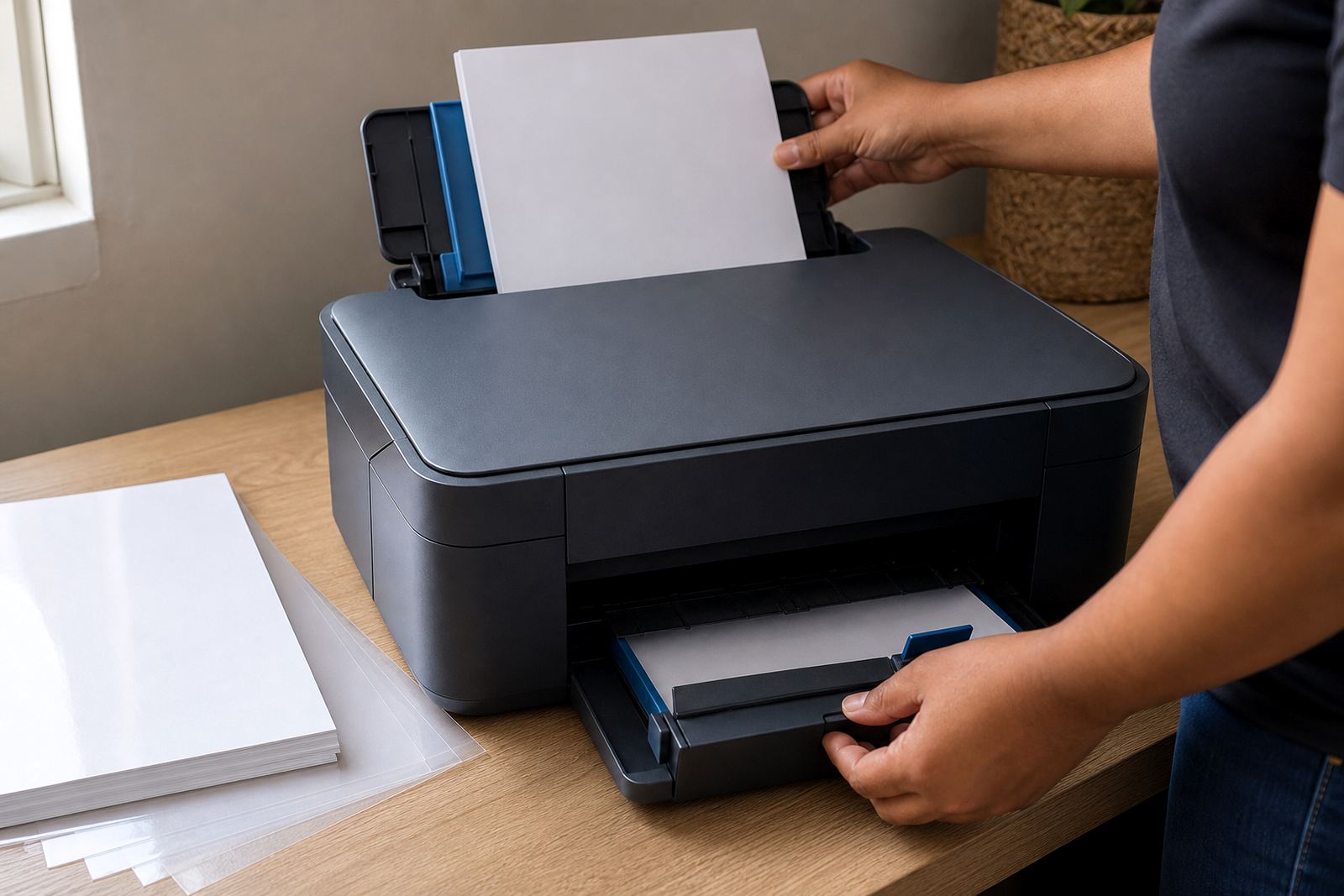
Printable sticker paper must match the printer type you are using. Inkjet sheets are made to take liquid ink that dries into the surface, while laser sheets are made for toner and heat-based fusing. Using the wrong sheet can affect the print finish and may cause poor results.
Before printing, check that your file size matches the sheet size and that the print settings are set for the correct paper type. A colour test on a single sheet helps you see whether the shades look too dark, too pale, or muddy. That small check saves paper and avoids a box of unusable labels.
For a home office in Pretoria, this can matter when labels are needed for file boxes, storage tubs, or a small online order. If the print looks off, the issue is usually paper type, printer setting, or colour balance, not the design itself.
Cut by hand or use a craft cutter
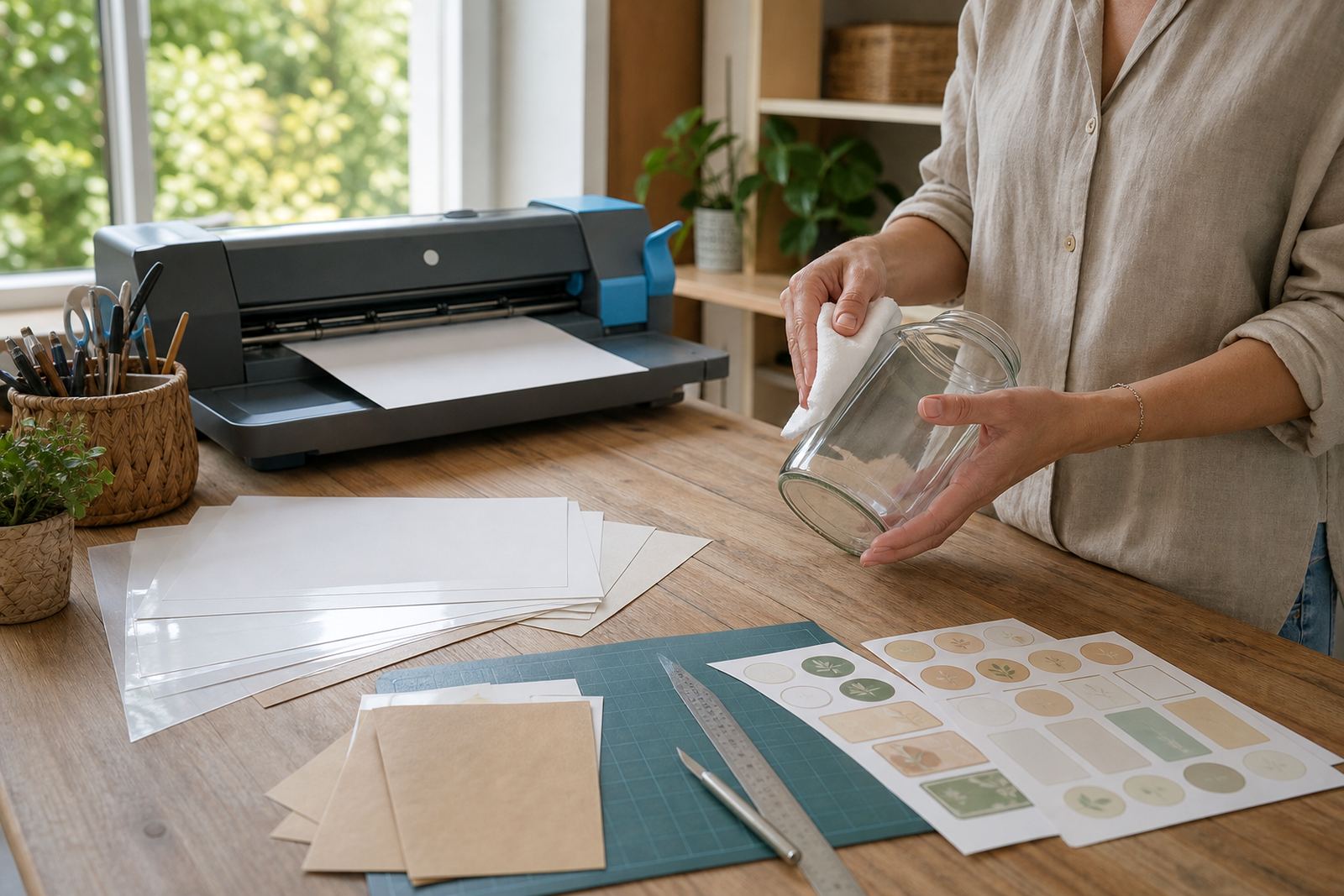
A kiss cut can be made by hand with a craft blade or by a cutter that follows a digital outline. Hand cutting suits simple shapes, square labels, and one-off jobs. A craft cutter is better when you need a stack of repeated shapes with cleaner edges and more consistency.
Whatever method you use, keep the blade sharp and avoid pressing so hard that the backing sheet is scored through. A light test cut near the edge helps you judge the pressure before you cut the whole page. That is especially useful when you are working with thinner sheets or small detailed shapes.
- Use a fresh blade for fine curves and corners
- Test one corner before cutting a full page
- Weed carefully so the sticker edge stays clean
- Store cut sheets flat to prevent curling
- Keep fingers off the print face while peeling
In a busy craft space in Bloemfontein, clean cutting saves time later because the labels separate neatly and do not tear at the edges. Small mistakes often happen when the pressure is too high or the mat is worn, so a steady setup matters more than speed.
Peeling, storing, and applying without rough edges
A good kiss cut should lift cleanly from the liner when you bend the backing sheet slightly. If the sticker edge lifts with the backing, the cut is too shallow. If the liner slices through, the cut is too deep and the sheet loses strength.
Keep sticker sheets flat, dry, and out of direct sun. Humid coastal air can make paper curl if it is left open, especially in summer around Cape Town and Durban. If the edges start to lift, place the sheets under a flat weight for a while and store them in a sleeve or file box.
When applying the sticker, clean the surface first and press from the centre outward. That helps avoid bubbles and trapped dust. A careful peel and placement gives a tidier result than trying to lift and reposition the sticker too many times.
A Durbanville example that makes the difference clear
A home organiser in Durbanville might print pantry labels on matte sticker paper, then kiss cut each label so the sheet stays together in a folder. The labels can be peeled one by one while the rest stay lined up, which is easier than loose die-cut pieces sliding around on the table.
If the same person later wants gift seals for jars, gloss or clear stock may suit better. If a batch is going to a market stall in Stellenbosch or Paarl, having each sheet held intact makes packing simpler and keeps the labels in order. That kind of practical handling is where kiss cut work earns its place.
StickerPaper works with crafters and home makers who need printable sticker paper that behaves properly in real use. Through the enquiry form on our contact page, the team can help with printer setting help, inkjet printing help, laser printing help, colour test help, smudge reduction help, paper jam help, craft cutter help, hand cutting help, clear sheet help, vinyl sheet help, sheet storage help, and sticker application help.