
Flat storage keeps the sheet surface ready for print
Printable sticker paper holds up best when the sheets stay flat from the day they arrive until the day you load them into a printer. If sheets curl at the corners or pick up moisture, the feed path can grab unevenly and the print can look less clean. A smooth stack also helps keep the adhesive layer steady, so the backing stays neat when you cut by hand or with a craft cutter.
For homes near the coast, especially around Cape Town, Durban and other humid areas, flat storage matters even more. Damp air can make paper edges lift a little and that small bend is often enough to affect cutting lines or cause a sheet to shift while feeding. A cupboard shelf, portfolio box or flat drawer gives the paper a better chance of staying ready for the next project.
Match the storage method to the finish you bought
Different sticker finishes respond differently to storage. Matte paper usually keeps a softer surface feel, but it can still mark if it rubs against rough cardboard or dusty shelves. Gloss sheets can show scuffs more clearly. Clear and vinyl sheets need extra care because fingerprints, bends and trapped grit show up fast once the backing comes off. Kraft-style sticker paper is more forgiving in appearance, though it still needs a dry flat place.
A sensible storage routine is easy to keep up with and does not need special gear.
- Keep unopened packs flat, not leaning against a wall.
- Place opened sheets back into their original sleeve or a clean folder.
- Keep them away from kitchens, windows and damp laundry rooms.
- Use a rigid board or portfolio if you move sheets around often.
If you work with mixed finishes, label the pack clearly so you do not mix matte with clear or vinyl when you are setting up a print run.
Inkjet and laser sheets need different storage habits
Inkjet-compatible sticker paper and laser-compatible sticker paper both prefer dry storage, but the reason matters. Inkjet sheets are more sensitive to moisture on the coating side, so a humid room can affect how the ink lands and dries. Laser-compatible sheets need to stay clean and flat too, because heat during printing makes any curl more obvious and can sometimes create feeding trouble.
When sheets stay straight, the printer is less likely to pull from one edge and leave the image slightly off-centre. That matters for labels, planners and small batch gifts where the print has to line up with cut marks. If a pack has been stored on a tiled floor or near a open window, let it settle in a dry room before use, especially after a rainy spell. A little patience there can save a ruined sheet or two, which is never fun.
Simple flat storage set-up for crafters at home
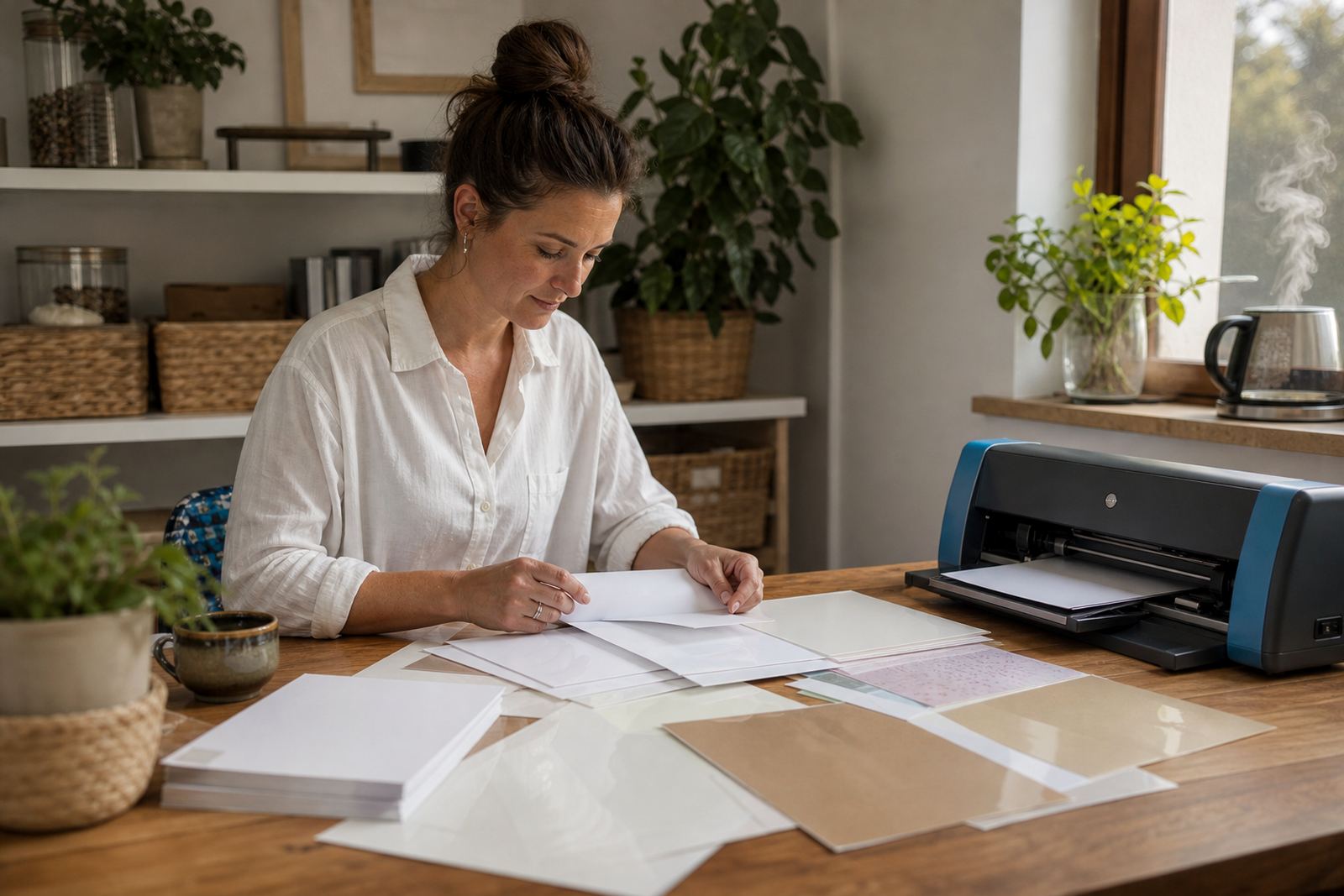
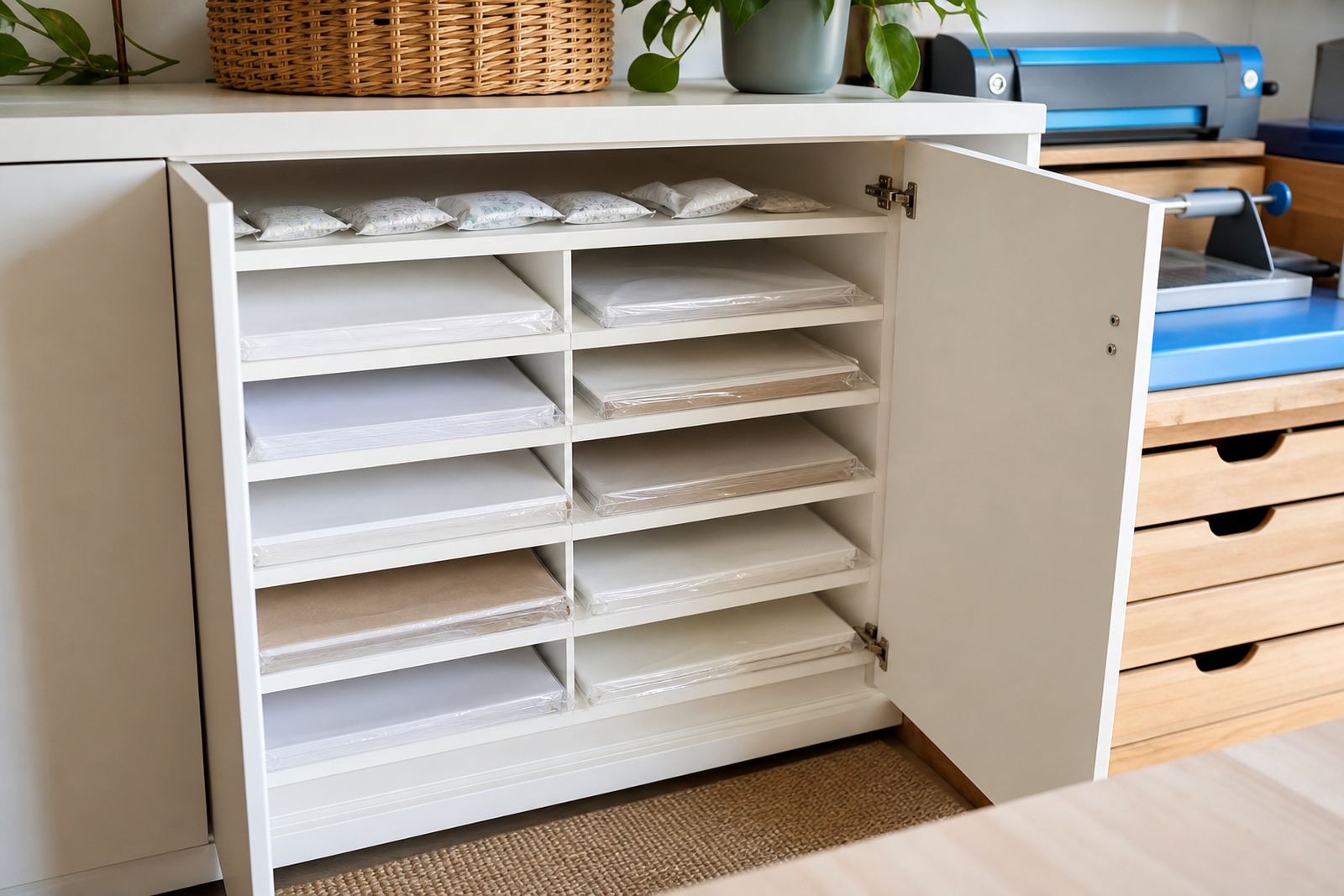
Most home makers do not need a fancy storage room. A dry cupboard, a flat drawer or a shallow box works well if the surface stays clean and the sheets do not take weight from other items. The main aim is to keep the paper supported from edge to edge. A bent corner today can turn into a curled sheet next week, and then the printer is doing extra work for no reason.
A practical set-up often includes a few small habits.
- Stack sheets the same way round every time.
- Keep cut scraps separate from full sheets.
- Store transparent sheets in sleeves so they do not scratch.
- Leave room in the box so the pack is not forced to curve.
In Durbanville, where many homes deal with warm afternoons and cooler evenings, the change in air can move paper a little. A closed cupboard gives steadier conditions than an open shelf in a garage or patio area.
When you cut by hand or with a craft cutter
Flat paper cuts better. When a sheet lies level, the blade follows the line more accurately and the corners stay crisp. Hand cutting also becomes easier because the ruler sits properly and the sheet does not slip against the table. If you use a craft cutter, a flat stack helps the feed rollers grip the sheet evenly, which is useful for smaller labels and repeated shapes.
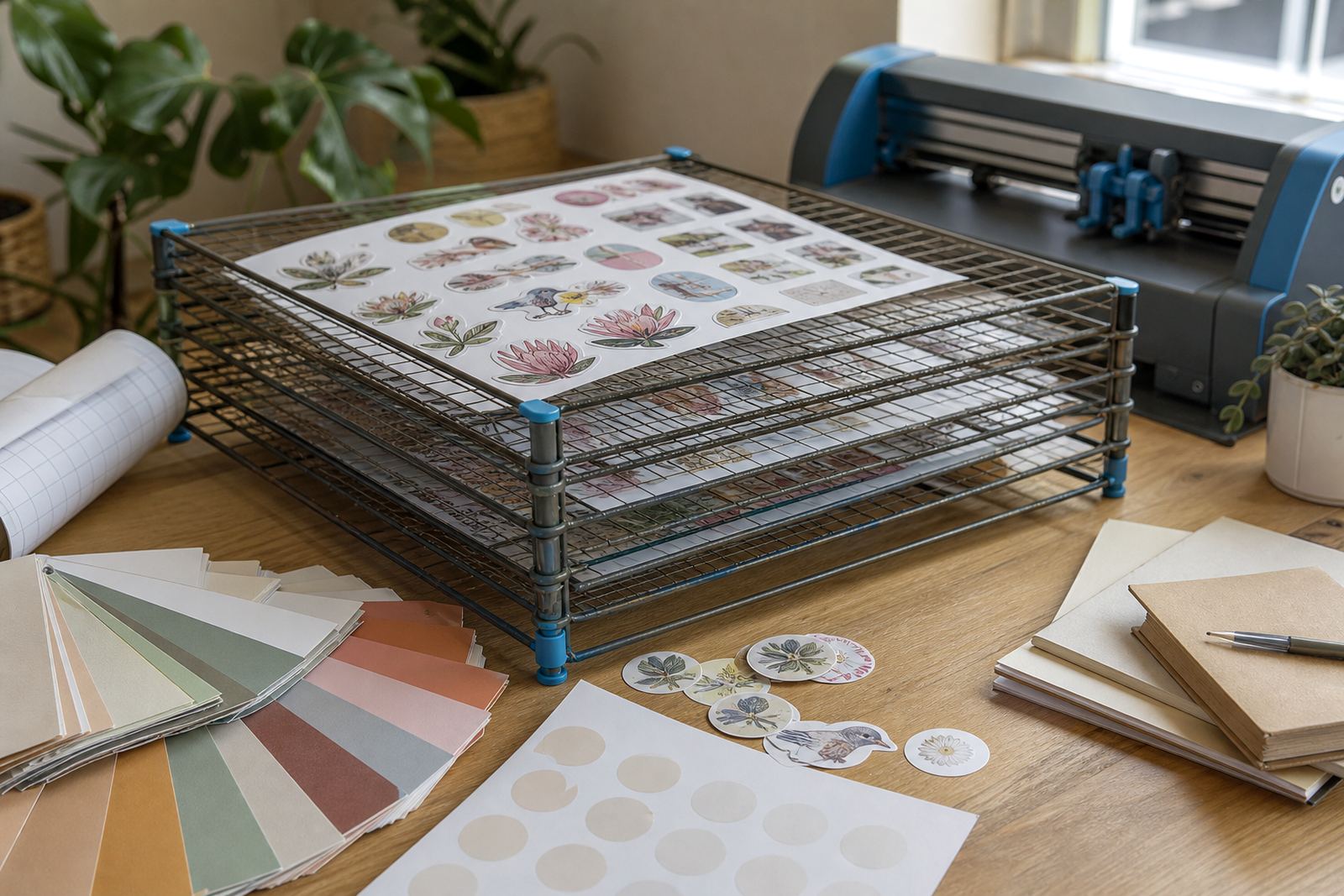
Care during storage also helps with weeded pieces and fine details. Clear and vinyl sticker paper can show tiny bends that make intricate cuts harder to lift cleanly. Matte sheets are more forgiving, but even those benefit from staying smooth. If you are doing a batch for pantry labels, gift jars or school files, check the sheet edges before you load it. A slight curl is often a sign to flatten the pack under a clean board for a while before printing.
A Durbanville example from a busy home studio
A home organiser in Durbanville might print labels on Thursday evening, then leave the remaining sheets for another project the following week. If those sheets are slid upright between books, the corners can start to lift and the stack can collect dust. Stored flat in a sleeve inside a cupboard, the same paper is easier to use later, with less trimming around the edges and fewer feeding issues in the printer.
That kind of setup suits busy households because it keeps things simple. There is no need for special treatment, just a dry flat place and a bit of order. For people working with school names, spice jars, party favours or craft gifts, good storage means the next print starts with paper that still behaves the way it should. The work feels calmer too, which always helps when the kitchen table is doing double duty.