
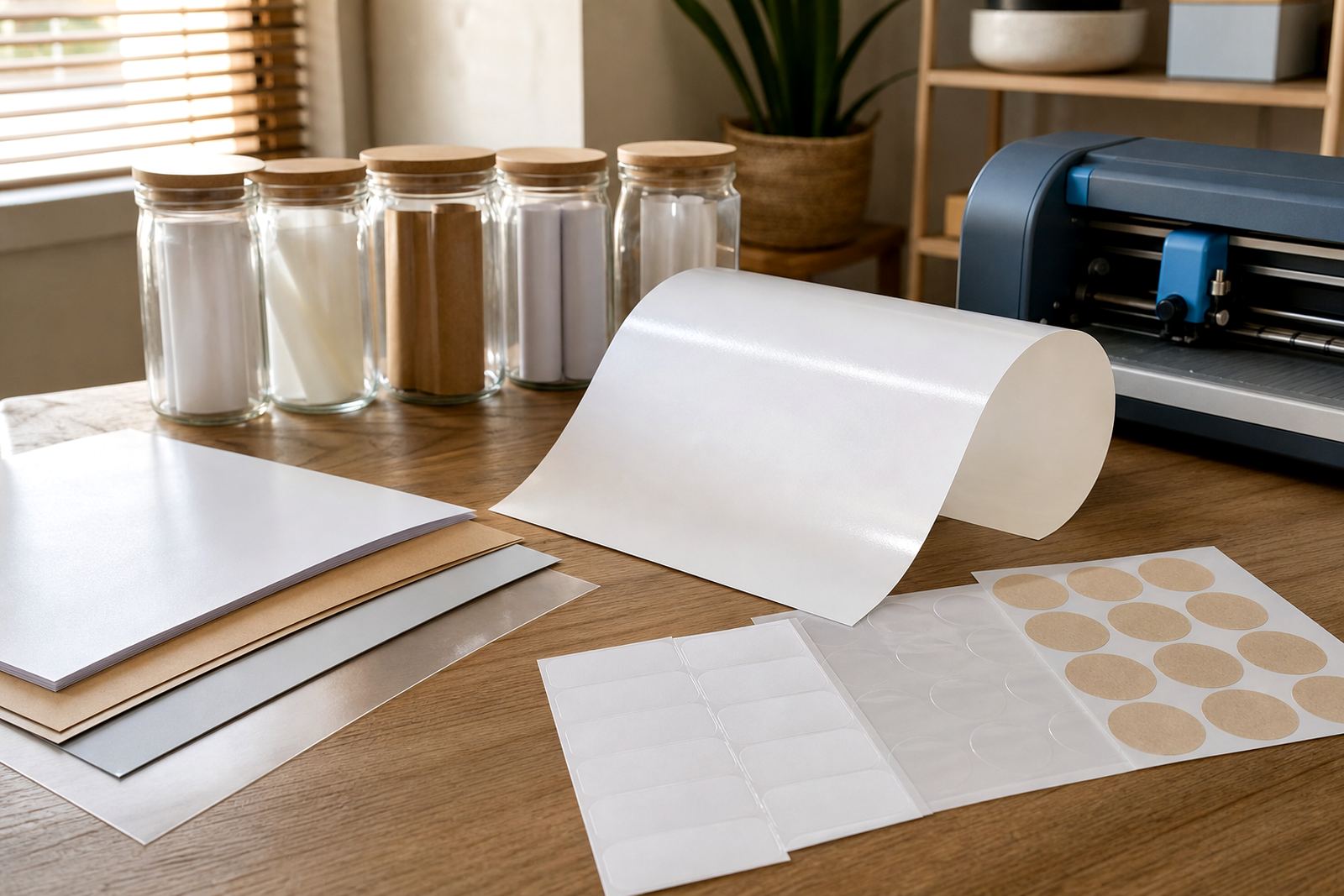
When a softer paper finish starts feeling too light
Not every project needs vinyl, but some jobs do better with a material that feels sturdier in the hand. If you are making labels for pantry jars, bath bottles, shipping pouches, plant pots or organiser boxes, vinyl sticker paper can give the finish a more durable, more settled feel than a plain paper label.
That matters when the label is going to be handled often or when the item sits in a busy space like a kitchen, classroom or stockroom. In Durbanville, where many homes and small makers work in shared spaces, a label that stays neat after repeated handling saves time and keeps the whole setup looking tidier.
Vinyl is also useful when you want the label to wrap smoothly around a curve. It has a little give in it, so it can sit better on round or slightly bent surfaces than rigid paper. That makes it a practical choice for jars, bottles and craft packaging that does not stay flat for long.
The vinyl finish when a project needs more body
Vinyl sticker paper is often picked for projects that need a stronger-feel material without moving into heavy industrial stock. It works well for home organisation, handmade products and branded parcels where the label should look neat and hold its shape. A good vinyl sheet feels more substantial, and that can change the whole impression of a project.
For makers working near the coast, a vinyl finish can also be helpful in humid conditions. Cape Town air can shift quickly, and in places closer to the sea moisture in the room may affect how paper behaves while it is being cut or stored. Vinyl is still not a miracle product, but it tends to handle everyday use more confidently than ordinary label paper.
- Good for jars, bottles and pantry containers
- Useful on curved or slightly uneven surfaces
- Better suited to frequent handling than light paper labels
- Handy for handmade packaging that must look tidy on arrival
- Helpful where a firmer feel matters more than a soft paper texture
Inkjet and laser printing on vinyl sheets
Vinyl sticker paper can work with inkjet or laser printing, but the right sheet must match the printer type. Inkjet sheets are made to receive liquid ink properly, while laser sheets must cope with heat from the printer process. Using the wrong type can lead to poor print quality, smudging or poor adhesion, and that is not something a busy home maker wants to wrestle with.
Before printing a full batch, it helps to do a small colour test first. Strong colours, dark blocks and fine text can behave differently on vinyl than on plain paper. A clean test sheet also helps you check how the edges sit after printing, especially if the design includes small borders or close-cut shapes.
- Match the sheet type to the printer type
- Run a colour test before using a full pack
- Check dry time on inkjet prints before handling
- Keep the paper flat while loading into the tray
- Use the printer settings recommended for label stock where possible
Cutting by hand or with a craft cutter
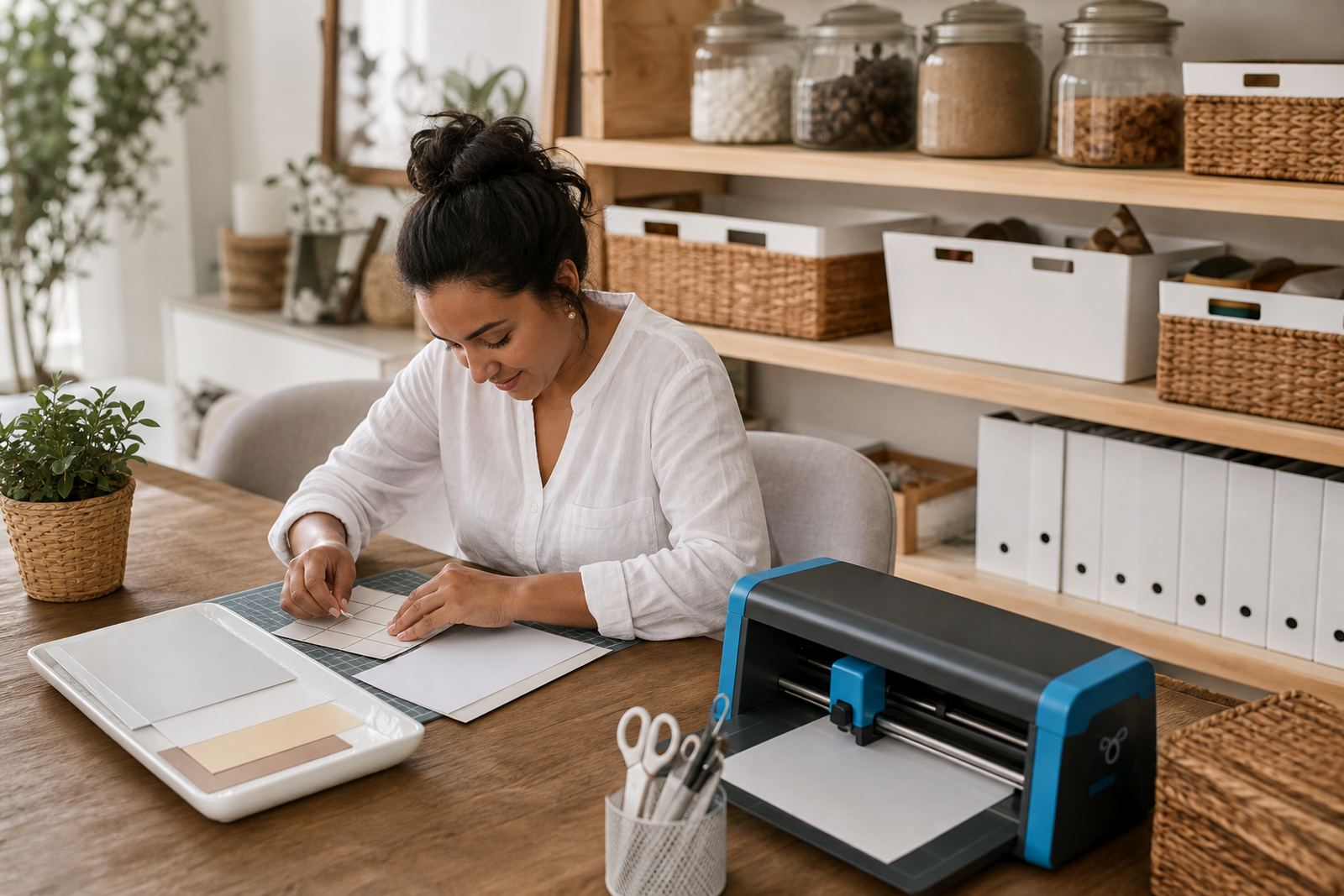
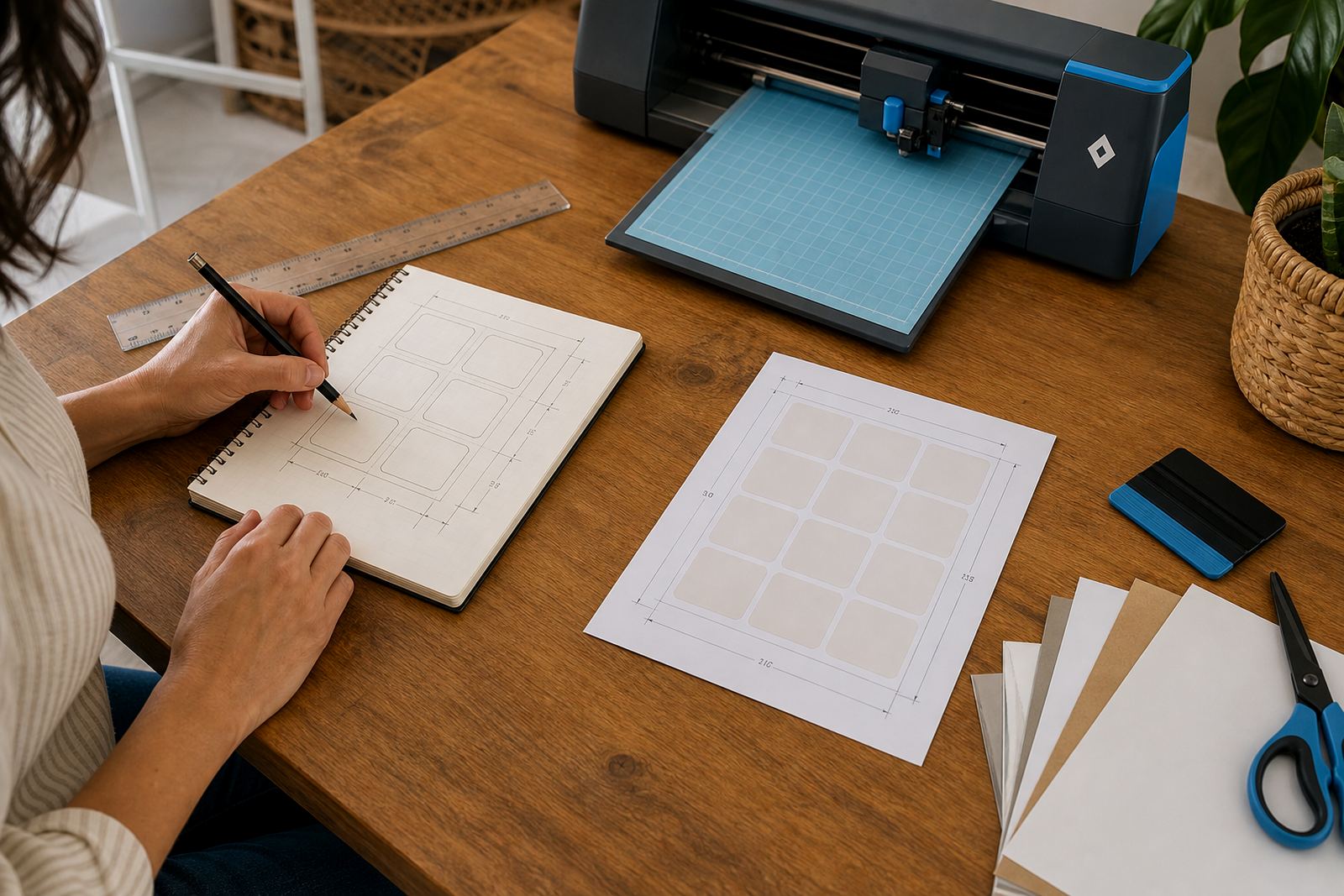
Vinyl can be cut by hand with scissors or a craft knife, and it can also work well in many craft cutters when the sheet size and backing suit the machine. For simple rectangular labels, hand cutting is usually quick enough. For circles, name labels and repeated shapes, a cutter saves a lot of time and gives a more even edge.
The main thing is to keep the sheet clean and avoid forcing a cut too deep. Too much pressure can lift the surface or score the backing. If you are working with a detailed design, a slower pass often gives a better result than trying to rush the job. That matters when you are making a batch of labels for gifts or storage tubs and every piece needs to match.
Some makers in Cape Town print at home and cut in the evening after the house is quieter. Others prepare labels for market stock on a kitchen table in Durban or Pretoria, where a small cutting mat and a steady ruler make all the difference. Vinyl rewards neat handling, but it does not need fancy tools to work well.
Sticker jobs where vinyl earns its keep
Vinyl sticker paper suits projects that need a label to hold up to regular use. It is often a good call for home organisers, labels on refill bottles, custom gift packs and product seals. The stronger feel of the material can also help when a label has to survive being moved from one container to another or touched during daily use.
It is also useful when the surface is not perfectly smooth. A bottle with a curve, a tin with a slight seam or a plastic tub with a gentle bend can be easier to label with vinyl than with thinner paper stock. The result is usually cleaner and less likely to lift at the edges.
- Pantry jars and kitchen containers
- Bathroom and laundry bottles
- Plant pots and seed packets
- Handmade gifts and hamper packaging
- Storage tubs, folders and organiser bins
- Small business labels for dispatch packs
Storing sheets so they stay ready for the next project
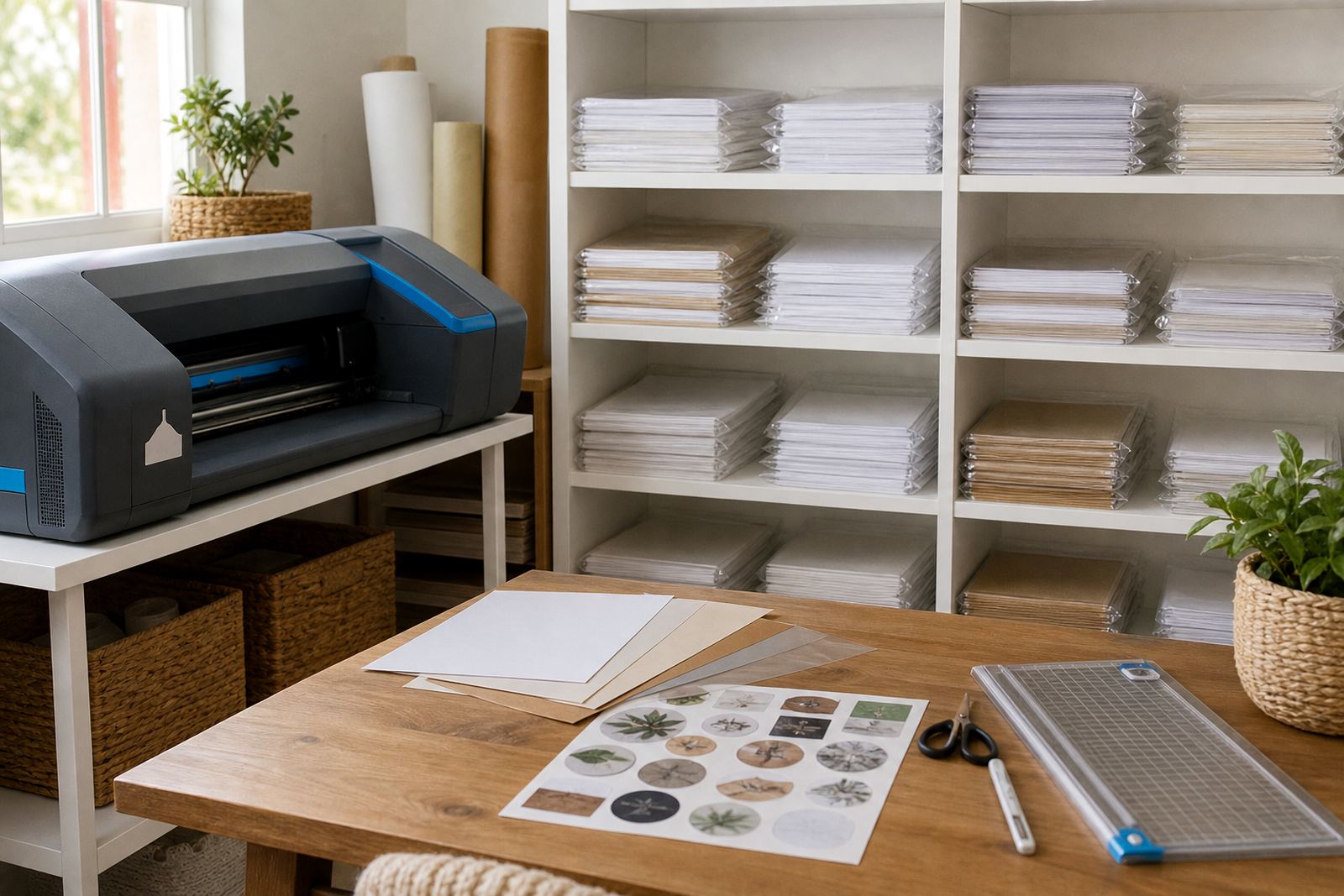
Vinyl sheets need sensible storage, especially in a coastal city where air can carry more moisture at certain times of the year. Keep them flat, away from dust and away from heavy bending. If a stack curls, it can catch in the printer tray or make trimming harder later on.
It also helps to leave the sheets in the room for a little while before printing so they are closer to the room temperature. Sudden shifts from a cool cupboard to a warmer work area can affect the way a sheet feeds. For makers in Bloemfontein or Pretoria, where indoor air can be very dry, the handling feel may be different but the same storage habits still help.
Good sheet care is not complicated. It is mostly about keeping the material flat, clean and sorted by type. That way, when you need a matte label for a spice jar or a clear vinyl sticker for a packaging seal, the right sheet is easy to reach and the print job starts without fuss.
A Durbanville example with a real home kitchen in mind
Think of a Durbanville home maker preparing a run of labels for honey jars, soup mixes and gift boxes for a school fundraiser. The jars will be handled by parents, packed into boxes and moved around before they reach the table. In that setting, a vinyl sticker paper label can make more sense than a light paper label because it handles touch better and feels more settled on the jar.
If the jars are round, the label can wrap more neatly. If the design needs a clean colour block, a suitable vinyl sheet can hold the print with good clarity. The result is not about looking flashy, it is about getting a label that looks tidy after real handling, real packing and a fair amount of movement from one person to the next.
That is where vinyl earns its place. It is the material you reach for when a project has to feel a bit tougher without becoming difficult to use. For many crafters and home organisers, that balance is exactly what makes the difference.