Soap bars need a label that keeps its shape
Soap wrap labels sit close to the product, so the finish matters as much as the print. Handmade bars are often wrapped in paper, tucked into boxes or tied with twine, and the label has to look tidy without slipping, curling or turning soggy from a humid bathroom shelf. In Durban, Cape Town and other coastal towns, that extra moisture in the air can show up fast, especially on packaging stored near a sink or on a market table.
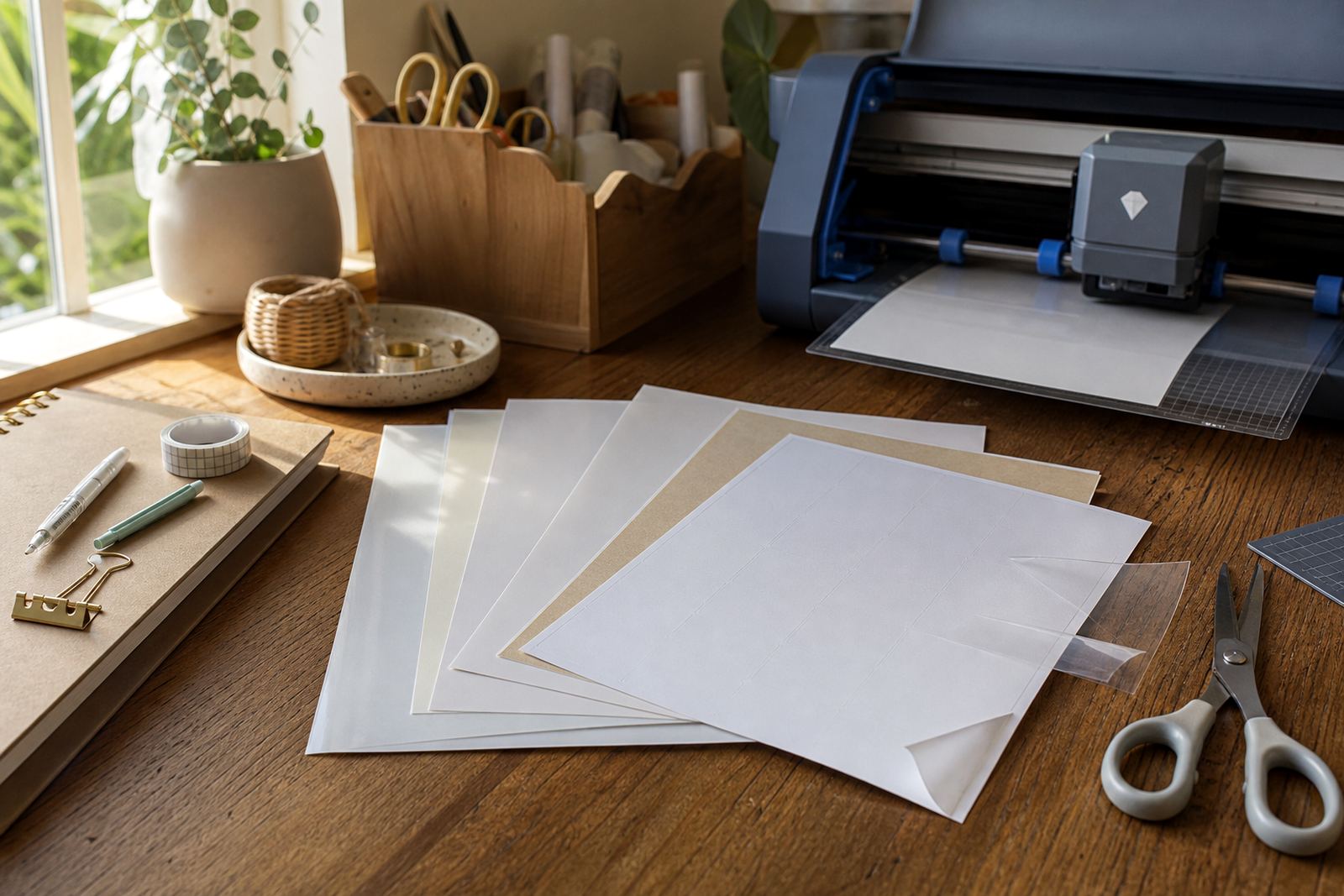
For soap makers, the label usually carries the name of the bar, ingredients, scent, weight and a short care note. Some makers keep it clean and plain, others use botanical artwork or a vintage look. The paper choice should match the tone of the soap. Matte gives a softer hand-made feel, gloss adds shine, and kraft suits earthy, natural packaging. Clear and vinyl can work for certain wraps too, although many soap makers prefer the warmer look of paper finishes.
The sticker paper types that suit handmade soap
Different finishes support different looks and handling needs. For soap wraps, the main choice comes down to appearance, print method and how much rubbing the label will take during packing and display. A label on a soap sleeve is not the same as one on a jar or bottle, so the surface has to suit folded paper and regular touching.
- Matte gives a calm, non-reflective finish and works well for herbal, unscented and farmhouse style soaps.
- Gloss suits brighter artwork, bold colour blocks and product names that need a sharper shine.
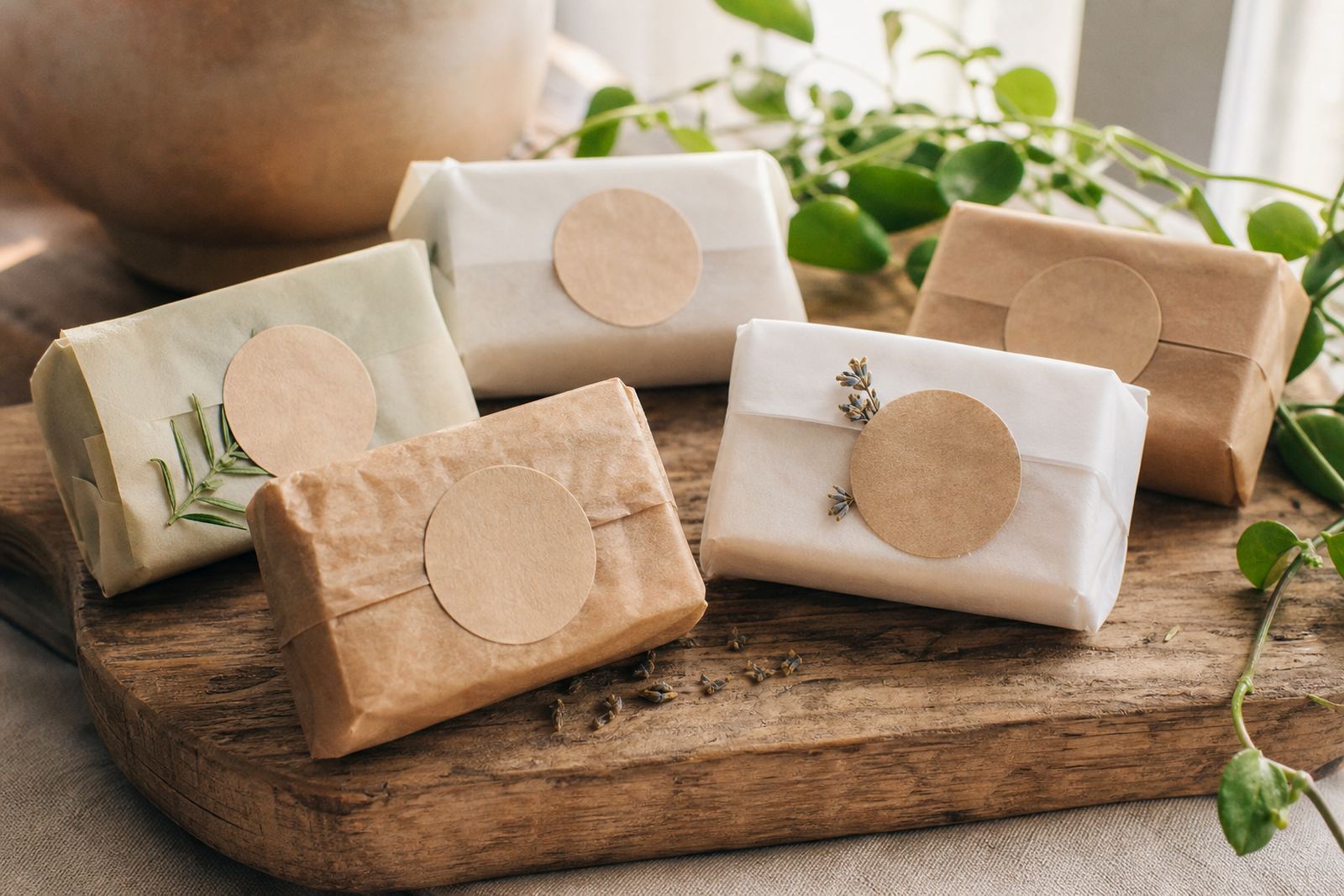
- Kraft pairs neatly with rustic wrap paper, neutral twine and simple black text.
- Clear works when the soap wrap itself should show through around the print area.
- Vinyl is useful where more handling is expected and the maker wants a tougher feel.
For most soap wrap jobs, matte and gloss are the easiest place to start. Kraft adds character, though dark print colours are usually easier to read than pale ones. Clear sheets need careful layout because any white space stays transparent, so the print has to be planned with that in mind.
Inkjet and laser setups used in soap packaging
Most soap wrap labels are printed on a home or small studio printer before being cut to size. Inkjet printers suit makers who print in small batches and want soft colour blends, floral art or watercolour style designs. Laser printers suit sharper text, finer line work and labels that need a more smudge resistant finish after printing. Either option can work well if the sticker paper matches the printer type.
When the print is going onto a soap wrap, the main job is to keep the wording crisp and the edges neat. A busy label with too much detail can start to feel cluttered once it is wrapped around a bar. Keep the layout simple enough to read at arm's length, and leave breathing room around the edges so the cut line does not crowd the design. That small bit of space makes a big difference.
- Set artwork with enough margin for trimming.
- Test colour on a small sheet before printing a full run.
- Let freshly printed sheets dry fully before cutting or packing.
- Store spare sheets flat in a dry cupboard or drawer.
Cutting the label to fit the wrap
Soap wrap labels are often trimmed into strips, rectangles, circles or small brand marks. Some makers cut by hand with a ruler and craft knife, while others use a craft cutter for repeat shapes and cleaner edges. A hand cut label can suit short runs and one-off gifts, but once the same size is needed for every bar, a cutter saves time and keeps the stack looking more even.
For wraps, the label should sit flat without pulling at the paper fold. A label that is too wide can bunch up near the seam, while one that is too narrow can look unfinished. Measure the finished wrap, not just the flat sheet, because the soap bar changes the way the paper sits. Keep that in mind when planning front panels, side marks and small ingredient labels. It avoids waste and a lot of re-cutting later on.
- Use a sharp blade or clean cutter mat for neat edges.
- Check the first few cuts before running a whole batch.
- Match the label size to the folded wrap, not only the bar size.
- Leave space for folded corners if the wrap is turned over.
Layout notes that help soap packaging look tidy
Soap packaging works best when the label reads in layers: brand, scent, key ingredients, weight and a short note. The eye should find the product name first, then the rest. If the design uses kraft paper, black and deep green text usually stands out well. On matte and gloss finishes, soft creams, navy, charcoal and warm earth tones stay readable without shouting from the shelf.
Small home makers often mix up label size and type size. A script font might look lovely on screen but turn unreadable on a 100 gram bar. Keep the fine print plain, keep the ingredient list direct, and avoid crowding too many icons into one panel. On soap wraps the label is doing practical work as well as decorative work, so too much detail can get in the way.
If a soap line has several scents, build one layout and change only the name, colour accent and ingredient line. That keeps the range organised and saves time when printing. It also helps when the soaps are packed for a market, an online order or a small gift box. A consistent label set looks orderly, even if the batch size changes from week to week.
Common mistakes that show up on soap labels
The most common issues are usually small, but they show on the shelf. Paper that is not suited to the printer can smear, especially on darker artwork. Labels that are cut too close to the edge can lift at the corners. Some makers also forget that soap wraps move around a little, so a design that looks centred on a flat sheet may sit off-line on the finished bar.
Humidity can also affect storage. In places like Durbanville, Cape Town and other coastal areas, paper left in a warm room can curl at the edges and pick up a faint wave. Keep spare sheets sealed until needed and avoid stacking them near steam, windows or damp walls. That small habit protects the finish and keeps the sheets easier to feed through the printer.
- Using the wrong paper for the printer.
- Printing a full run without a test sheet.
- Choosing fine text that is too small for the wrap.
- Cutting labels before the ink is fully set.
- Storing sheets where moisture can reach them.
What soap wrap labels usually cost in rand
For a small maker testing a few scents, the spend can stay fairly modest. A starter pack of printable sticker paper for soap wraps may sit in the low hundreds of Rand, while larger sheet packs for repeated production move into a few hundred Rand more. Matte and gloss usually suit the first batch well, while kraft is often chosen for a more handmade look without changing the whole packaging setup.
Budget also depends on how often the labels are printed and whether the soap line is seasonal or regular. A maker packing weekend market stock may only need a small quantity at a time, while someone supplying shops or gift boxes may prefer more sheets per order so the artwork stays consistent. If the design changes often, it helps to keep the label structure simple and the sheet size practical, so there is less waste from trimming and fewer off-cuts to store.
StickerPaper supplies printable sticker paper from Durbanville, Cape Town, with delivery across South Africa, including Cape Town, Johannesburg, Durban, Pretoria and Bloemfontein. For soap wrap labels, the team can help with printer setting help, inkjet printing help, laser printing help, colour test help, smudge reduction help, paper jam help, craft cutter help, hand cutting help, clear sheet help, vinyl sheet help, sheet storage help and sticker application help. The enquiry form on the contact page is the place to send the details for a soap label run.