
Tiny jars, busy shelves, and labels that stay legible
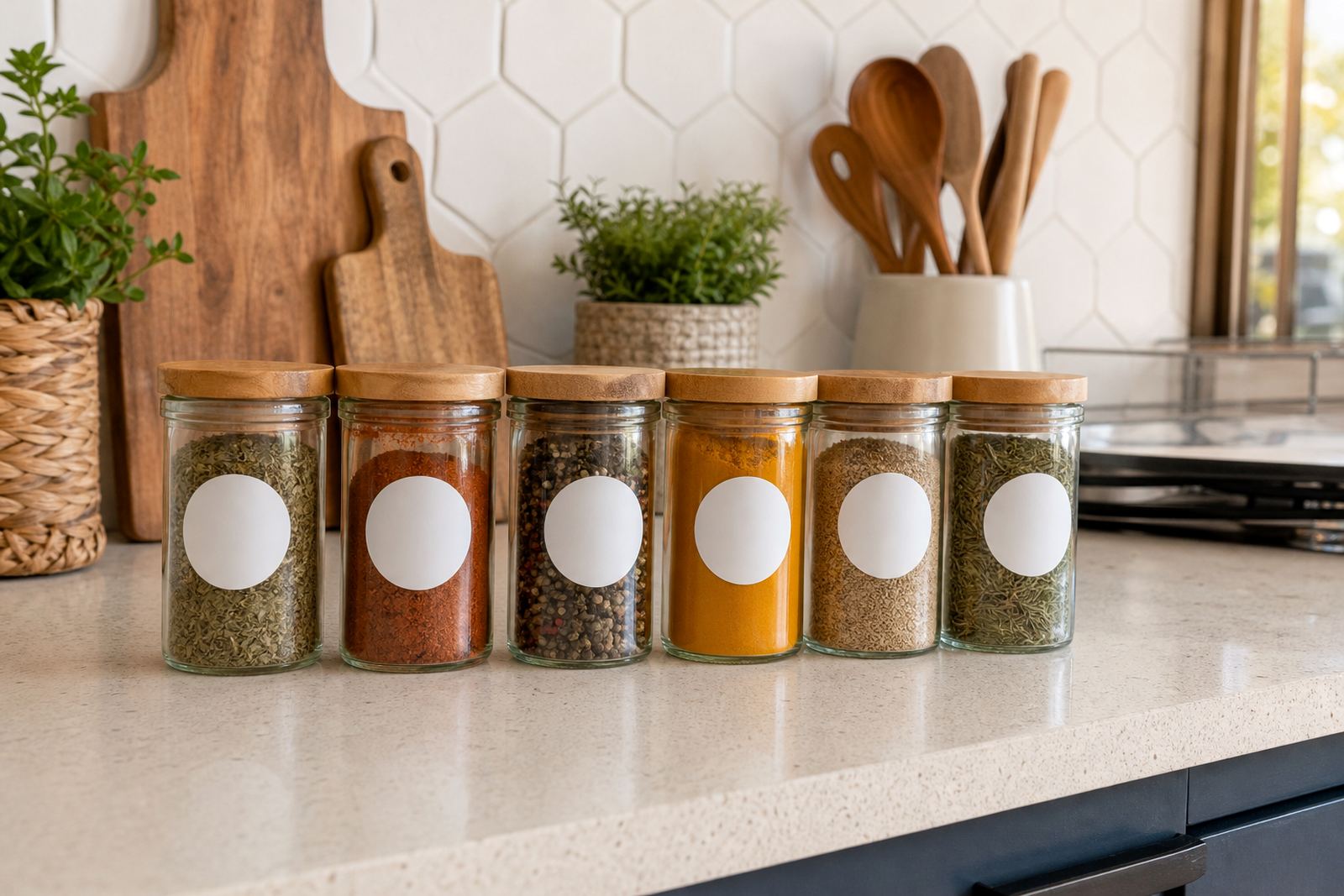
Spice jars are often small, curved and handled often, so the label has to do a lot of work in a tight space. Names should stay easy to read from arm’s length, and the edge of the sticker needs to sit flat so it does not lift when jars are wiped or stacked.
For spice labels, neat sizing matters more than decoration. A long ingredient name such as coriander seed or mixed herbs can crowd a narrow label, while a shorter name may need a balanced layout so the shelf looks orderly. In many kitchens the jars sit close together, which means consistent spacing between labels makes the whole set easier to scan.
Picking the right sheet finish for kitchen use
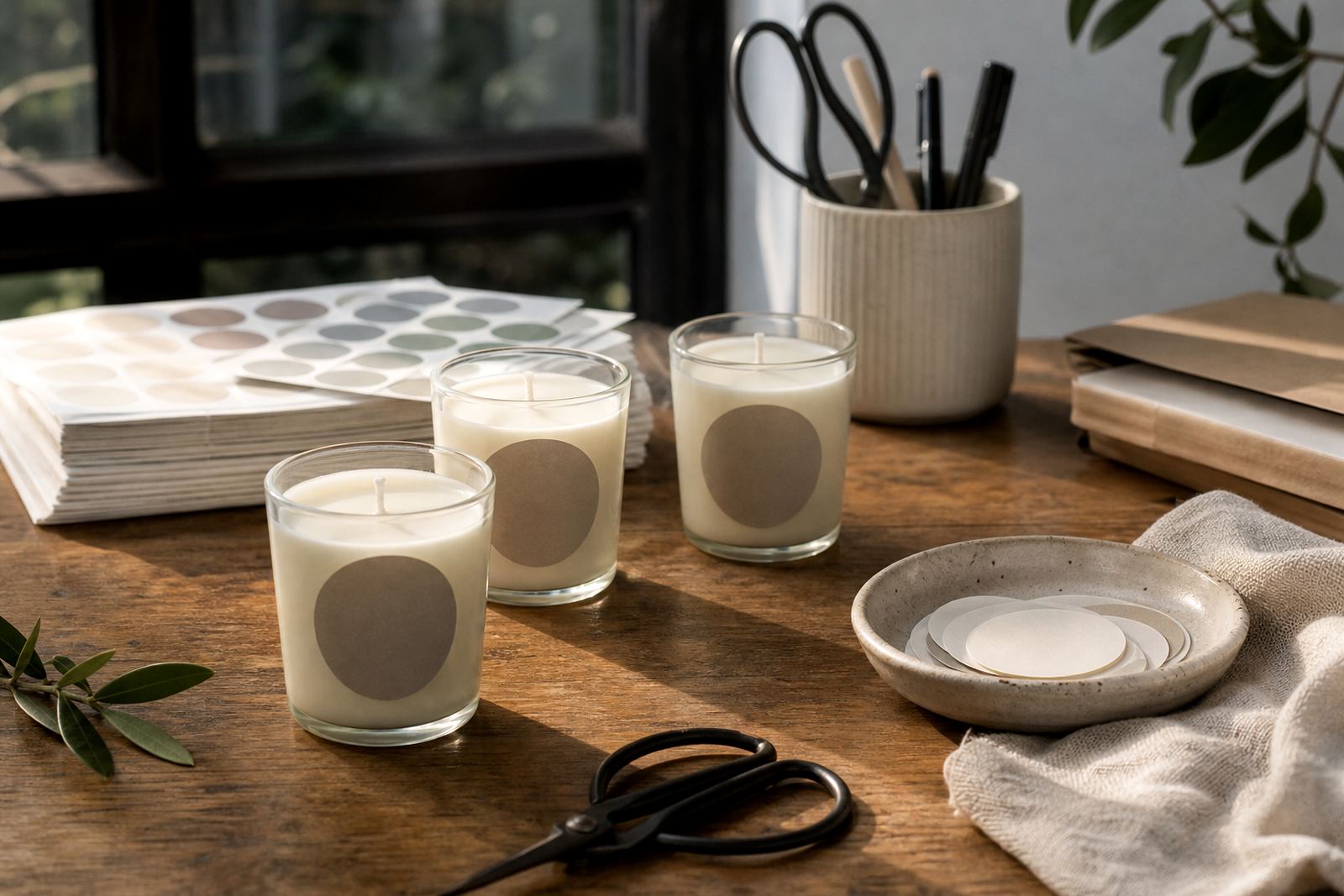
Printable sticker paper comes in several finishes, and the right one depends on how the jars are used. Matte gives a soft, low-glare look that reads well under bright kitchen lights. Gloss adds a sharper sheen and can suit colour coding or decorative pantry sets. Clear sheet options work well when you want the jar colour or the contents to show through the label edges.
Vinyl is useful where jars are washed or handled often, because it gives a tougher feel and usually sits well on curved glass or smooth plastic. Kraft suits a more natural pantry style, especially where hand-drawn icons or earthy tones are part of the design. For spice jar labels, the finish should match the cleaning routine and the look of the shelf, not just the artwork.
- Matte for easy reading and less glare
- Gloss for brighter colour and a polished look
- Clear for a see-through edge on glass jars
- Vinyl for more hardwearing handling
- Kraft for a natural, homely pantry style
Inkjet and laser printers both have a place
Some kitchens call for a small set of labels printed at home, while others need a larger batch for a full pantry set. Printable sheets for inkjet printers suit many crafters who want colour detail and softer artwork. Laser compatible sheets are often preferred where a sharper finish is needed and the print must feel dry as it leaves the machine.
It is worth matching the sheet to the printer before the job starts, because the wrong surface can affect the image, the feed path or the finish on the label. Clear sheets, matte labels and gloss sheets all behave differently through a printer, so the setting choice matters. If the design uses light type on a dark background, a test page can help show whether the small text still reads cleanly on the jar.
- Check whether the sheet is made for inkjet or laser use
- Use a colour test on the exact paper finish
- Allow the print to settle before trimming or applying
- Keep a spare sheet for layout changes or damaged prints
Layout choices for neat spice jar sets
A good spice label layout starts with the jar, not the artwork. Round jars often need a shorter text block, while square jars may allow a longer line or a stacked name. If the jars are stored in rows, keep the font weight and label width the same so the shelf reads as one set rather than a mix of styles.
Many home makers also add a small category marker, such as herbs, baking or seasoning, but the main name should remain the star. Small icons can help, yet too much detail on a tiny label can become muddy after printing. For best results, leave breathing room around the text and avoid filling every corner of the label with decoration. That little bit of empty space helps the jar look clean, even when the contents are busy.
- Use one label size across the full spice range
- Keep font sizes large enough to read quickly
- Leave margin space so the edges do not feel cramped
- Test the layout on one jar before printing the full set
Cutting by hand or with a craft cutter
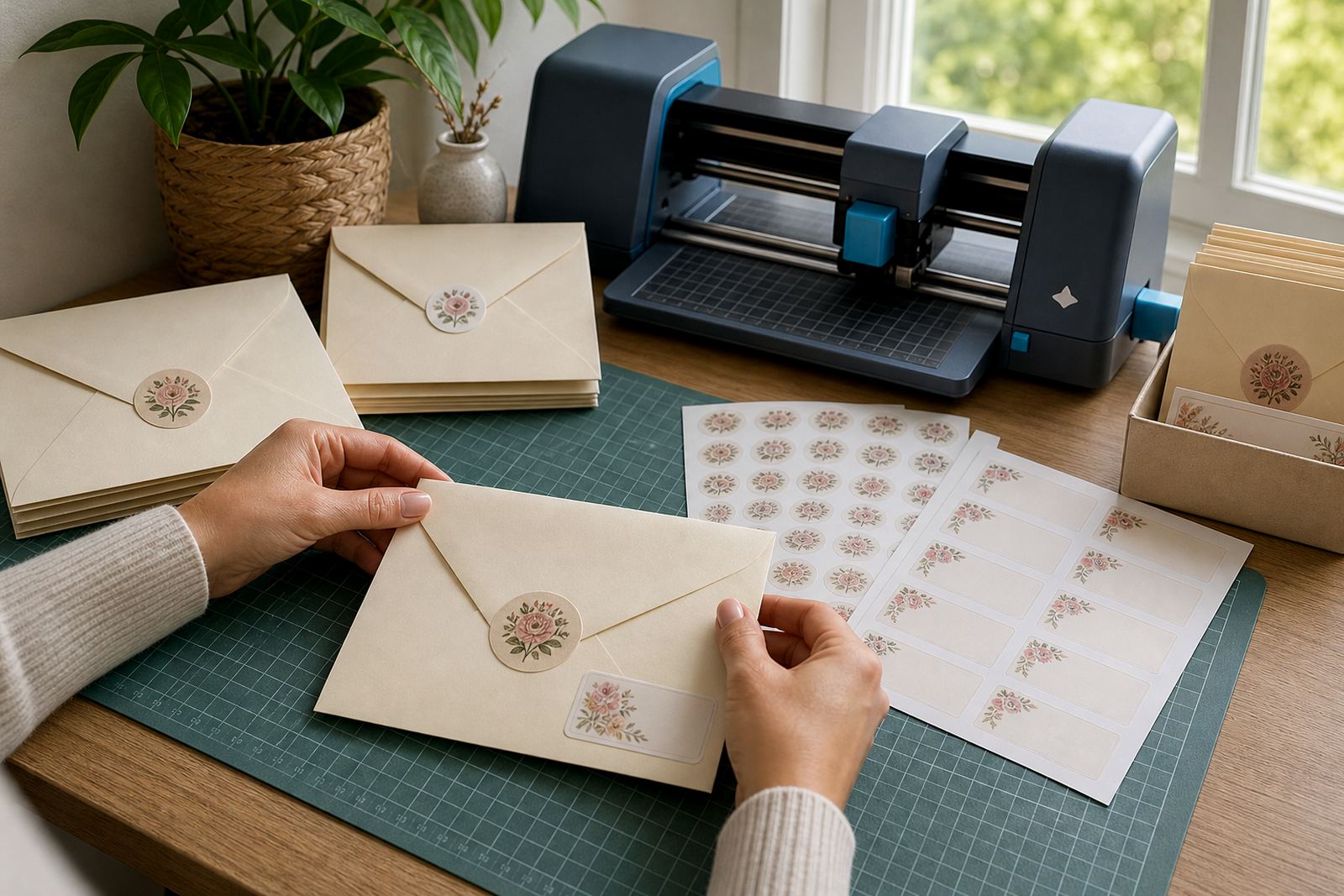
Spice jar labels can be cut by hand with a steady ruler, craft knife or scissors, and that works well for simple rectangles and circles. A craft cutter helps when you need repeated shapes, corners that match, or a full pantry run with the same size over and over. The important part is clean edges, because jagged cuts can lift earlier when a jar is handled a lot.
For curved jars, a slightly smaller label often looks tidier than a sheet that wraps too far around the bottle. Clear labels can be useful on glass, but they still need careful placement so no air pockets sit under the print. A dry, clean jar surface makes a bigger difference than many people expect, especially on glass that has been stored in a humid kitchen cupboard or near the stove.
Common slip-ups on spice jar projects
The most common problem is font size that looks fine on screen but becomes too small on a 4 cm jar. Another is choosing a paper finish that clashes with the kitchen light, so the label becomes hard to read when the jars sit on a shelf. Some people also print the full set before checking the jar diameter, then find the labels overlap seams or curl at the edge.
Humidity can also matter in Cape Town kitchens near the coast, and in homes where steam from cooking hangs in the air. Labels that are stored loose in a cupboard may pick up a slight curl before use, so flat storage helps keep sheets in better shape. If a jar is cleaned often, it is worth pressing the label down properly from the centre outward, then leaving it to settle before heavy handling.
Budget planning for a pantry set in Rand
For spice jar labels, the budget usually depends on sheet size, finish and how many jars need labelling. A small home project with a few sheets can stay modest, while a full pantry refresh needs more paper, more print attempts and sometimes a cutter for cleaner repetition. The price range also changes when you want a special finish such as clear or vinyl instead of a standard matte sheet.
As a broad guide, smaller label jobs may start in the low hundreds of Rand for paper and basic printing supplies, while fuller pantry sets can move into the mid hundreds or higher if you need more sheets, test prints and matching finishes across the full range. If the order is being used for a gift kitchen, a market stall or a home organising project, it helps to think in batches so the label sizes and layout stay consistent from the first jar to the last.
StickerPaper supplies printable sheets from Durbanville, Cape Town, with delivery across South Africa including Cape Town, Johannesburg, Durban, Pretoria and Bloemfontein. The team can help with printer setting guidance, hand cutting, craft cutter use, colour tests, smudge reduction, sheet storage and label application when a spice project needs a steadier finish.