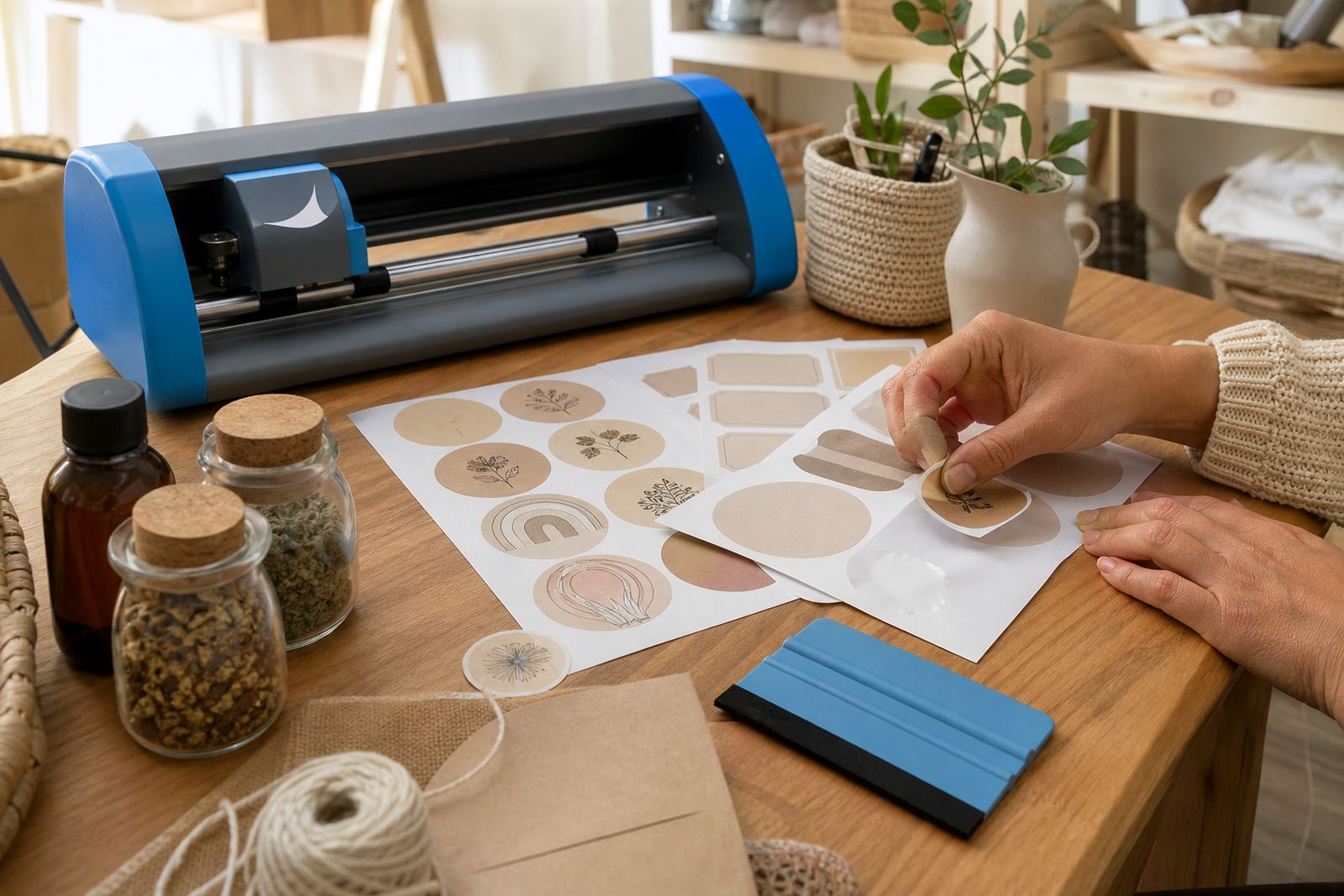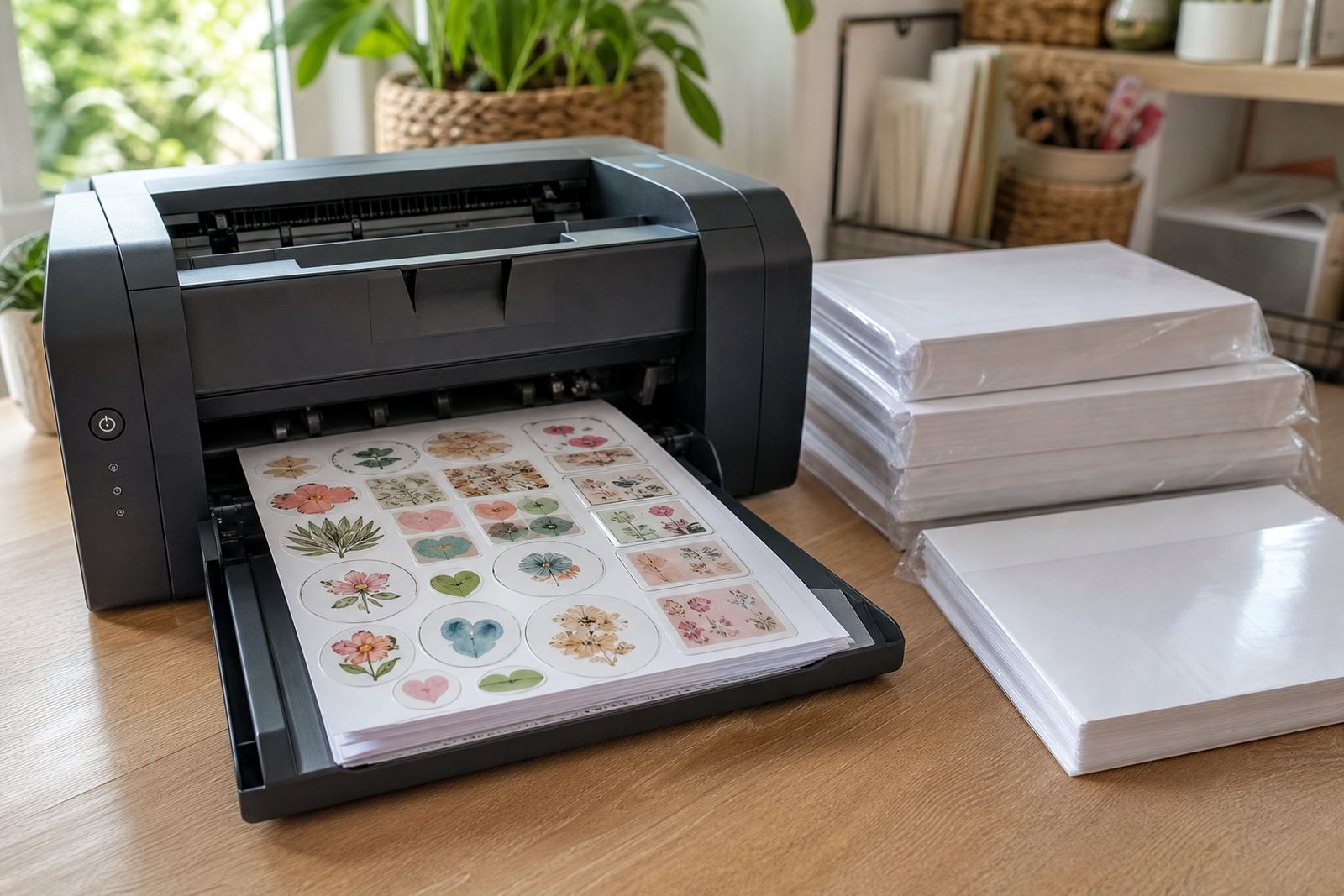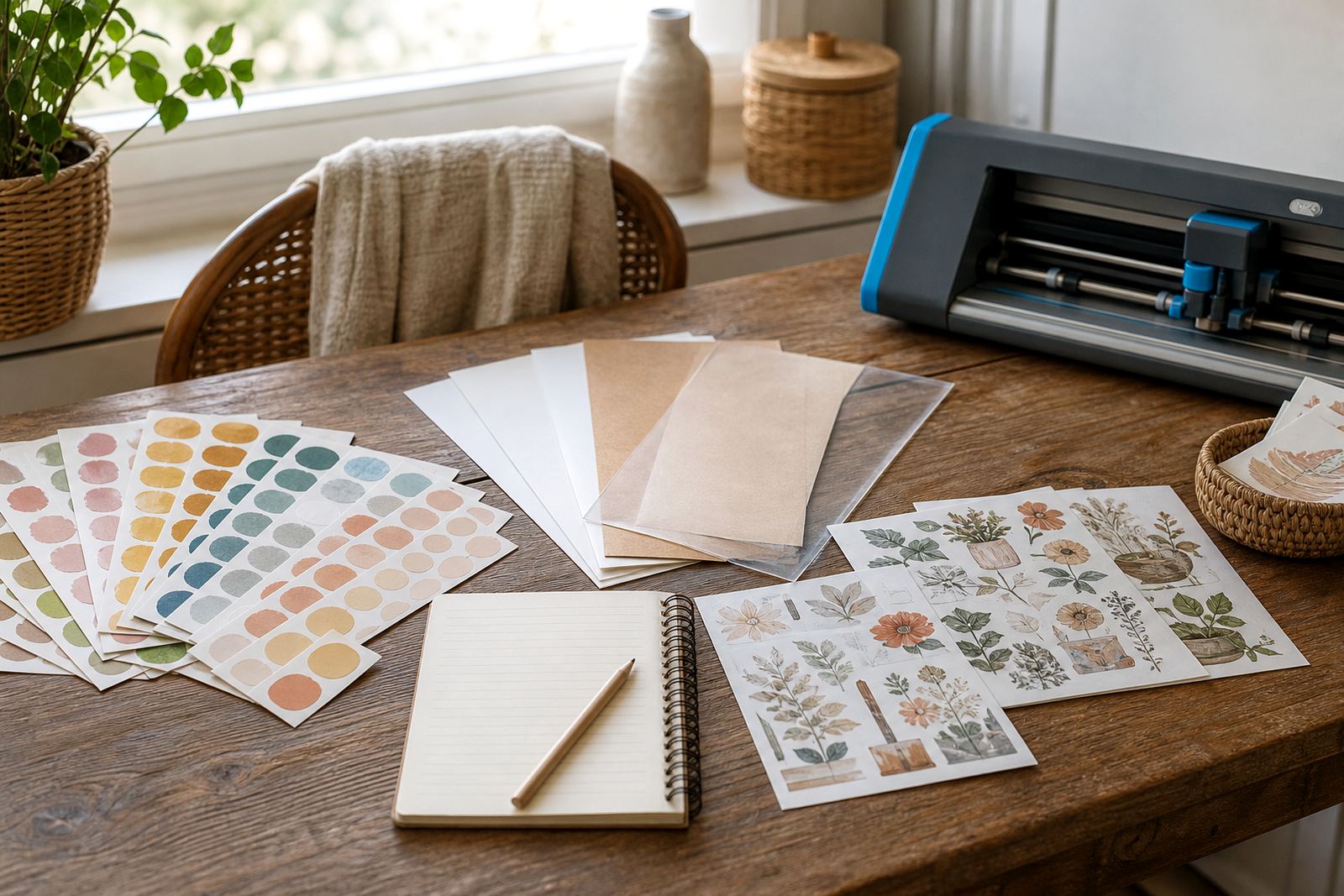

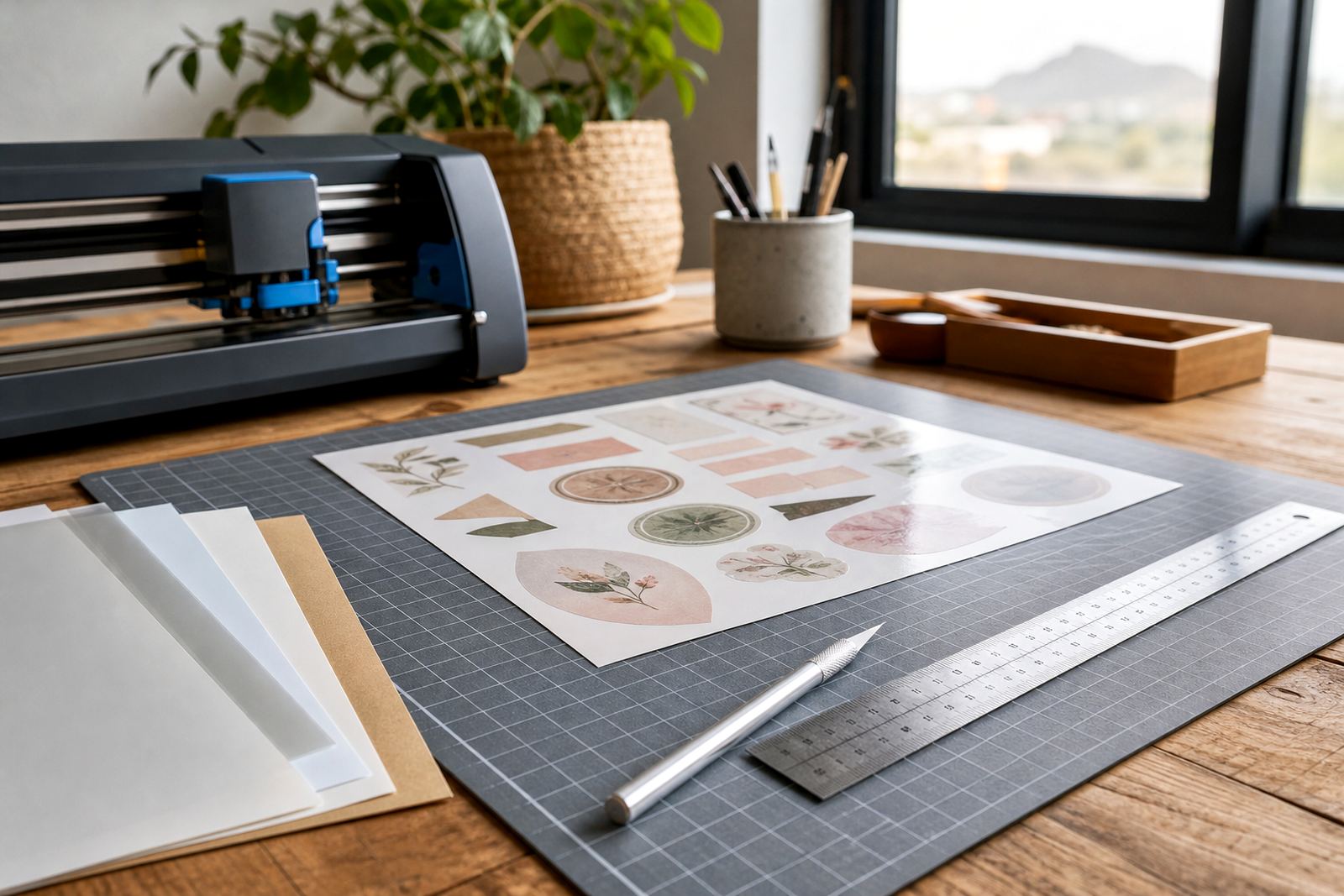
Neat edges for labels, gifts and home labels
Hand cutting help is useful when a project needs small batches, mixed shapes or pieces that do not suit a machine cut. We work with matte, gloss, clear, vinyl and kraft sticker paper, and we show the cleanest way to trim each finish without rough corners or lifted edges.
For Durbanville homes, Cape Town studios and makers across South Africa, the main goal is controlled cutting. That means choosing the right blade or scissors, keeping the sheet flat and allowing enough space around each design. A calm cutting setup saves paper and keeps edges tidy, especially on clear and gloss sheets where marks show quickly.
- Scissors for simple shapes and quick trims
- Craft knives for straight lines and inside cuts
- Metal rulers for crisp edges on labels
- Cutting mats to protect tables and keep the sheet steady
What the hand cutting help includes
This service covers practical guidance for cutting printable sticker paper by hand. We explain how to read the printed layout, leave safe margins and handle curved corners without fraying the sheet. If your stickers need a peeled edge, we also show how to leave enough backing around the design so removal stays tidy.
We deal with the small details that matter in real use. That includes blade pressure on vinyl, avoiding smudges on freshly printed sheets, and choosing a cutting method that suits the finish. Clear sheets and gloss stock need a lighter touch, while kraft and matte paper usually forgive a firmer hand. A little test strip helps, though it is often skipped when people rush the first cut.
- Guidance for straight, curved and irregular shapes
- Tips for keeping registration lines visible
- Help with trimming borders for labels and jars
- Advice on cutting multiple sheets in a safe stack
How the cutting process is handled
We begin with the print layout and the end use of the stickers. Some sheets are meant for pantry jars, others for school projects, gift tags or small business packaging. The shape and finish change the way the cut should be made, so the first step is to match the method to the paper.
Next, we suggest the tool and cutting order. Straight lines are easier if the ruler sits firm and the knife is kept sharp. Curves work better in short passes rather than one heavy sweep, and corners stay neater when they are approached slowly. If a sheet has a glossy surface, we keep fingerprints to a minimum because marks can show under light.
- Check the printed sheet for border space and alignment
- Choose scissors, knife or ruler based on the shape
- Cut in stages instead of forcing one deep pass
- Lift finished pieces carefully so edges do not curl
On busy tables, patience matters more than speed. A rushed cut can bruise the adhesive edge or leave a crooked line that shows up on the finished label.
Paper types and cut behaviour
Matte sticker paper is the easiest for hand cutting because it shows less glare and allows a clear view of the line. Gloss sheets reflect more light, so a sharp blade and good angle help. Clear sticker paper needs steady hands because the cut line can be harder to see, while vinyl sheets need a firmer stroke and a clean surface under the mat. Kraft stock gives a natural look and cuts well for rustic labels, seed packets and home organiser sets.
Inkjet and laser compatible sheets are handled with the same care once printed, but the print finish can change how the edge appears. Ink density, dry time and the type of artwork all play a part. If a sheet is still tacky, the blade can drag colour or leave a faint trail. That is worth watching on darker prints and full colour label runs, especially in humid Cape Town weather.
- Matte for easy visibility and soft finish
- Gloss for bright labels and a polished look
- Clear for see-through effects on bottles and jars
- Vinyl for tougher handling and longer wear
- Kraft for natural, earthy projects
Turnaround and job handling
Hand cutting help is handled as a support service, not a rush task. The time it takes depends on the sheet size, the number of shapes and how detailed the design is. A small batch of simple labels is quicker to guide than a full sheet of tiny icons or curved lettering. We keep the process practical and straight forward, with the aim of reducing waste and avoiding reprints.
For clients in Durbanville, Cape Town, Johannesburg, Durban, Pretoria, Bloemfontein, Stellenbosch and Paarl, the service is arranged around the order details and the chosen paper type. When the sheet size or artwork needs a careful cut plan, we account for that before the work begins. That helps the final pieces stay neat and usable.
- Simple shapes take less handling
- Detailed cuts need more spacing and patience
- Large sheets may need staged trimming
- Mixed batches are planned by paper finish and shape
We do not force one method onto every sheet. A small label run and a decorative gift set need different handling, and the cut plan should match the job.
Pricing approach for cutting support
Pricing for hand cutting help is shaped by the amount of labour involved, the type of paper and the complexity of the shapes. Straight trims, label strips and simple squares sit in a lighter bracket than intricate curves or lots of tiny pieces. Sheets that need extra care on clear or gloss stock may also take more handling time.
We keep the pricing approach practical and easy to follow. The key factors are sheet count, detail level, paper finish and whether the job includes advice for a first print test. If a project needs careful blade work or repeated alignment checks, that is worked into the quote rather than hidden later. It keeps things fair for crafters and home makers who want proper results without wasted stock.
- Sheet count and sheet size
- Level of detail in the cut line
- Finish type, including matte and gloss
- Extra handling for clear or vinyl sheets
Aftercare for cut stickers and labels
After the cut, the stickers should be stored flat in a dry place and kept away from direct sunlight while they are waiting to be used. Freshly trimmed sheets should not be bent at the corners because the edges can lift, especially on vinyl and clear stock. If a piece curls slightly, flatten it under a clean book or board for a short while.
For application, the surface should be clean and dry before the sticker goes on. A little pressure from the centre outward helps reduce air pockets. On jars, tins and storage tubs, start at one edge and smooth slowly so the label sits true. If a printed edge lifts after handling, press it down with a clean cloth and check that the base surface was wiped properly first.
- Store flat in a cool dry place
- Avoid folding fresh cuts at the corners
- Apply to clean, dry surfaces only
- Use steady pressure when placing labels
Hand cutting works best when the paper, the tool and the surface all match the task. That is what keeps the finish tidy from the first trim to the final placement.
Key facts
| Supported finishes | Matte, gloss, clear, vinyl and kraft |
|---|---|
| Printer compatibility | Inkjet and laser compatible sticker paper |
| Cutting tools | Scissors, craft knives and metal rulers |
| Best uses | Labels, gifts, organisers and short runs |
| Sheet handling | Flat cutting on a mat with clean alignment |
| Delivery areas | Cape Town, Johannesburg, Durban, Pretoria and Bloemfontein |