
Vinyl Sheets for Labels, Gifts and Busy Household Jobs
Vinyl sheets suit labels, jars, folders, wall decals, gift tags, and short-run personal projects where the finish must feel neat in the hand. They are useful for Durbanville homes that pack pantry goods, organisers, school items, and handmade goods for markets or family gifting. The material sits flatter than many ordinary papers and handles a little flex during cutting and transfer, which helps when the sheet is moved around a table or mat.
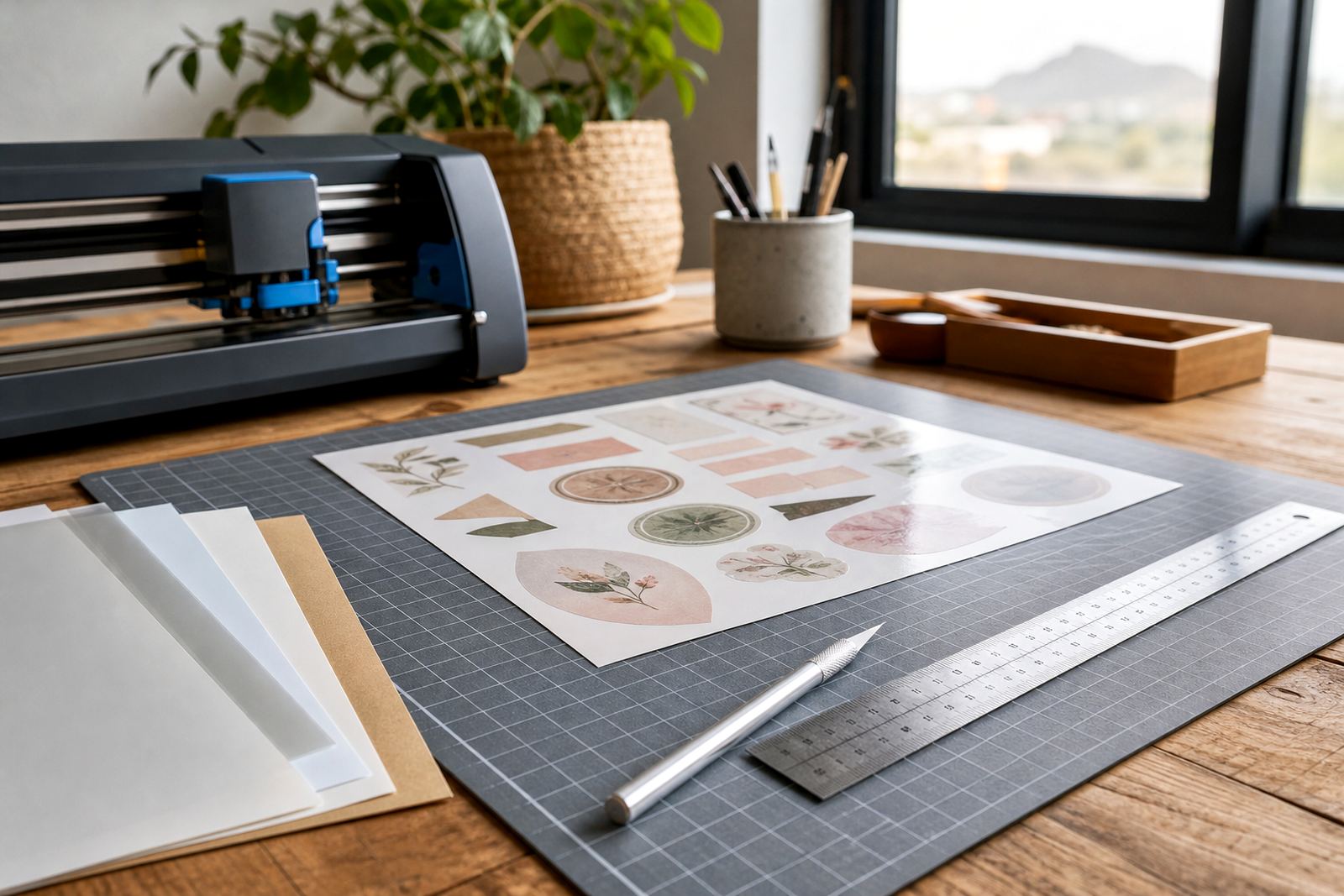
We work with printable vinyl in practical sheet sizes for benchtop printers and craft cutters. Matte vinyl gives a softer look and is easier to photograph under indoor light, while gloss vinyl gives sharper shine on bright labels and decorative pieces. Clear vinyl suits layered labels and see-through containers, and kraft-look options work well for rustic tags or stationery sets. For customers near Cape Town, Johannesburg, Durban, Pretoria and Bloemfontein, the same sheet choice can feel very different once it reaches a humid kitchen, a cool study, or a storeroom near the coast.
Inkjet and Laser Use Without Guesswork
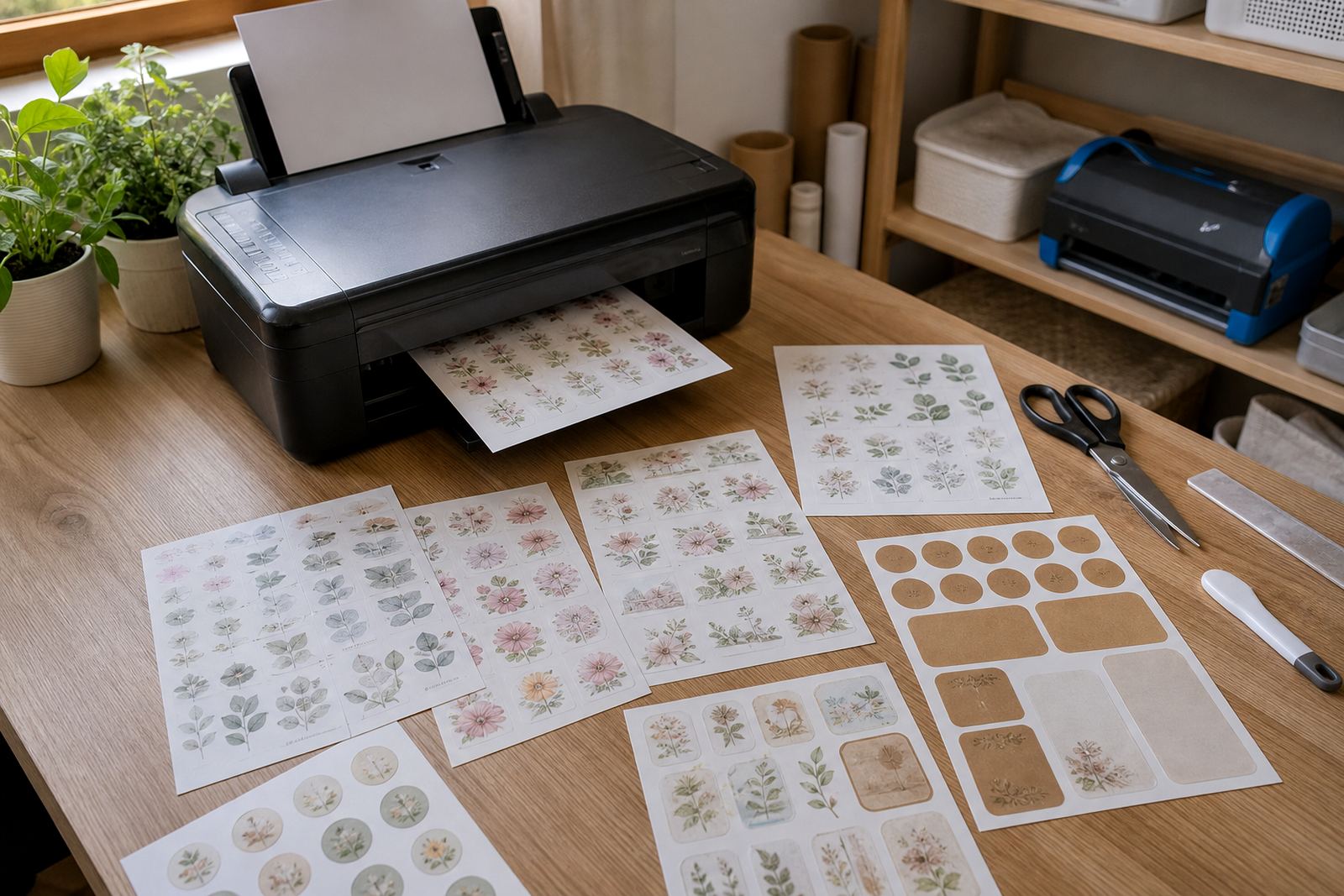
Vinyl sheet help usually starts with printer compatibility, because the wrong sheet for the wrong printer can waste a neat stack of material. Some vinyl sheets are made for inkjet printers, where the ink sits on the coating and needs a little more drying time before handling. Other sheets are made for laser printers, where heat and toner behave differently and the sheet must tolerate that process safely.
- Inkjet sheets are common for home printing and photo-style labels.
- Laser sheets suit toner output and sharper text-heavy layouts.
- Clear sheets need careful colour planning, because white areas stay see-through.
- Gloss surfaces show fingerprints more easily than matte surfaces.
- Kraft-look vinyl gives a warmer finish, but colours print differently on it.
For mixed home use, it helps to keep the job simple. Test one sheet first, check the print orientation, and let the print settle before cutting. Smudge reduction matters on rich colours, especially where labels are handled after printing. That is useful in kitchens, laundry rooms and home offices where the sheet may be moved around before application.
Cutting by Hand or With a Craft Cutter
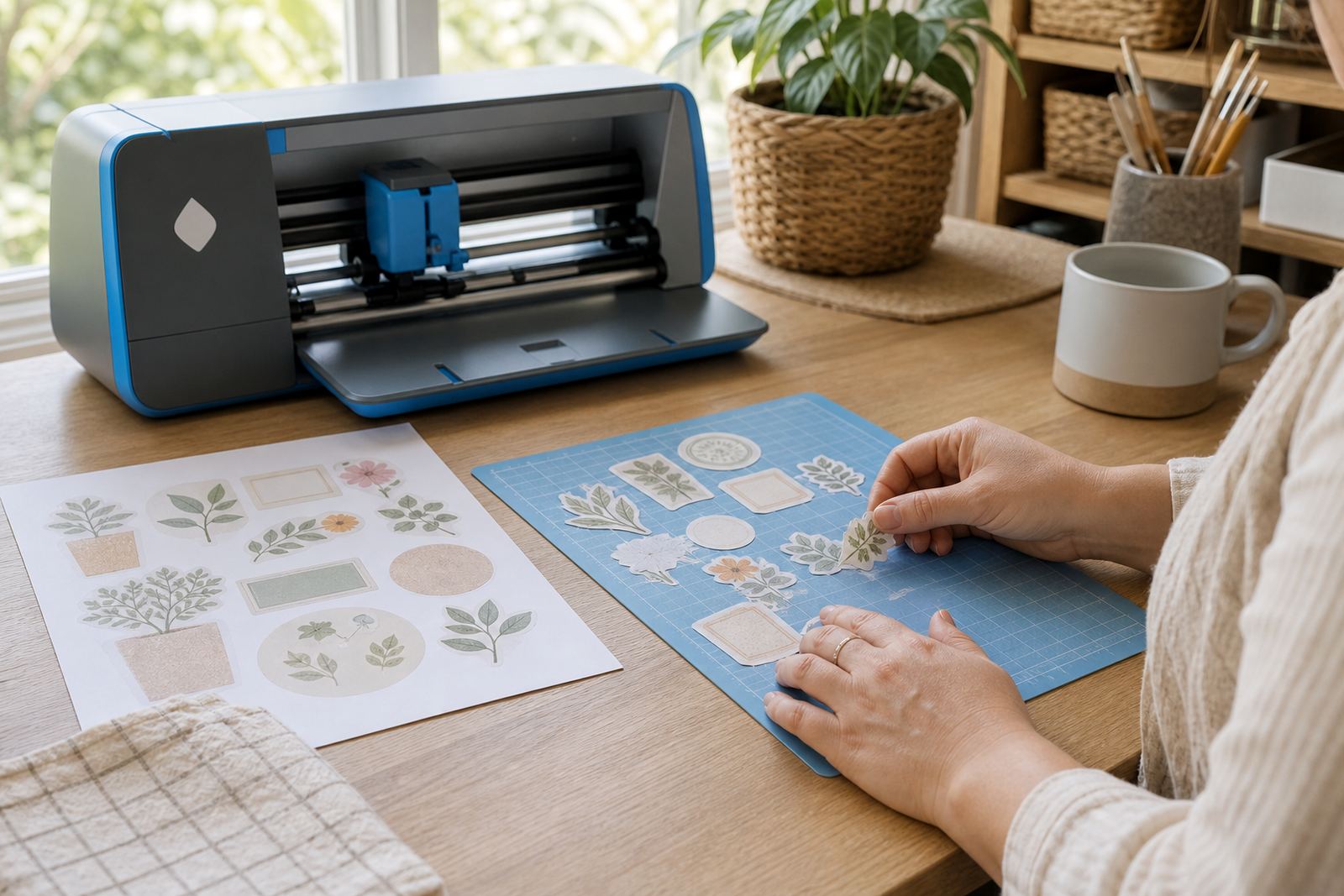
Vinyl can be trimmed with scissors, a craft knife, or a benchtop cutter, depending on the shape and number of pieces. Straight cuts for storage labels or packaging inserts are easy to manage by hand, while small icons, rounded corners and repeated shapes usually behave better on a craft cutter. For detailed work, a clean mat and a sharp blade help the sheet feed evenly and reduce tearing at the edges.
We usually guide customers to keep spacing generous between labels, because close layouts can make weeding and trimming more difficult. A cutter can handle detailed outlines, but the cut depth still needs to suit the vinyl thickness and the backing sheet. Too much pressure can mark the liner, while too little leaves edges hanging. If a project uses a glossy sheet, the blade can drag more than expected, so a slow test cut is worth doing before the full run.
- Use a fresh blade for fine shapes and tiny lettering.
- Keep the cutting mat clean so the sheet grips evenly.
- Leave a safe border around printed artwork.
- Check corner lifts before removing the first label.
Application Care for Cleaner Results
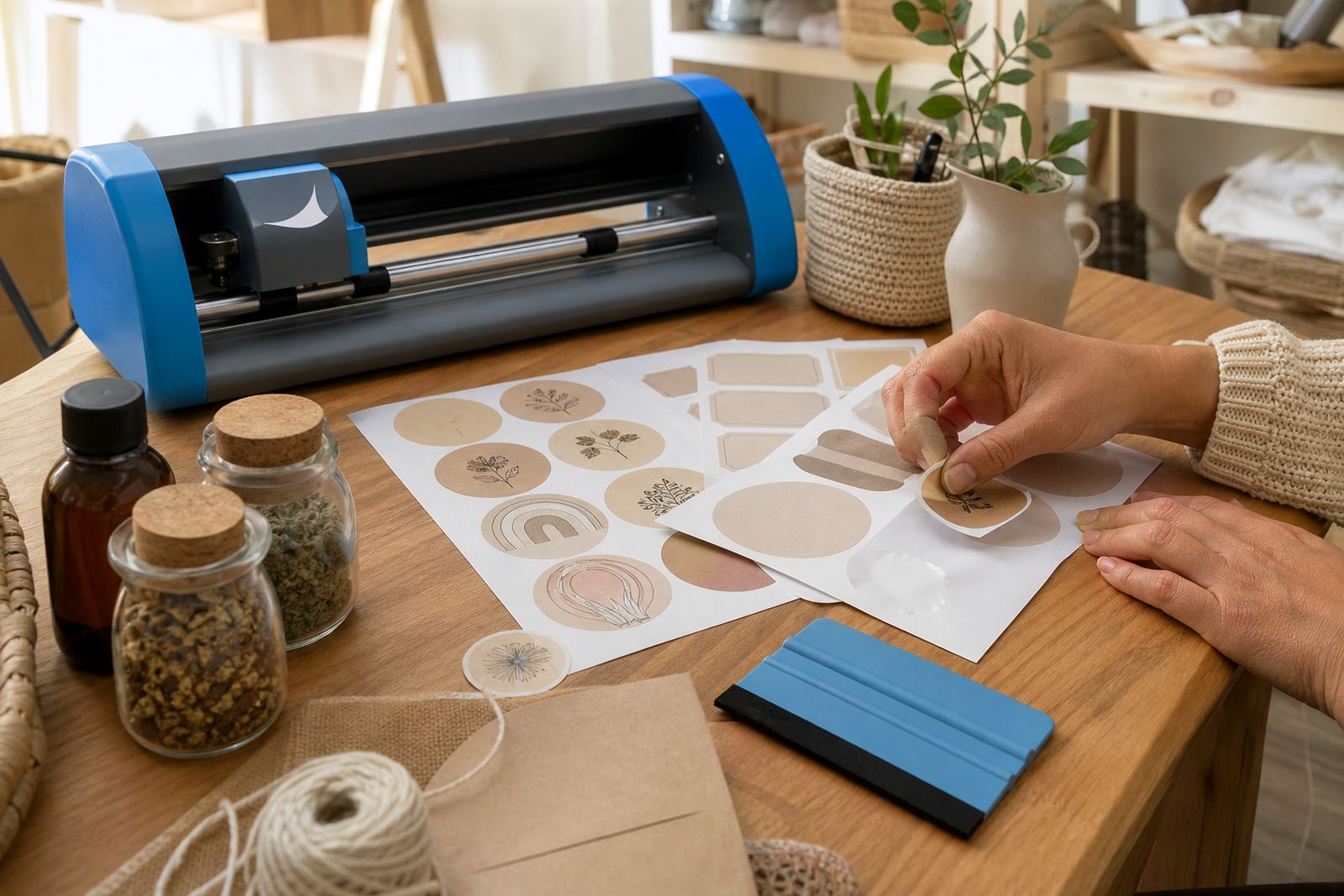
Application care starts with a clean, dry surface. Dust, oil and moisture can interfere with the bond, especially on smooth containers and painted household items. Press each piece from the centre outward, then smooth the edges with steady pressure. On curved jars or tins, smaller labels often settle better than one large sheet, because the material can follow the shape more easily.
Vinyl behaves differently on glass, plastic, coated cardboard and metal. In a kitchen with coastal humidity, the surface should be wiped and fully dry before application, otherwise the edges may lift sooner than expected. On items that are handled often, a gentle thumb press around the corners helps the label stay flat. If a piece has been placed slightly off line, lift it carefully before firm pressure is applied, because once the adhesive takes hold it is not meant for repeated shifting.
How We Handle a Vinyl Sheet Enquiry
An enquiry for vinyl sheet help usually begins with the project type, the printer model, the finish you want, and whether the cutting will be done by hand or with a machine. From there, the guidance can focus on sheet size, print orientation, outline spacing, and the sort of aftercare that makes sense for the item being labelled or decorated. If the job is for home organisation, we look at practical label sizes. If it is for gifts or craft sales, the emphasis shifts to finish, consistency and handling.
- Share the sheet type you want to use.
- Note the printer setup and cut method.
- Include the item surface and project size.
- Mention whether the piece will face moisture or regular handling.
For customers around Durbanville and across South Africa, the process is kept straightforward and specific to the sheet in hand. The guidance is based on the material choice, not on guesswork, and it covers the sort of use a crafter actually gives the sheet once it leaves the printer.
Pricing Approach and Delivery Across South Africa
Pricing for vinyl sheet help depends on the sheet type, the number of sheets, the finish, and whether the order is for a mixed set of uses or a single project. Clear vinyl, gloss vinyl, matte vinyl and kraft-look options can carry different handling needs, and that affects the final quote. Larger packs and repeat sizes are often priced differently from small sample quantities, especially where cut preparation or special packing is involved.
Delivery runs from Durbanville to Cape Town, Johannesburg, Durban, Pretoria, Bloemfontein, Stellenbosch and Paarl. Orders are packed for dispatch with care, because vinyl can crease if it is bent hard during transit. In warmer inland areas, the sheets are kept flat and protected from rough stacking. In coastal conditions, clean wrapping matters too, since humidity can affect how the outer layers feel when the parcel is opened.
The team at StickerPaper includes Morne van der Merwe, Anele Kekana, Bianca Februarie, Jason Zungu, Leandri Mthethwa and Themba Mabuza, and each part of the process keeps to the practical side of the work. The focus stays on getting the right sheet type into the right hands, with no clutter in the packing or the advice.
Aftercare That Keeps Vinyl Looking Neat
Aftercare is mostly about gentle handling and sensible storage. Keep unused vinyl sheets flat, away from bent edges and damp corners. Once a label is applied, avoid heavy rubbing for the first stretch after application, especially on smooth plastics or lightly textured painted surfaces. If the item is used in a kitchen or laundry area, a soft cloth is better than scrubby cleaning pads, which can scratch the print.
For storage, a dry folder or a flat box helps prevent curling and keeps the backing sheet usable. A kraft-look sheet may show handling marks more easily than matte vinyl, while clear vinyl can show dust, fingerprints and adhesive haze if it is stored badly. Good storage protects the sheet before use and makes the next project easier to manage. That is often the difference between a tidy result and a label that looks tired before it has even been placed.
Key facts
| Sheet types | Matte, gloss, clear, vinyl and kraft-look printable options |
|---|---|
| Printer compatibility | Inkjet and laser compatible sheets, depending on the product selected |
| Cut methods | Hand cutting, craft cutters and knife trimming |
| Common uses | Labels, jars, storage, gifts, stationery and small decor pieces |
| Application surfaces | Glass, plastic, coated board, metal and painted household items |
| Delivery areas | Durbanville, Cape Town, Johannesburg, Durban, Pretoria, Bloemfontein, Stellenbosch and Paarl |