
Keeping sheets printable without curl or dust
Sheet storage help is about more than stacking paper on a shelf. Printable sticker paper can pick up dust, edge curl and damp if it sits in the wrong spot, and that shows up later as feed issues, dull print areas or lifting at the corners. Our guidance is made for Durbanville homes, Cape Town studios and busy spaces where paper may be handled often.
We look at how the sheets are being used, whether they are matte, gloss, clear, vinyl or kraft, and how they are packed once opened. Flat storage matters most, along with a dry room and steady temperature. Direct sun through a window can warm one side of the pack, and coastal humidity can leave sheets feeling soft or slightly wavy.
What the service covers in practical terms
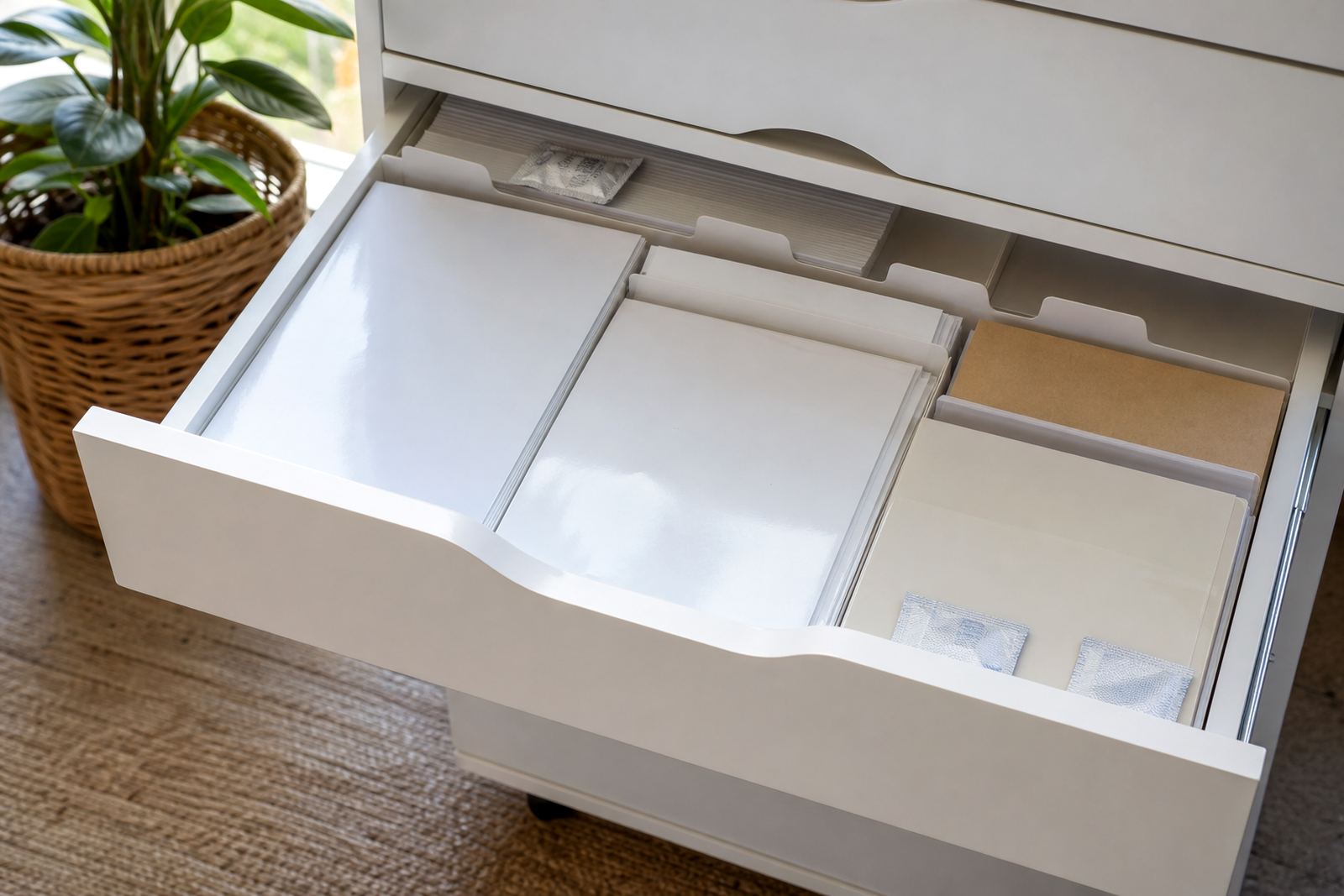
The service covers the day to day handling points that affect print quality and cutting. That includes how to keep opened packs flat, how to stop corners from lifting, how to separate small offcuts from full sheets, and how to keep printable surfaces clean. We also guide clients on storing clear sheets so they do not scratch against rough cardboard or rub on grit.
- Flat storage advice for opened and sealed packs
- Dust control for printable faces and cut edges
- Protection from heat, damp and pressure marks
- Care for matte, gloss, clear, vinyl and kraft sheet stock
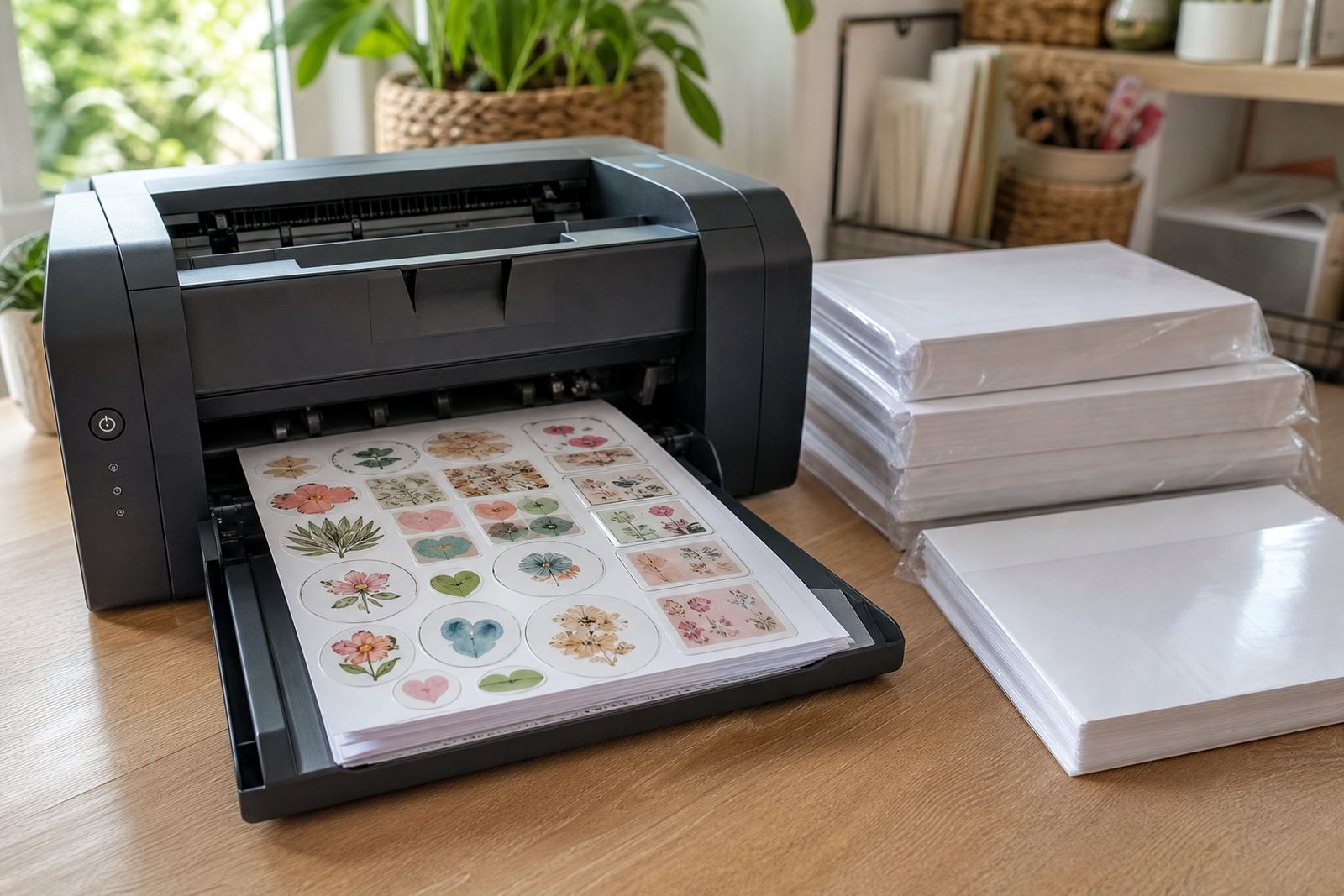
- Handling notes for inkjet and laser printable paper
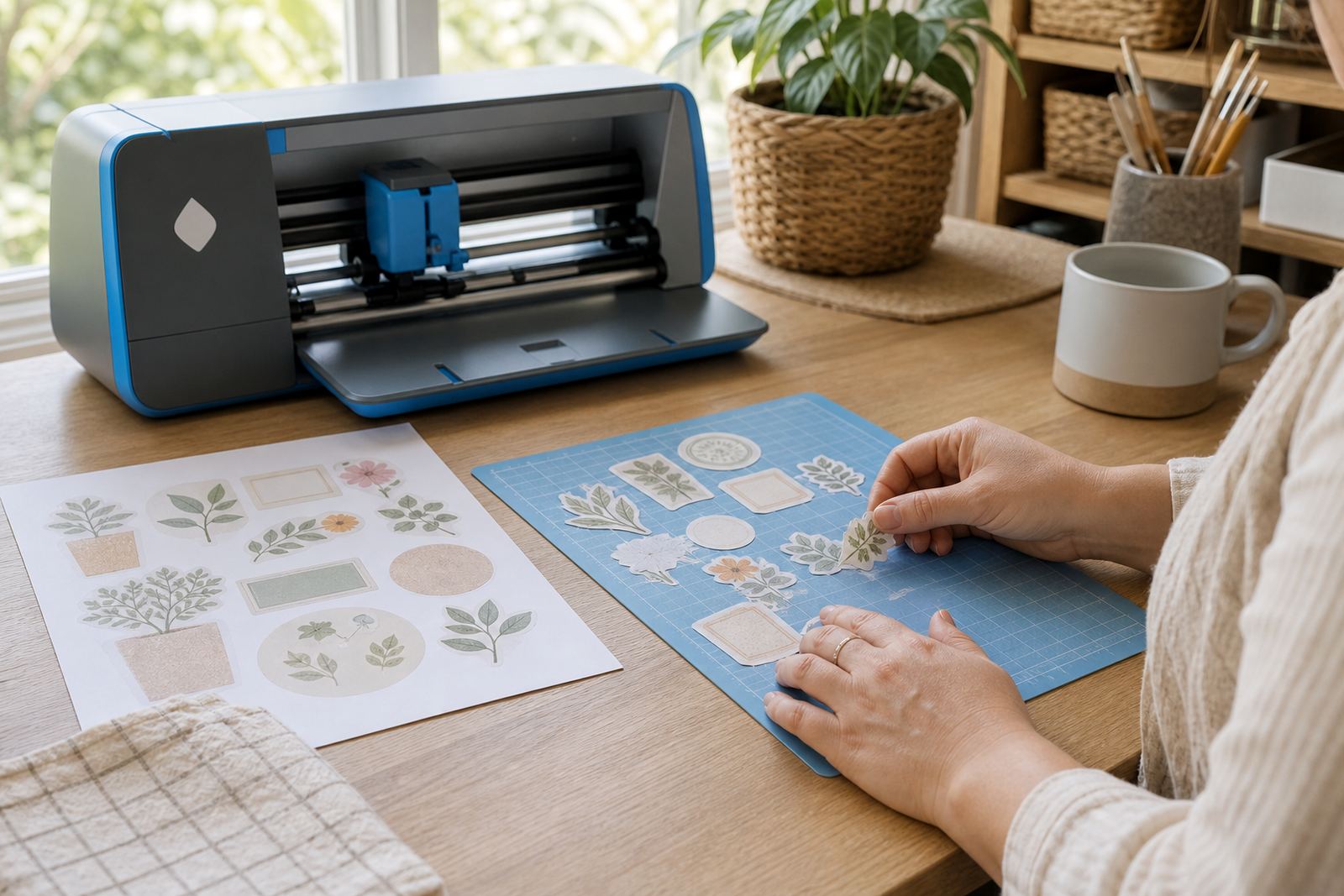
For crafters who cut by hand, we also cover how to keep sheets straight so rulers and blades track neatly. For craft cutters, tidy stacking and smooth feeding matter just as much as the print side.
How we work through your storage setup
We start by asking what type of sheet you keep on hand, how many packs are opened at once and where the paper is stored. A cupboard near a stove is not the same as a spare room shelf, and a plastic tub in a damp garage behaves differently from a sealed drawer in a home office. The goal is to keep the paper printable, not only out of sight.
- Check the paper type and sheet size
- Note where the stock is kept day to day
- Identify any curl, dust, scuffing or moisture marks
- Suggest a flat storage method that suits the space
- Set out handling steps for printing and cutting
Where needed, we also explain how to separate fresh stock from older opened packs. That helps prevent mixed stacks, bent corners and sheets getting used in the wrong order.
Specs that affect how sticker paper should be stored
Different printable sticker papers need different care. Matte sheets usually tolerate handling well, but they still benefit from flat storage. Gloss sheets show fingerprints and scuffs more easily, so clean hands and smooth stacking matter. Clear sheets should stay away from grit, while vinyl sheets need to stay free of sharp bends and pressure points. Kraft stock is generally more forgiving, yet it can still warp if it sits where the air is too damp.
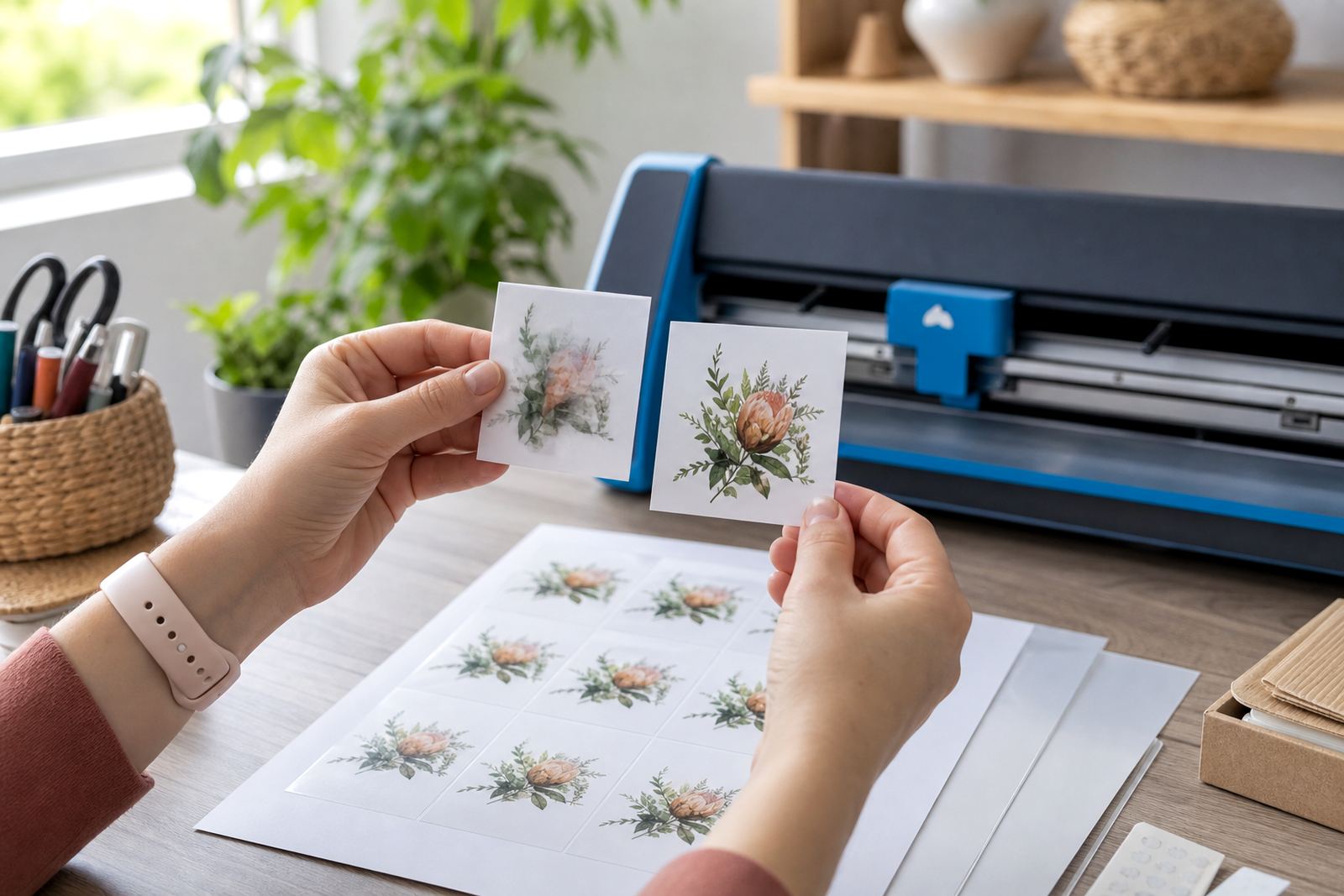
Inkjet-compatible sheets should remain free of dust and moisture so the ink sits evenly on the surface. Laser-compatible sheets need to stay flat and clean too, since heat during printing can exaggerate curl or uneven stacking. If a pack has been opened and left leaning against a wall, the edges can take a set and feed poorly later on, especially in a humid room.
Pricing approach for storage help
Pricing depends on the amount of stock being reviewed, the mix of paper types and whether the guidance is for a simple home shelf or a larger working space. A small pack of sheets stored in one room needs less input than several paper types spread across drawers, boxes and folders. We keep the pricing approach practical and tied to the real handling work, not to unnecessary extras.
If the job includes checking unopened packs, opened stock, offcuts and cutter-ready sheets, that is factored in from the start. Clear notes help avoid wasted paper later, which is often where the real value sits. Clients in Cape Town, Johannesburg, Durban, Pretoria and Bloemfontein all use the same basic storage rules, though the room conditions can differ quite a bit.
Aftercare for clean, ready-to-use sheets
After the storage setup is sorted, we leave you with handling notes that are easy to follow during daily use. That includes how to lift a single sheet without bending the rest of the pack, how to reseal opened stock, and how to keep cut pieces from collecting dust before printing or application. Small habits make a noticeable difference, especially when sheets are shared between label making, gifts and home organisation.
- Store open packs flat under light pressure only
- Keep sheet faces clean and dry before printing
- Avoid hot windowsills, damp floors and loose piles
- Separate cut pieces from full-size stock
- Use a clean sleeve or folder for spare sheets
If a sheet starts to curl, restacking it correctly usually helps more than forcing it into shape. Gentle handling keeps the printable surface in better condition, and that saves time when the next project starts.
Key facts
| Sheet types covered | Matte, gloss, clear, vinyl and kraft printable sticker paper |
|---|---|
| Printer compatibility | Inkjet and laser compatible sheets, handled separately where needed |
| Cutting methods | Hand cutting, rulers, craft knives and craft cutters |
| Storage conditions | Flat, dry storage away from excess heat and damp |
| Common risks | Curl, dust, scuffs, moisture marks and edge lift |
| Service area | Durbanville, Cape Town and delivery across South Africa |