
Keep Unused Sheets Flat and Out of Damp Air
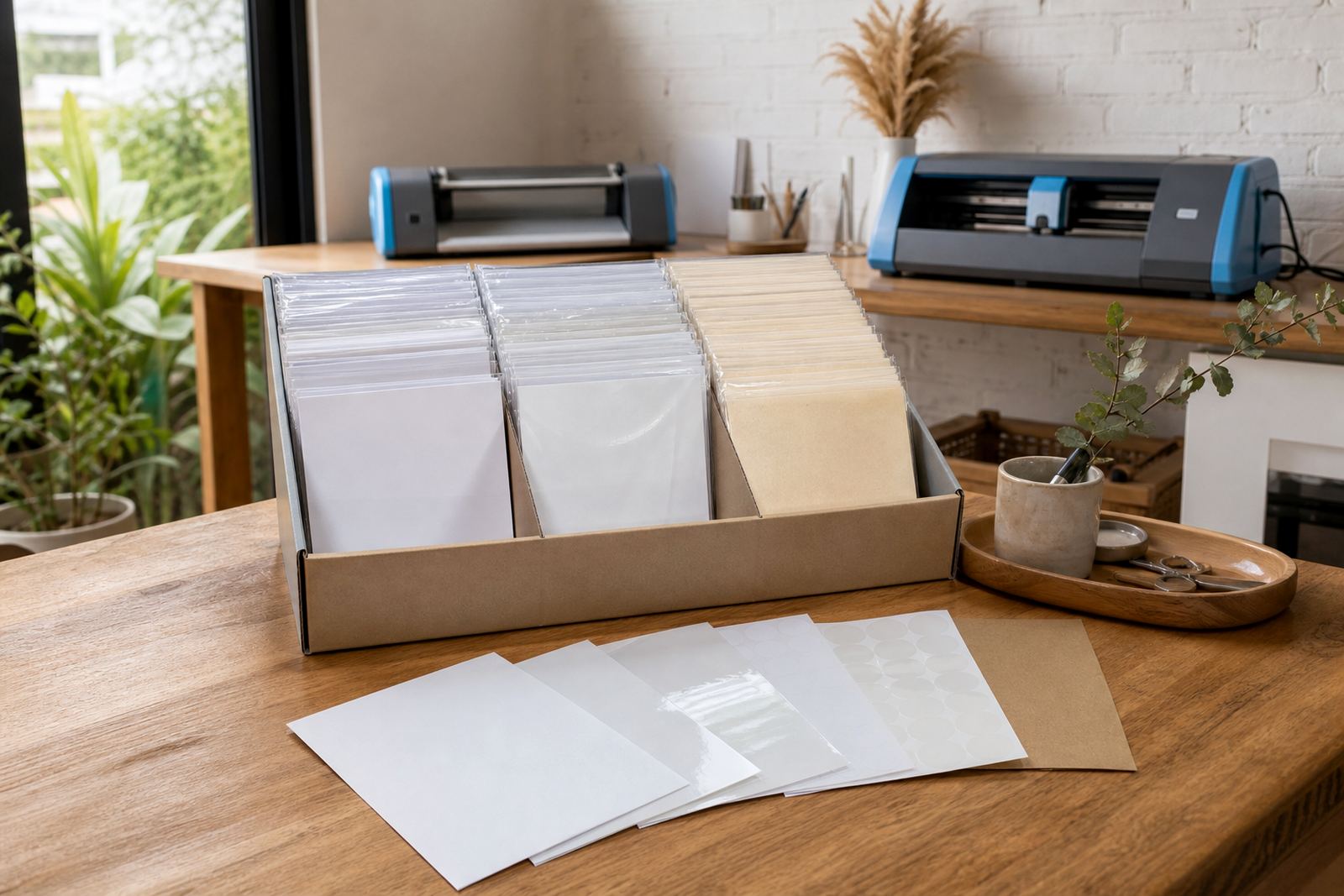
Sticker paper bends easily if it is stored on its side or tucked into a cramped spot. Keep reams and loose packs lying flat on a shelf or in a drawer, with the original backing left in place until you are ready to print. In Durban and other coastal areas, humidity can creep into paper fast, so a closed cupboard is better than an open rack near a window or door.
If you are storing matte, gloss, clear, vinyl or kraft sticker paper together, separate the types so the sheets do not rub against each other. A thin divider card or file sleeve helps keep corners neat and reduces curling. Avoid heat, direct sun and a place where the paper can collect dust.
- Store in a flat folder, tray or cupboard shelf
- Keep away from bathrooms, kitchens and laundry steam
- Leave sheets in their wrap until needed
- Use dividers for mixed finishes and sizes
Handle Print Sheets Only When Your Hands Are Clean and Dry
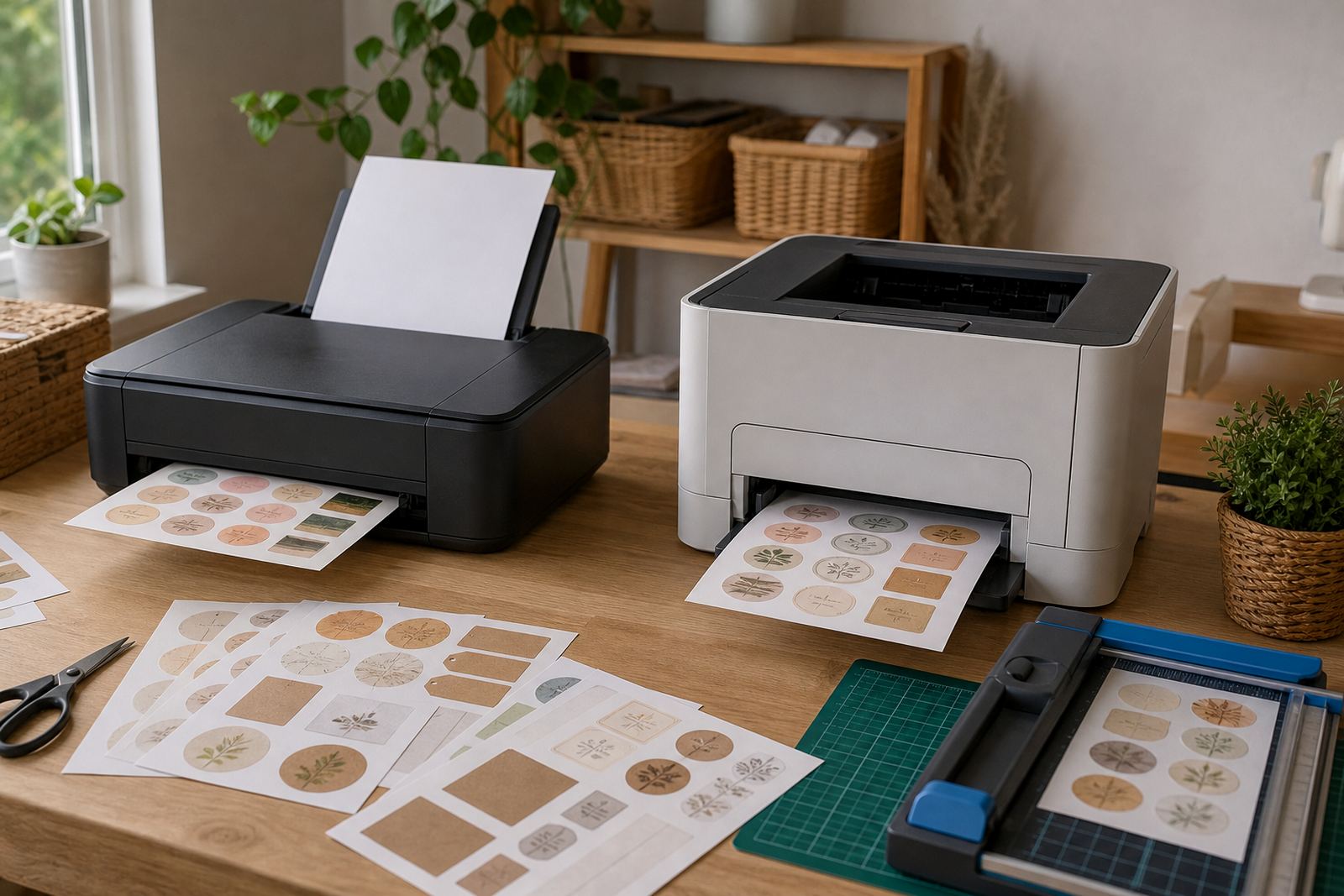
Before printing, let the sheet settle in the room for a short while so it is close to the same temperature as the printer space. This helps reduce feeding issues and edge lift. When you touch the printable surface, keep fingers dry and clean because oil from the hand can show on gloss and clear sheets, and can soften print quality on some surfaces.
If you are working with inkjet stock, handle it by the edges. For laser-compatible paper, avoid stacking freshly printed sheets too tightly while they are still warm. Smudge marks often start with rushed stacking or a thumb placed across the printed side, so a calm layout on a clean table helps more than people expect.
- Hold sheets by the corners or edges
- Keep drinks, glue and craft spray away from the stack
- Let printed sheets cool before filing or cutting
- Do not press down on fresh ink or toner
Let the Finish Guide the Storage Method
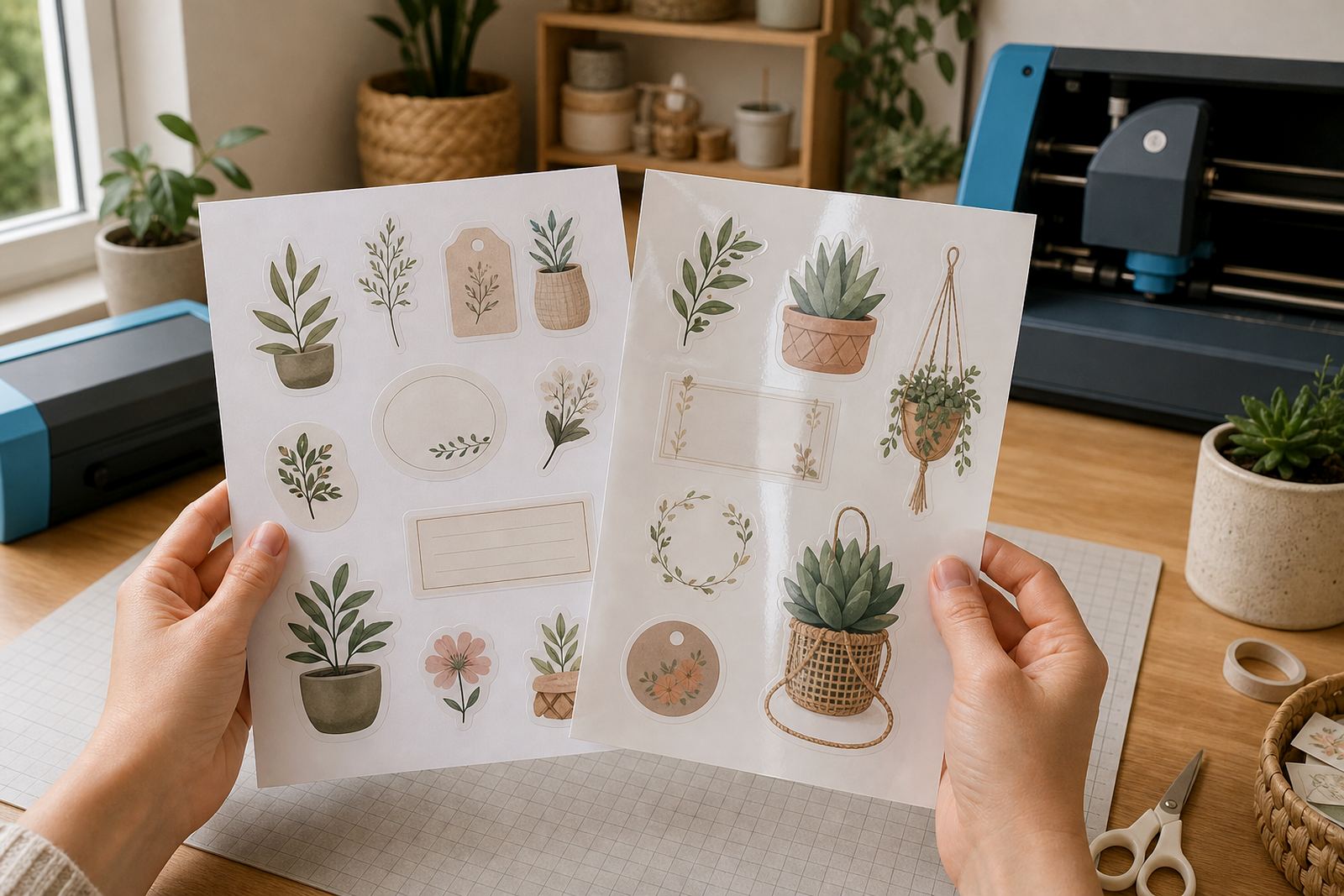
Different finishes need slightly different care. Matte sheets usually hide fingerprints better, but they still warp if they pick up damp air. Gloss sheets show marks more clearly, so they should stay in a sleeve or folder after printing. Clear sticker paper needs extra protection because scratches and dust are easy to see once it is printed. Vinyl sheets are more forgiving for handling, yet they still need a flat resting place to avoid curl at the corners.
Kraft sticker paper can pick up surface marks if it is dragged across a rough table. Keep it on a smooth board or inside a rigid folder when moving it from printer to cutter. If you are sorting mixed jobs for home organisation, gifts or product labels, label each stack clearly so the right finish is used for the right task.
- Matte: store flat and dry, away from dust
- Gloss: protect from fingerprints and scuffs
- Clear: keep covered so scratches stay off the print face
- Vinyl and kraft: use rigid support when moving sheets
Protect Printed Sheets Until the Labels Are Needed
Once a sheet has been printed, place it in a clean sleeve, folder or box with a lid. This keeps the surface safe from dust, pet hair and accidental bending. If the print is being held for later cutting, do not stack heavy items on top because pressure can flatten adhesive areas unevenly and leave a mark on the top sheet.
For longer storage, keep printed sheets sorted by project. A small note on the sleeve helps when you are making pantry labels, school labels or gift tags in batches. In a busy home, this makes it easier to find the right sheet without handling every page in the pile.
- Use a dust cover, folder or closed box
- Label each batch by finish, size or project
- Keep printed sheets separate from plain stock
- Store completed prints flat until application time
Cutting and Trimming Without Damaging the Adhesive
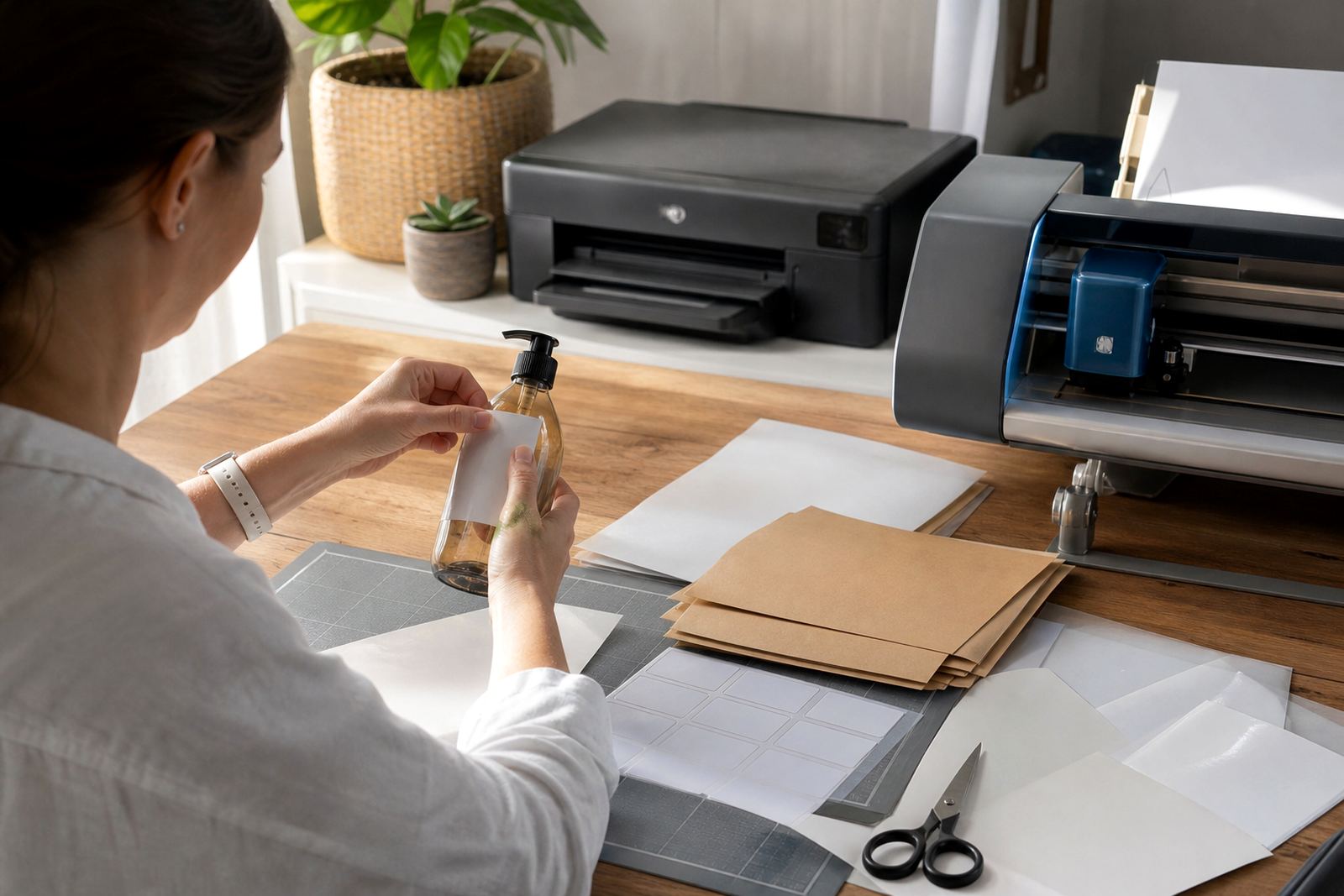
Sticker paper can be cut by hand with a craft knife or scissors, or by a craft cutter if the settings suit the material. When cutting by hand, use a sharp blade and a clean cutting mat so the sheet does not drag. Keep the backing intact until the last moment, especially on clear or vinyl sheets where tiny scuffs show quickly.
After cutting, return unused pieces to a flat sleeve instead of leaving them on the table. Offcuts can curl at the edges if they sit in warm air or near a fan. If the sheet needs a second pass through a cutter, check that the page lies flat and the feed path is free of dust or scraps.
- Use a sharp blade or suitable cutter setting
- Keep the backing on until the final trim
- Return offcuts to flat storage straight away
- Clear dust from the table and cutter path
A Short Weekly Routine for Home Makers and Crafters
A simple routine helps keep your stock in good condition and reduces waste. Check stored packs for curl, then move any sheet with a lifted corner back under a flat weight for a short while. Keep printed jobs sorted by finish so a clear label is not mixed with a matte one, and keep unused stock away from moisture from windows or open doors.
For crafters in Cape Town, Johannesburg, Durban, Pretoria and Bloemfontein, the same routine works well in dry inland air or coastal humidity. It is steady, practical and easy to repeat without extra equipment.
- Look for curl, dust or dents before each project
- Sort plain stock and printed sheets separately
- Keep the storage area dry and shaded
- Use the oldest sheet first when a batch has been open for a while