
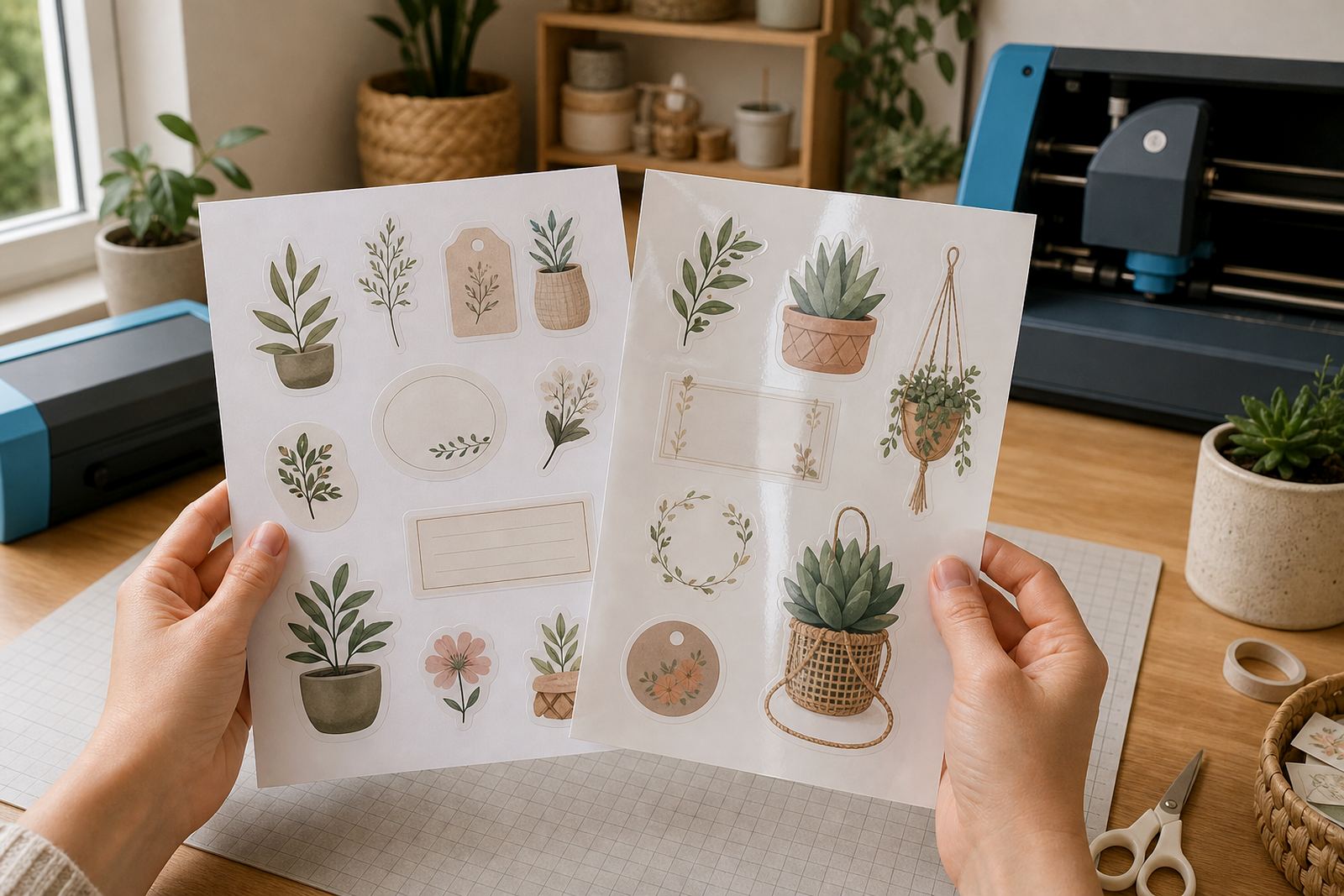
The hand-feel difference you notice first
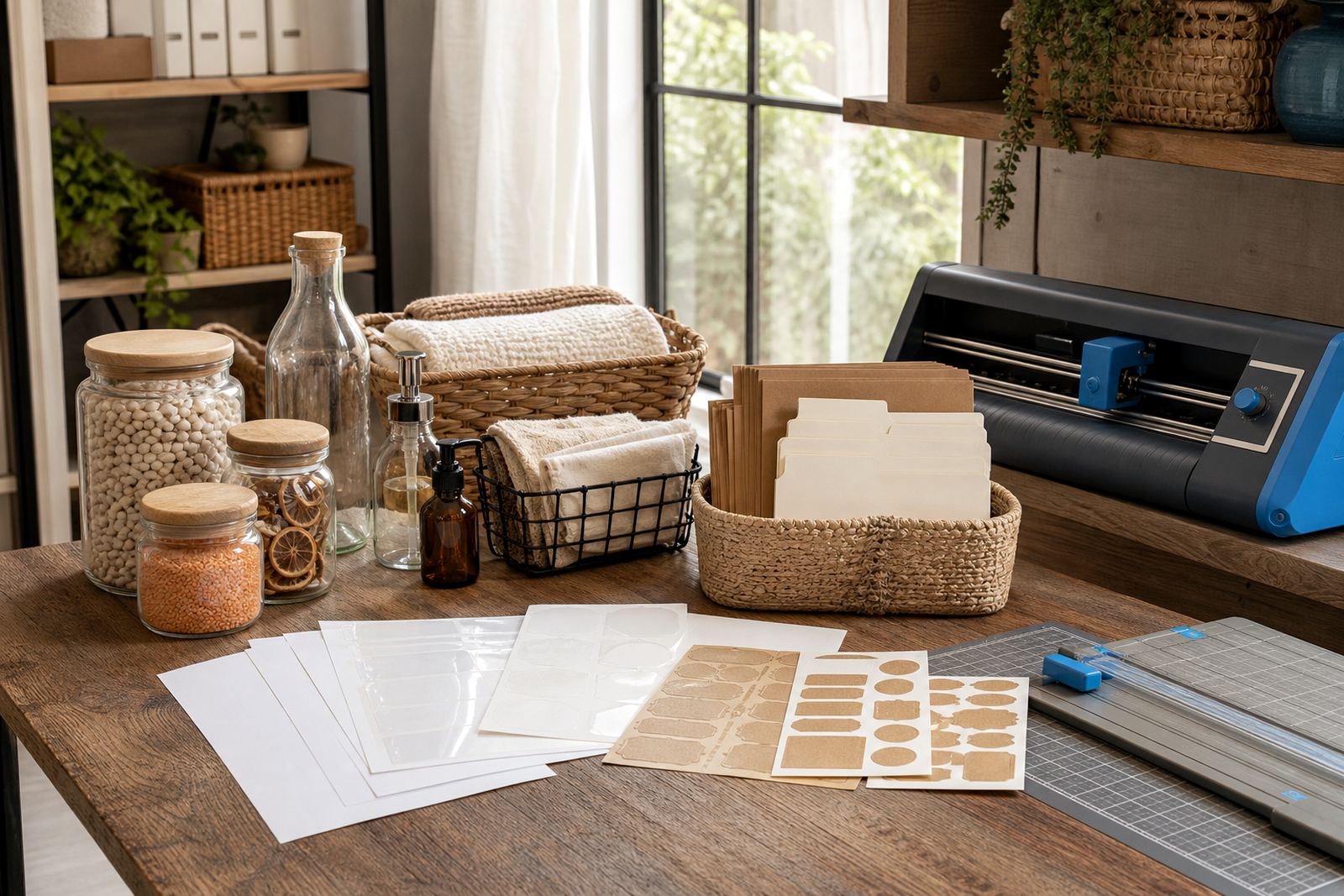
Matte sticker paper has a dry, paper-like feel. It sits flat, takes pen well, and looks calm on labels where glare would get in the way. Printable vinyl feels smoother and a bit more flexible. It bends better around bottles, tubs and rounded containers, which makes it useful for items that get handled often.
If you are labelling flour jars, seed tins or storage boxes on shelves, matte often feels tidy and easy to read. If you are making water bottle labels, bath items or anything that may get wiped down, vinyl gives a more durable surface and less chance of the edges lifting when handled often.
- Matte feels softer and more paper-like
- Vinyl feels smoother and more flexible
- Matte suits clean indoor labelling
- Vinyl suits curved or frequently handled items
Finish and colour on the page
Matte finish reduces shine, so text, line art and small icons stay easier to read under kitchen light or office light. It works well for labels with handwriting, pantry sets and organiser stickers where a clear surface matters more than a glossy look. The colour can appear slightly softer, which some crafters prefer for a calm, printed-on-paper look.
Printable vinyl gives a richer surface appearance. Colours often look fuller and the sheet has a smoother visual finish. Clear printable vinyl can also be useful when you want the background to disappear on glass or plastic. For gift stickers, product labels and decorative pieces, that cleaner finish can make the design feel more polished. A small note here, glossy is not always the best match if strong light hits the label often.
- Matte cuts glare and keeps fine text clearer
- Vinyl often gives stronger colour presence
- Clear vinyl works well on transparent containers
- Gloss can reflect more light than matte
How each sheet behaves in use
Matte sticker paper is usually the easier starting point for home makers who are printing labels in batches. It feeds neatly on many printers, cuts cleanly by hand and works well for projects that stay indoors. It is a good fit for craft fairs, storage labels, school projects and short-run planner stickers.
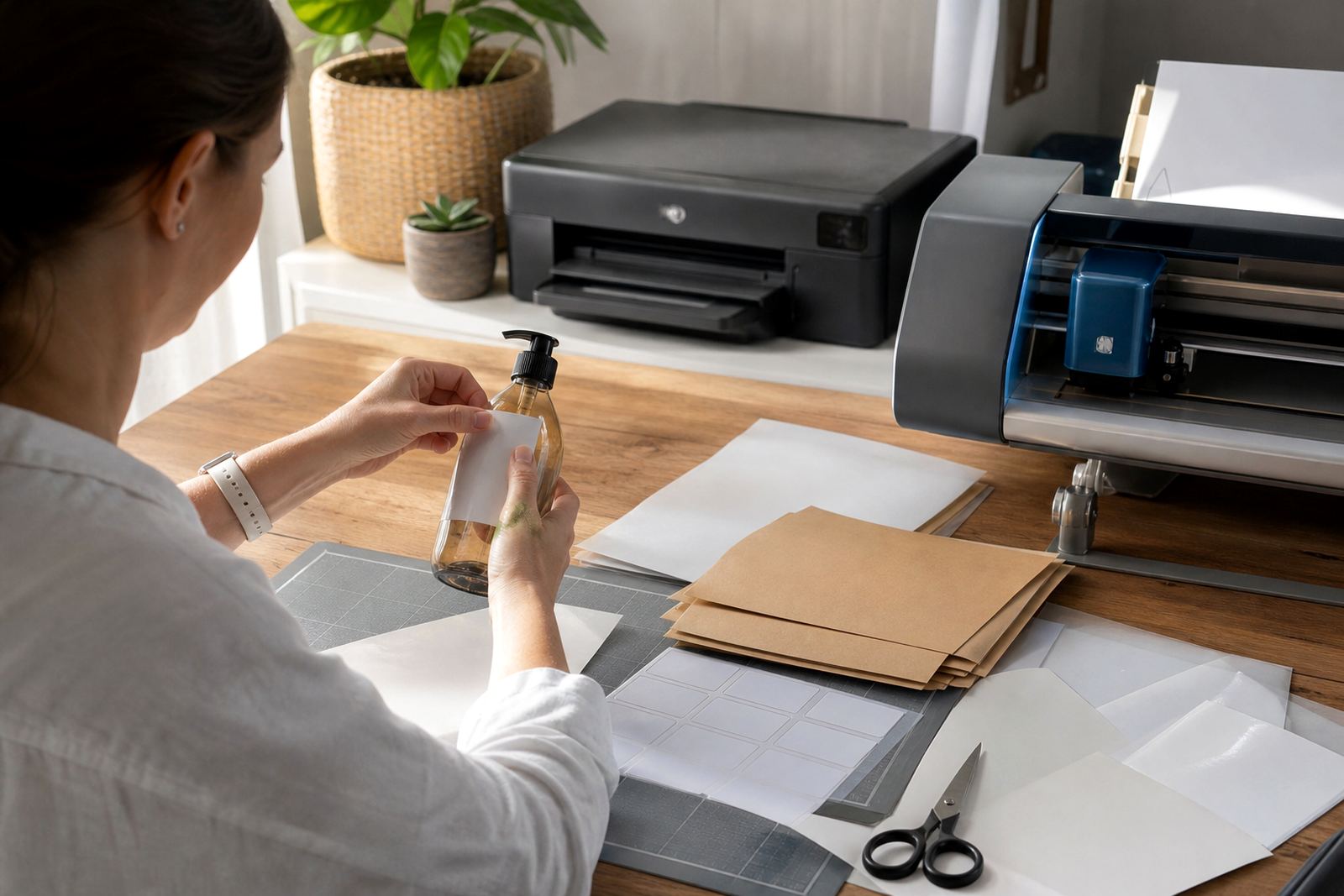
Printable vinyl handles a bit more bending and movement. It is a strong option for items that may be touched often, shifted in a handbag or cleaned gently with a damp cloth. Vinyl is also handy for labels on curved bottles, jar sides and containers that need a neater wrap around the edges.
- Matte suits pantry labels, craft labels and planner pages
- Vinyl suits bottles, cosmetic jars and curved containers
- Matte is easier for handwriting
- Vinyl handles flex and handling better
Inkjet, laser and the printer fit
Printer compatibility matters before the first sheet goes in. Some sticker papers are made for inkjet printers, where liquid ink needs time to dry into the coating. Others are made for laser printers, where heat fixes the image onto the sheet. Using the right type helps avoid smudging, weak colour or feed problems.
For matte paper, inkjet versions are common for home projects and craft rooms. Laser versions are also available for users who print labels in bulk. Printable vinyl can also be made for either printer type, but the sheet coating must suit the machine. If the wrong sheet is used, the finish may not hold the print properly and the cut edges can mark more easily.
- Check whether the sheet is for inkjet or laser
- Let inkjet prints dry before cutting or stacking
- Use printer settings suited to thicker media
- Keep a test page for colour and feed checks
Cutting by hand or with a craft cutter
Matte paper is generally forgiving when cut by hand with a scissors or craft knife. The edges are easy to follow and small slips are less visible on simple label shapes. That makes it practical for quick jobs, school projects and a few small sticker sheets at home. A clean mat and sharp blade help keep the finish neat.
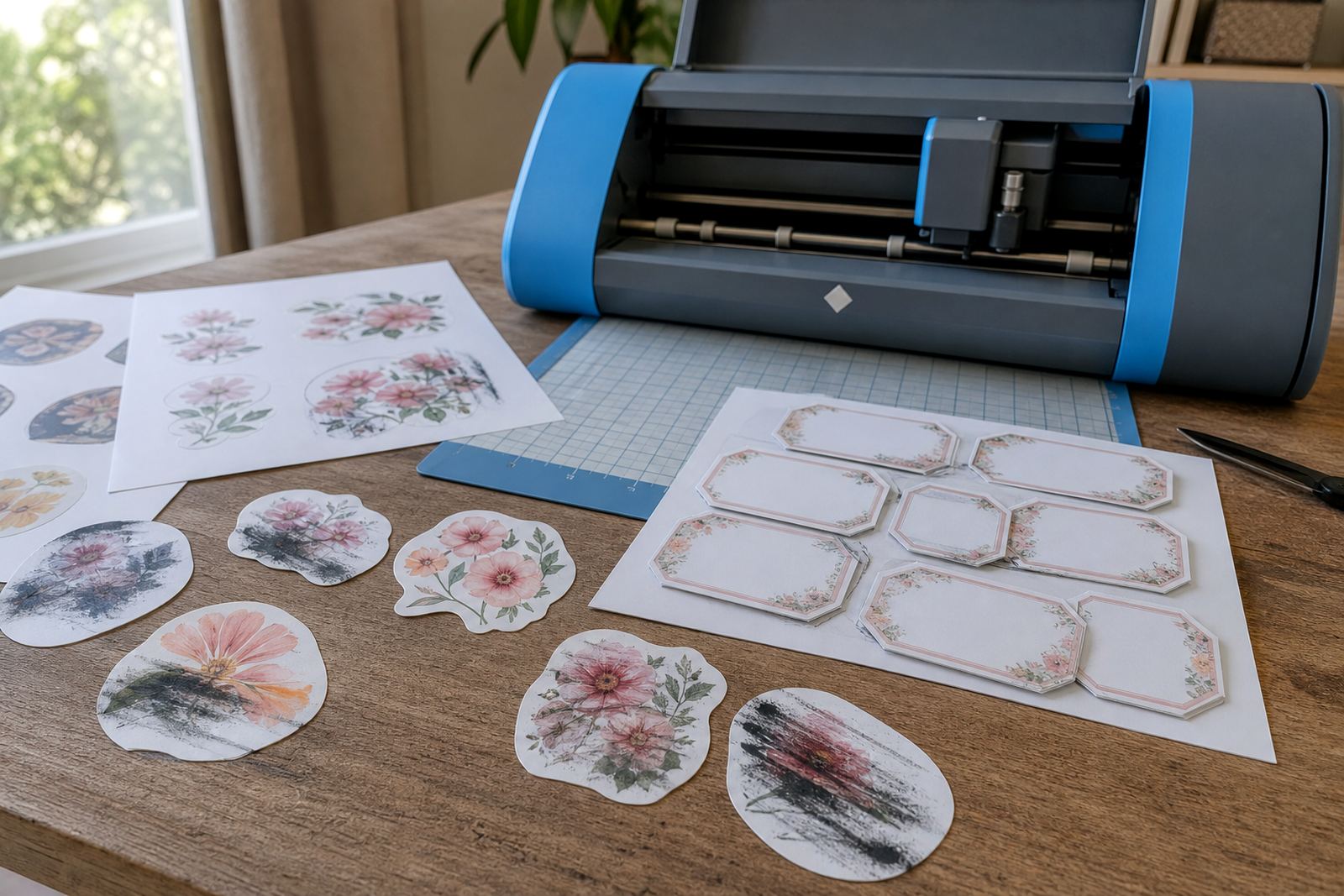
Printable vinyl can also be cut by hand, though a craft cutter is often used for repeat shapes or detailed outlines. When using a cutter, keep the blade pressure sensible and test one sheet first. Too much pressure can mark the liner or leave rough edges. For small lettering and fine shapes, a slower cut usually gives better results.
- Use a fresh blade for both materials
- Test one shape before full sheets
- Reduce pressure if edges look rough
- Leave a small margin around detailed artwork
Picking the sheet for real South African jobs
In Durbanville and across Cape Town, many home makers use matte for pantry systems, jar labels and gift tags because it prints clearly and keeps a tidy look. In warmer, busier kitchens or for items that get handled often, vinyl is often the better fit. It also suits home studios where labels are wiped down after use or stored in boxes that move around often.
For deliveries to Johannesburg, Durban, Pretoria and Bloemfontein, the choice often comes down to the surface and the use. Matte works well for paper-like projects and everyday organising. Vinyl suits moisture, repeated handling and curved containers. If you are setting up a mixed order, it can help to split the job: matte for the shelves, vinyl for the bottles.
- Use matte for writing, sorting and shelf labels
- Use vinyl for curved jars and handled items
- Keep finished sheets flat in a dry place
- Store printed pages out of direct sun
A quick checklist before you print and stick
Before printing, check the sheet type, printer type and the surface where the sticker will sit. A smooth dry container is easier to label than a dusty or damp one. If you are working with clear vinyl, make sure the background behind the sticker is clean because any speck will show through. For matte paper, a neat flat surface gives the cleanest result.
For best results, print a test page, cut one sample and place it on the container you plan to use. Look at the edges, the colour and the way the sheet bends. If the label is for a kitchen jar, bath bottle or storage tub, that small test can save a lot of wasted paper. It also helps to keep printed sheets flat for a while before cutting, especially if the room is humid near the coast.
- Confirm printer type before loading the sheet
- Clean the surface before applying the sticker
- Test one label before running a full batch
- Store unused sheets flat and dry