Start with the job your sticker must do
Think first about where the sticker will live. A spice label on a kitchen shelf has different needs from a gift tag on wrapped boxes, and a jar in a steamy bathroom is another story again. If the surface gets handled often, the finish needs to hold ink well and keep its shape when you trim it by hand or with a craft cutter.
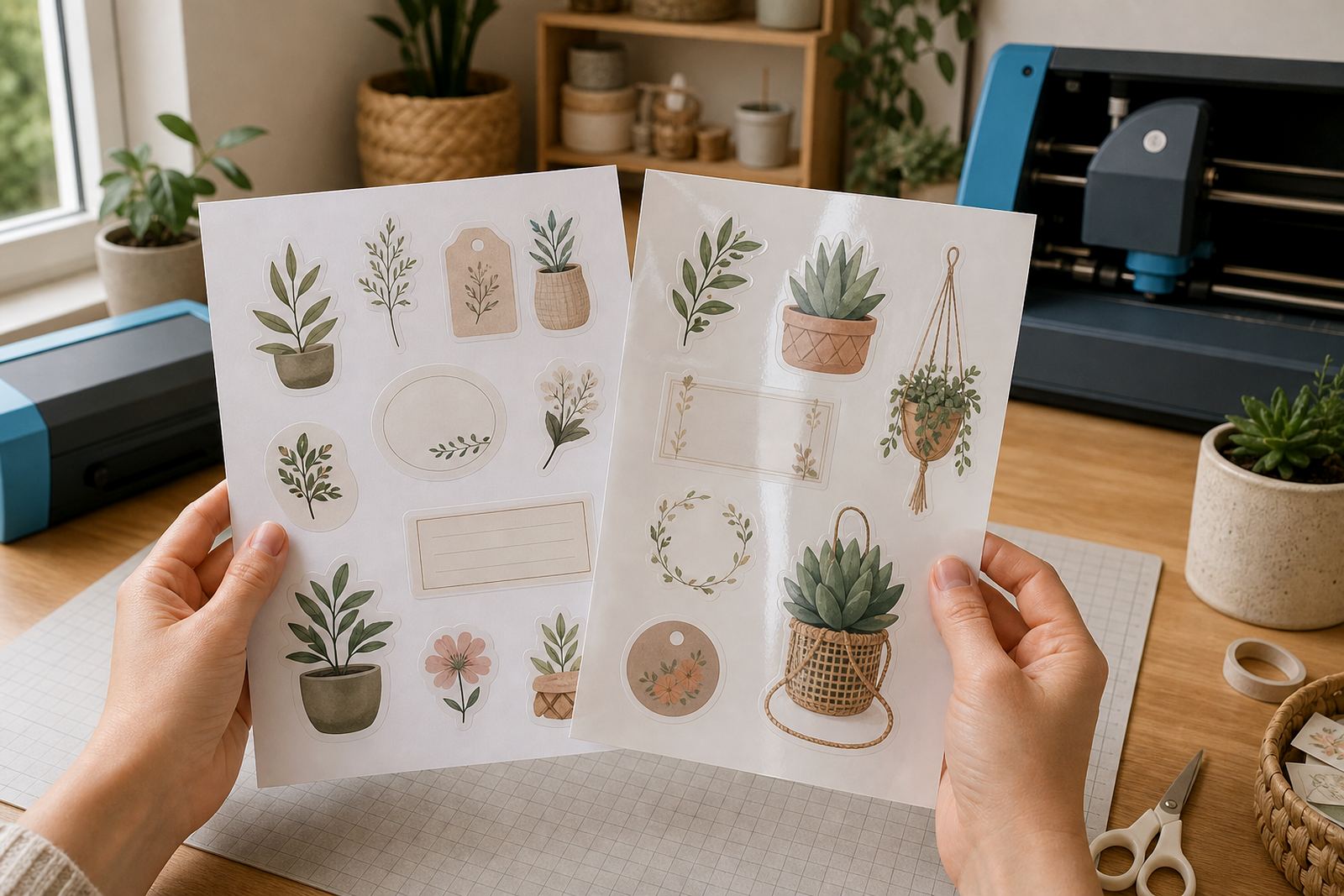
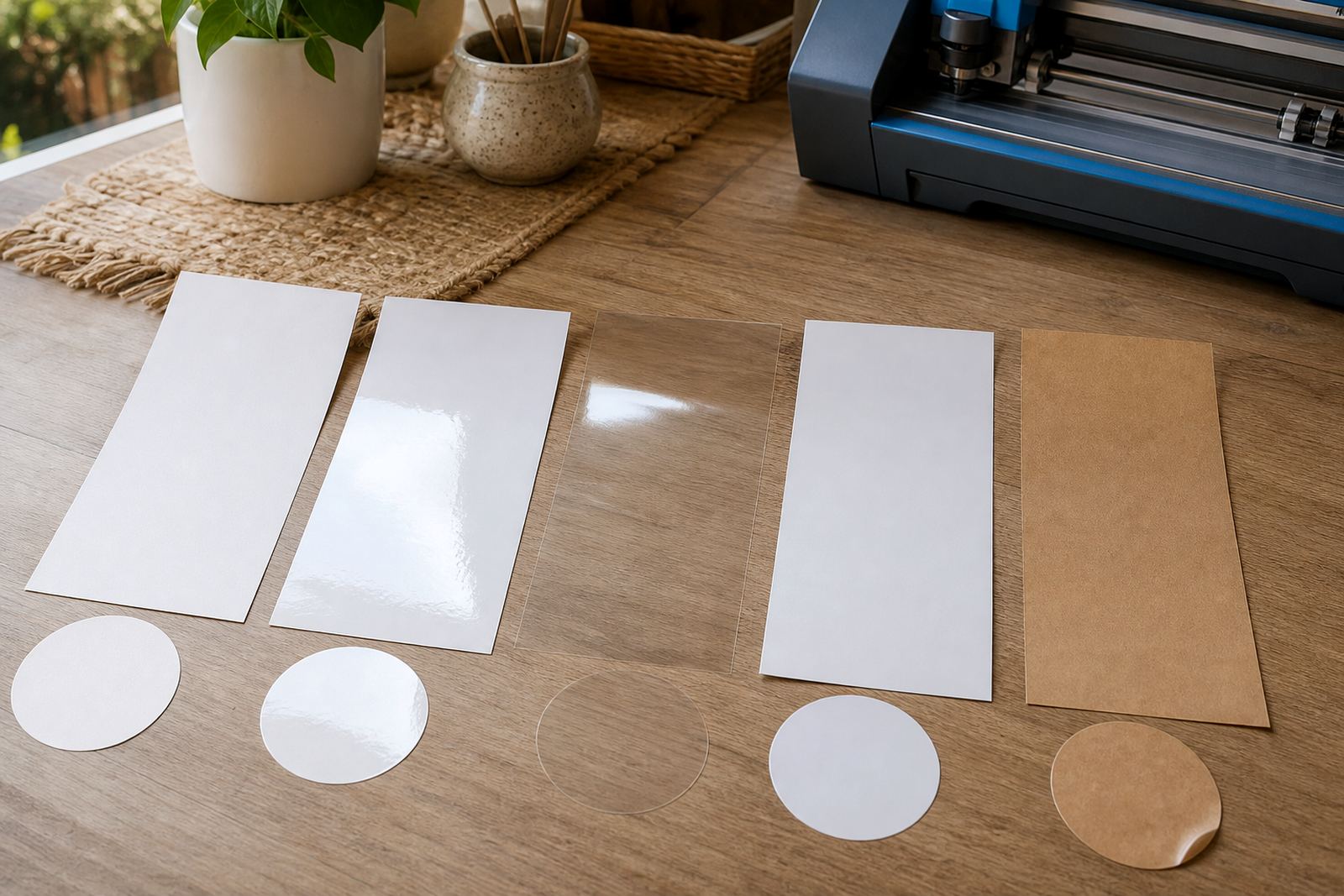
For home organisation, matte and gloss are the most common starting points. For jars, bottles, bins and folders, clear or vinyl can be the better fit when you want a cleaner look or extra durability. Kraft works well when the project needs a natural feel, especially for hampers, pantry goods and handmade gifts.
- Use matte for a softer, low glare label.
- Use gloss for bright colour and a polished finish.
- Use clear when you want the surface to show through.
- Use vinyl for tougher handling and frequent use.
- Use kraft for a warm, earthy look on gift projects.
Matte suits neat labels and writing space
Matte sticker paper gives a calm, low shine finish that works well for labels you need to read at a glance. It suits pantry jars, storage tubs, folder tabs and school projects where glare would get in the way. It also takes pen or marker more comfortably than a high gloss sheet, which helps when you want to add batch notes, names or dates by hand.
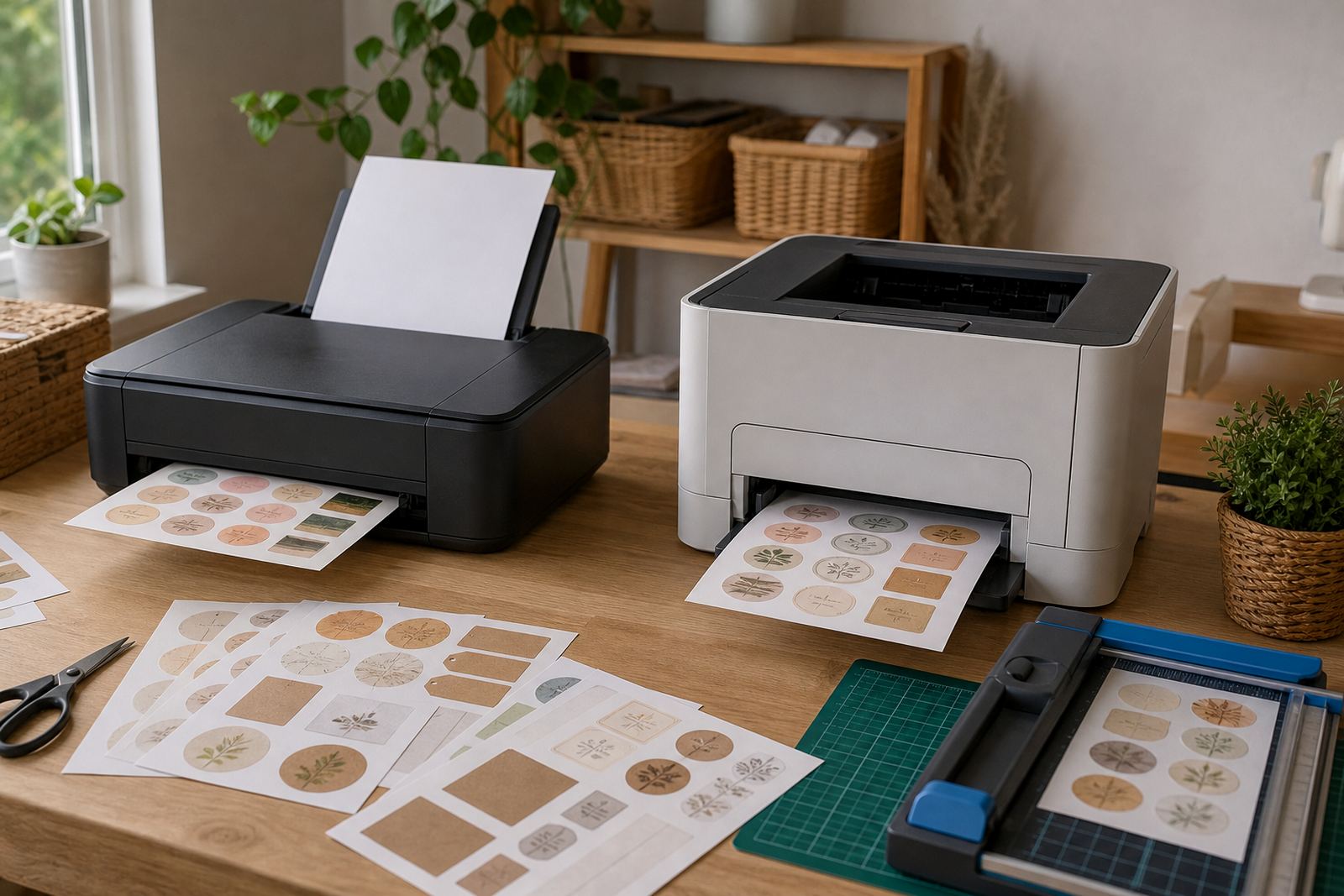
For printing, matte is often a safe choice with both inkjet and laser printers, provided the sheet is made for the printer type you are using. It also cuts cleanly with scissors or a craft cutter, so it is handy for crafters working on batches at home. If you like a tidy result without a shiny finish, matte is usually the easiest place to begin.
- Best for pantry labels, file labels and simple gift tags.
- Good for writing on after printing.
- Works well when glare would make reading difficult.
- Often the easiest finish for first time craft projects.
Gloss brings out colour and detail
Gloss sticker paper gives a brighter, more reflective finish. It suits project sheets, decorative stickers, product labels and personalised gifts where you want colour to stand out. Photographs, bold graphics and rich blocks of colour usually look sharper on gloss, especially when the artwork includes black text or strong contrast.
Because the surface is smoother and shinier, it is worth checking that the printed sheet is fully dry before handling. That matters more with inkjet printing, where fresh ink can smudge if you stack pages too soon. If you are cutting by hand, take a little care with round corners and small shapes, as the shine can make cut lines harder to see in bright light.
- Good for labels that need a brighter finish.
- Useful for colour heavy designs and photos.
- Handle printed sheets carefully until dry.
- Watch reflections when trimming detailed shapes.
Clear sheets work when the background should show
Clear sticker paper is useful when you want the container or surface to remain visible. It suits glass jars, plastic bottles, candle containers and neat branding on packaging, especially where you want the label to feel light and unobtrusive. A clear finish can make text and simple logos sit neatly on the item without covering the whole surface.
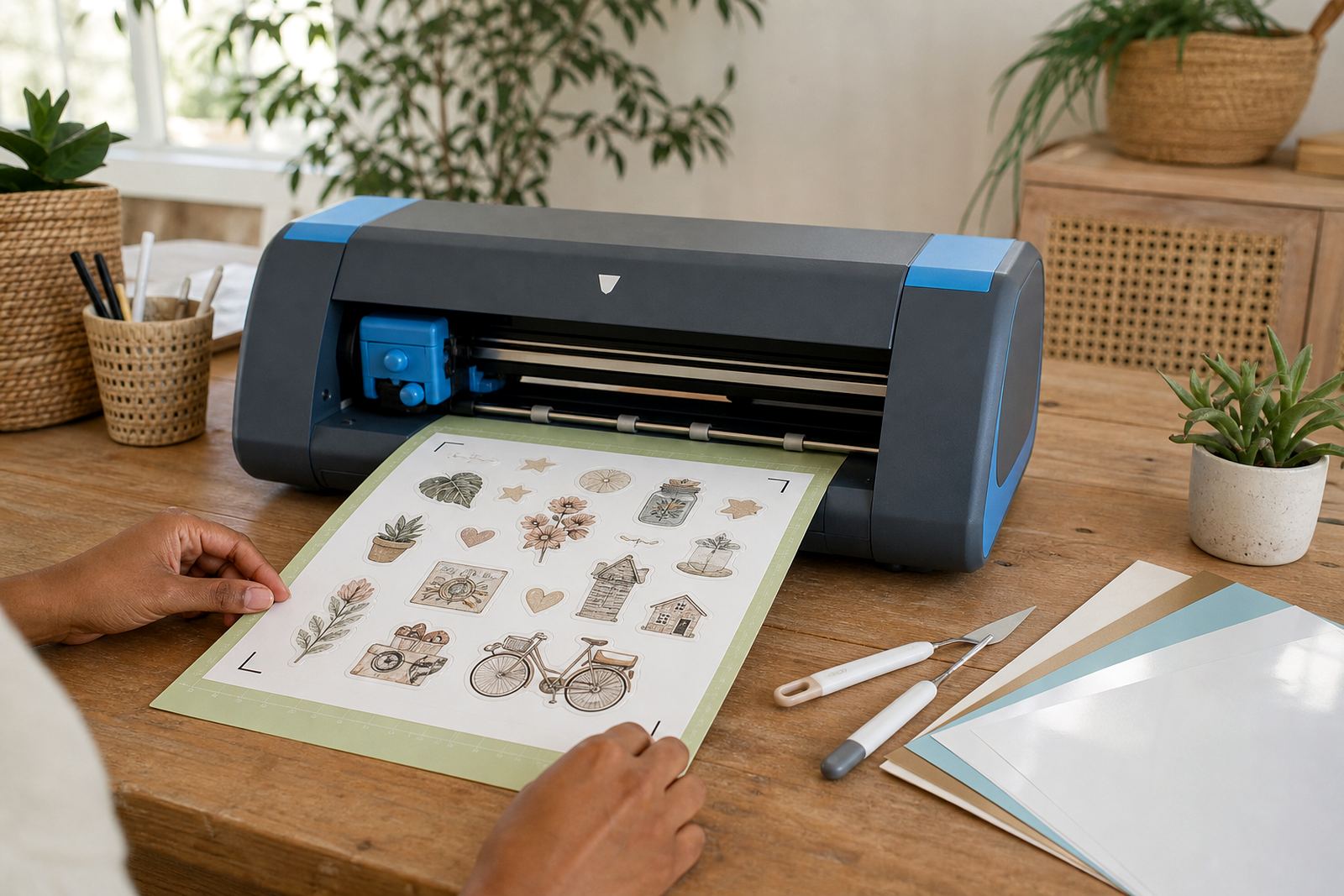
Clear sheets need a clean surface underneath, because any dust, moisture or fingerprints may show more than they would on matte or kraft. They also need careful application, since air bubbles are easier to notice on transparent material. If you use a craft cutter, set the cut depth accurately so you do not score too deeply into the backing sheet.
- Best when the bottle or jar must remain visible.
- Looks neat on glass, smooth plastic and smooth packaging.
- Needs careful surface cleaning before application.
- Works well with simple shapes and clean text.
Vinyl handles tougher use and repeated touch
Vinyl sticker paper suits projects that get handled often, moved around, or exposed to more wear than a paper label would enjoy. It is a practical option for water bottles, tool boxes, storage bins and outdoor facing items that need a stronger feel. In humid coastal conditions, vinyl can be a sensible choice when the label must keep its shape a bit longer.
It works with many craft cutters and can also be trimmed by hand if you are patient with straight edges and small curves. For printing, match the sheet to the printer type and use the right settings so the ink or toner bonds properly. Let printed sheets dry before stacking, and press labels down firmly from the centre outward to reduce bubbles.
- Useful for frequent handling and sturdier labels.
- Handy for kitchens, storerooms and workshop items.
- Apply with care to reduce trapped air.
- Choose it when a paper finish may wear too soon.
Kraft gives gifts and jars a warmer look
Kraft sticker paper has a natural brown tone that works well for handmade goods, pantry jars, candle labels and gift packaging. It gives a softer, more rustic result than white paper, and it pairs well with black text, line drawings and simple graphics. If you are packaging baked goods, home made jams or craft items, kraft can make the label feel grounded and personal.
Because the base colour is darker than white paper, lighter inks may not show as strongly. Keep your artwork bold and simple for the best effect. Kraft usually suits hand cutting just fine, though a craft cutter makes repeat shapes easier when you are doing a larger batch. Store sheets flat in a dry place so the edges stay neat, not curled.
- Works well for handmade and rustic style packaging.
- Use bold text for better visibility.
- Handy for jars, hampers and small gift runs.
- Store flat to keep the sheets in good shape.
A quick selection check before you print
When you are torn between finishes, use the project itself to make the call. Start with how the item will be used, then match the printer, cutter and surface. A label for a pantry shelf does not need the same finish as a bottle that is picked up every day, and a gift sticker does not need the same strength as a storage label in a busy scullery.
Keep this short checklist nearby before you place the sheet into the printer. It helps to prevent waste, and it keeps the cutting stage easier. If you are using a craft cutter, test one sheet first so you can see how the finish behaves on your machine.
- Will the sticker face moisture, grease or frequent handling?
- Do you want a shine, a soft look or a see through effect?
- Will you print with inkjet or laser settings?
- Are you cutting by hand or using a craft cutter?
- Do you need space for writing, or only printed text?
For support with printer settings, colour tests, smudge reduction, paper jams, sheet storage, clear sheets, vinyl sheets, hand cutting, craft cutters and sticker application, the team in Durbanville works with customers across Cape Town, Johannesburg, Durban, Pretoria, Bloemfontein, Stellenbosch and Paarl through the enquiry form on the contact page.