How clear and gloss change the look of a label
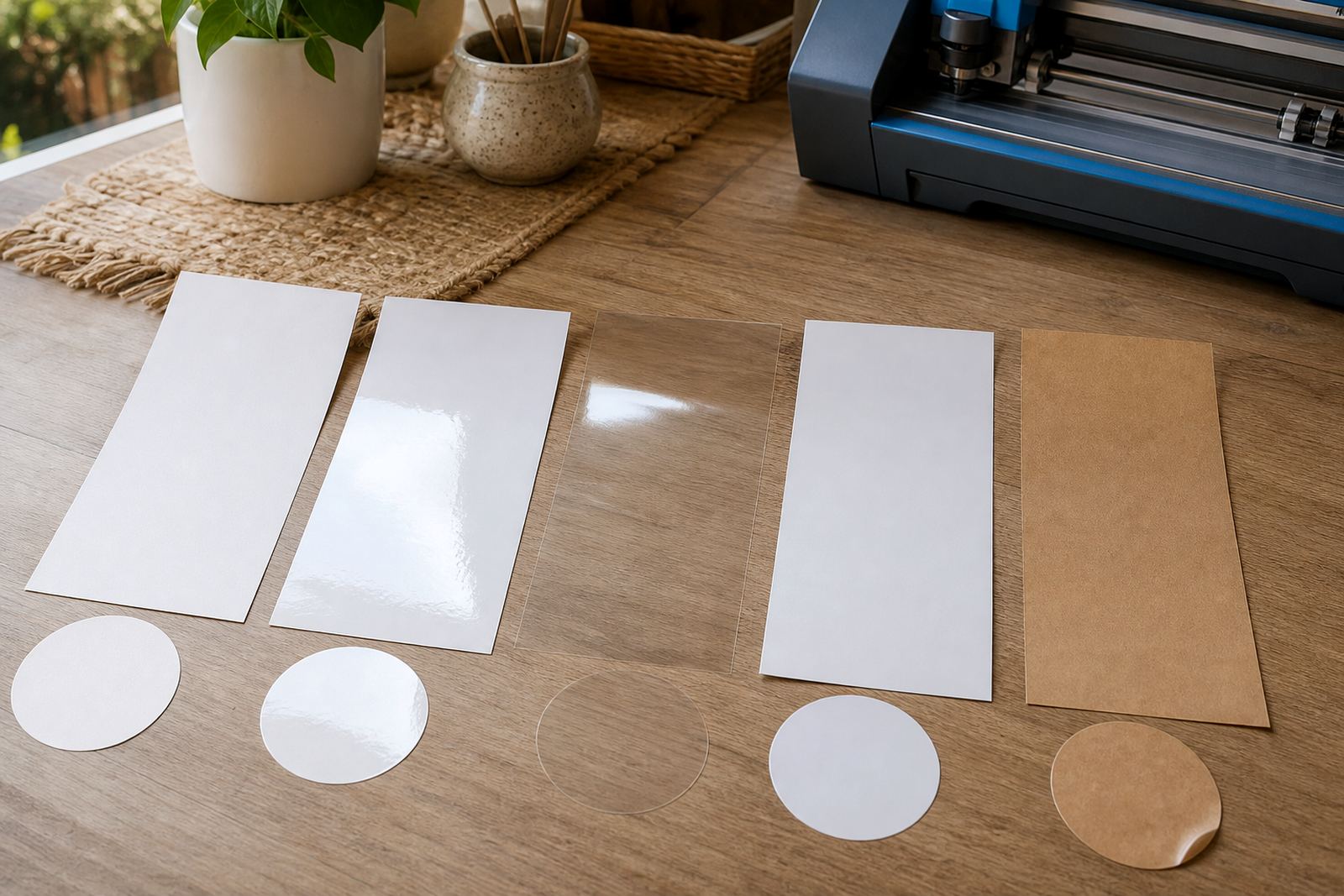
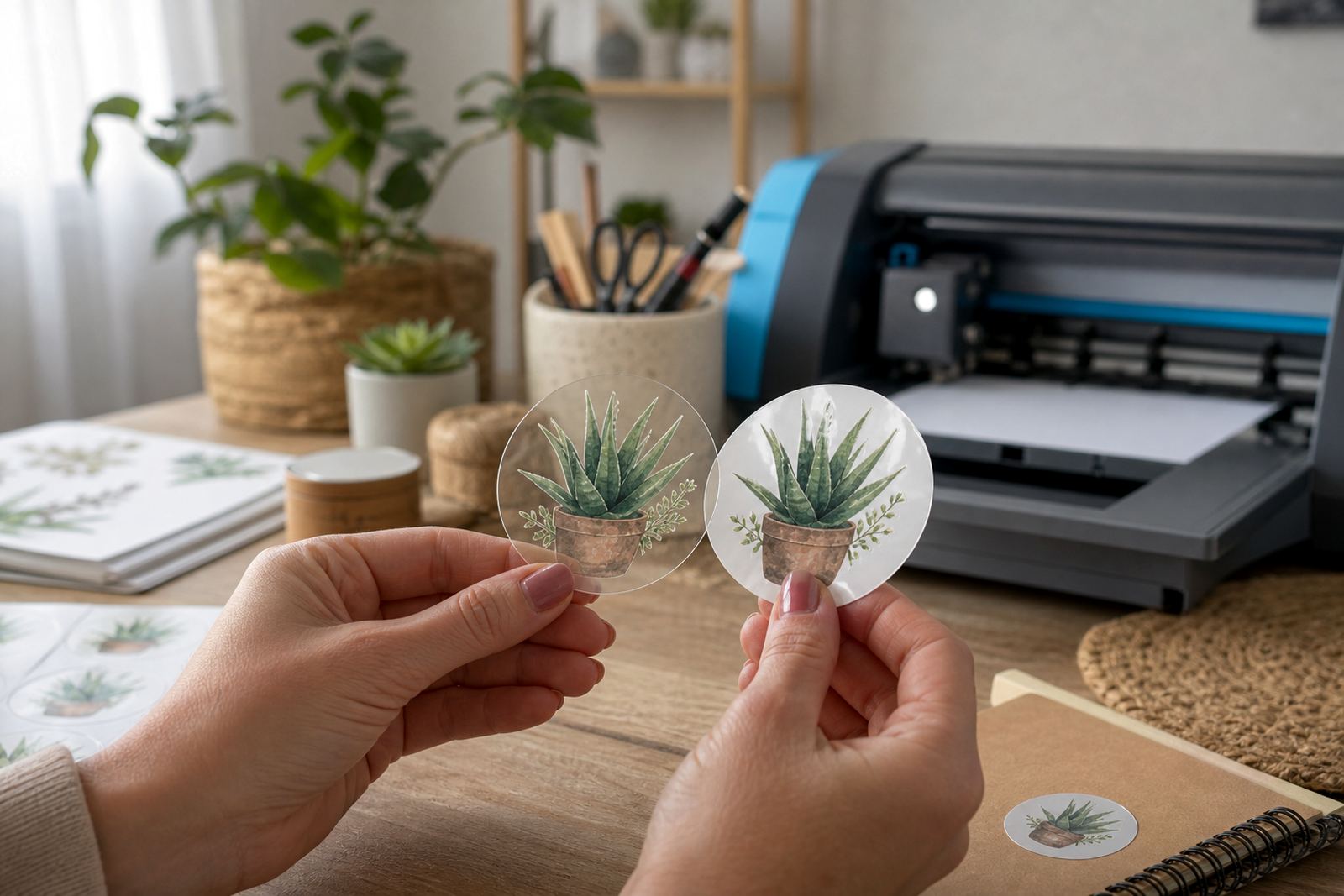
Clear sticker paper is made for a see-through finish, so the surface behind the sticker stays visible. That makes it useful for glass jars, bottles, clean storage tubs and other places where you want the label to feel lighter on the surface. The print still stands out, but the clear film gives the label a quieter look.
Gloss sticker paper reflects light and gives colour a wet looking shine. It suits brighter artwork, pantry labels, gift tags and decorative stickers where the aim is to make the print pop. If the design has strong colour blocks, photo style images or bold lettering, gloss usually gives it more presence.
Both finishes can work well in a home craft room, but they behave differently when light hits them. Clear sheets can disappear into the background on plain glass, while gloss will show a stronger surface shine. That difference matters on jars near a sunny window in Durbanville or on storage labels used in a busy kitchen.
When clear paper gives the better result
Clear sticker paper is a good choice when the item underneath should remain part of the design. A simple logo, black text or a neat line illustration often looks tidy on clear sheets because the background stays visible. On glass, plastic and polished containers, the label can look more intentional and less bulky.
It is also useful when you want colour from the container itself to show through. A cream label area on a clear sheet can work nicely on amber bottles, dark jars or tinted storage tubs. In those cases, the product does not fight with the surface underneath, it sits with it.
- Best for glass jars, bottles and clear containers
- Useful for minimal text, icons and line art
- Helps the item beneath show through the label
- Works well for home organisation with a lighter visual feel
Clear sheets need careful design choices. White does not print as white on most printers, so pale colours may look softer than expected. If the artwork depends on strong white areas, that detail needs to be planned into the layout before printing.
Where gloss brings more life to the print
Gloss sticker paper suits designs that need a fuller, brighter finish. The surface catches light and gives colour a stronger appearance, which is helpful for decorative labels, kitchen jars, kids craft projects and personalised gifts. It can make simple art look more finished without needing extra decoration.
For projects with photographs, bright patterns or bold wording, gloss can create a clean showroom feel. It also works nicely for short run seasonal labels, party items and project stickers that are meant to stand out on a shelf or gift box. The finish adds energy without changing the printed artwork itself.
- Good for bold colour and photo style prints
- Works well on pantry jars and craft packaging
- Brings more shine to decorative labels
- Helps simple artwork feel more polished
Gloss does show fingerprints and handling marks more easily than matte sheets, so clean hands help during use. If a sheet is being trimmed by hand, steady pressure and a sharp blade matter. A rough cut can catch the light and make the edge more noticeable than the artwork.
Inkjet or laser: match the sheet to the printer
Sticker paper is not all the same underneath the finish. Some sheets are made for inkjet printers, others suit laser printers, and some ranges are made for one type only. The finish on top may look similar, but the coating underneath needs to work with the printer method being used.
Inkjet printing usually needs time for the ink to sit and dry on the sheet. On clear and gloss stock, this matters even more because the surface can show smudging if the print is handled too soon. Laser printing uses heat, so the sheet has to handle that process without warping or lifting at the edges.
- Check whether the sheet is made for inkjet or laser use
- Match the print setting to the sheet finish
- Let ink dry fully before cutting or stacking sheets
- Test one sheet first if the design is detailed
A good test print can save a lot of waste, especially with labels that include small text or fine lines. On clear stock, dark text usually reads better than pale text. On gloss stock, strong contrast helps the artwork stay easy to read when the surface catches light.
Cutting by hand or with a craft cutter
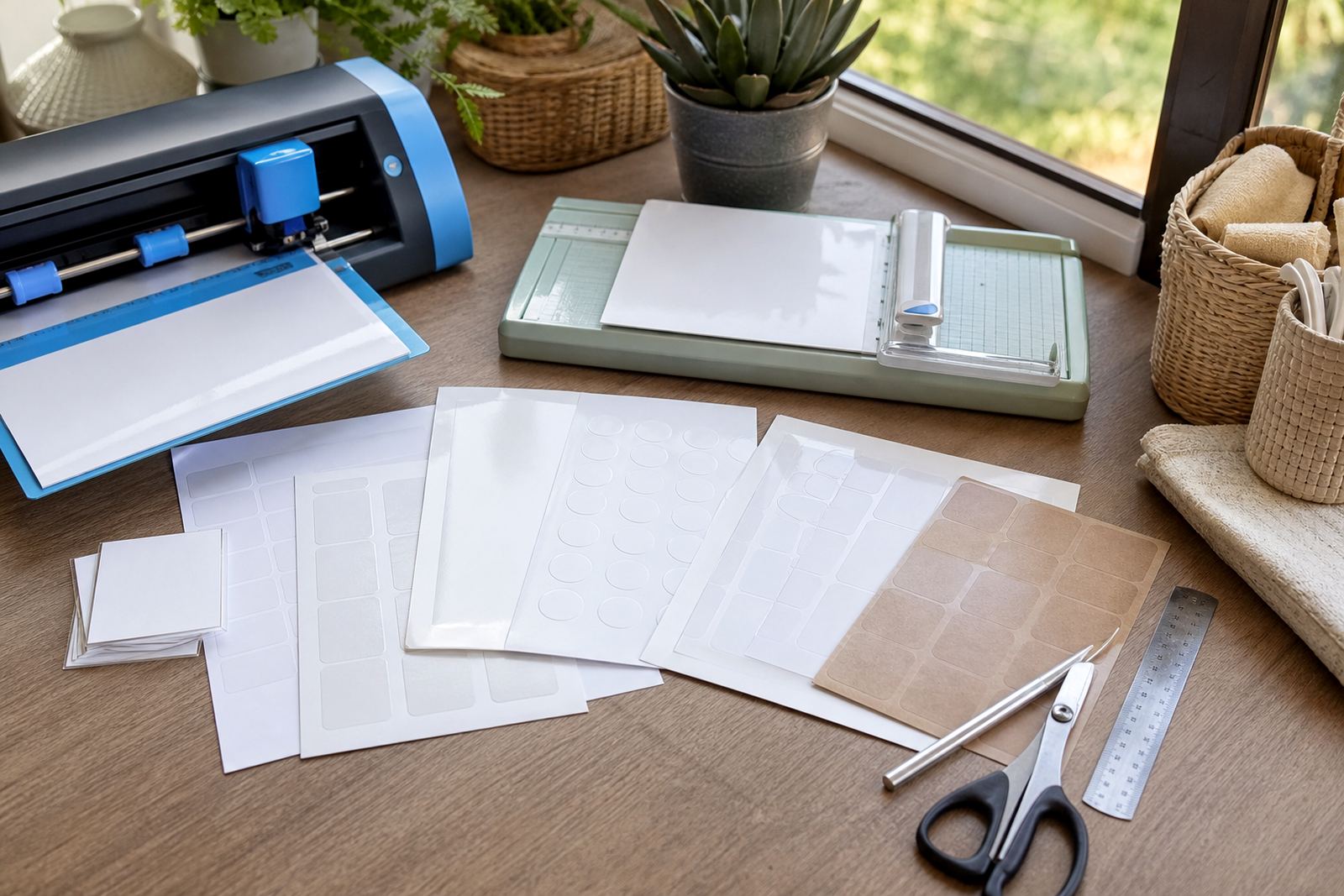
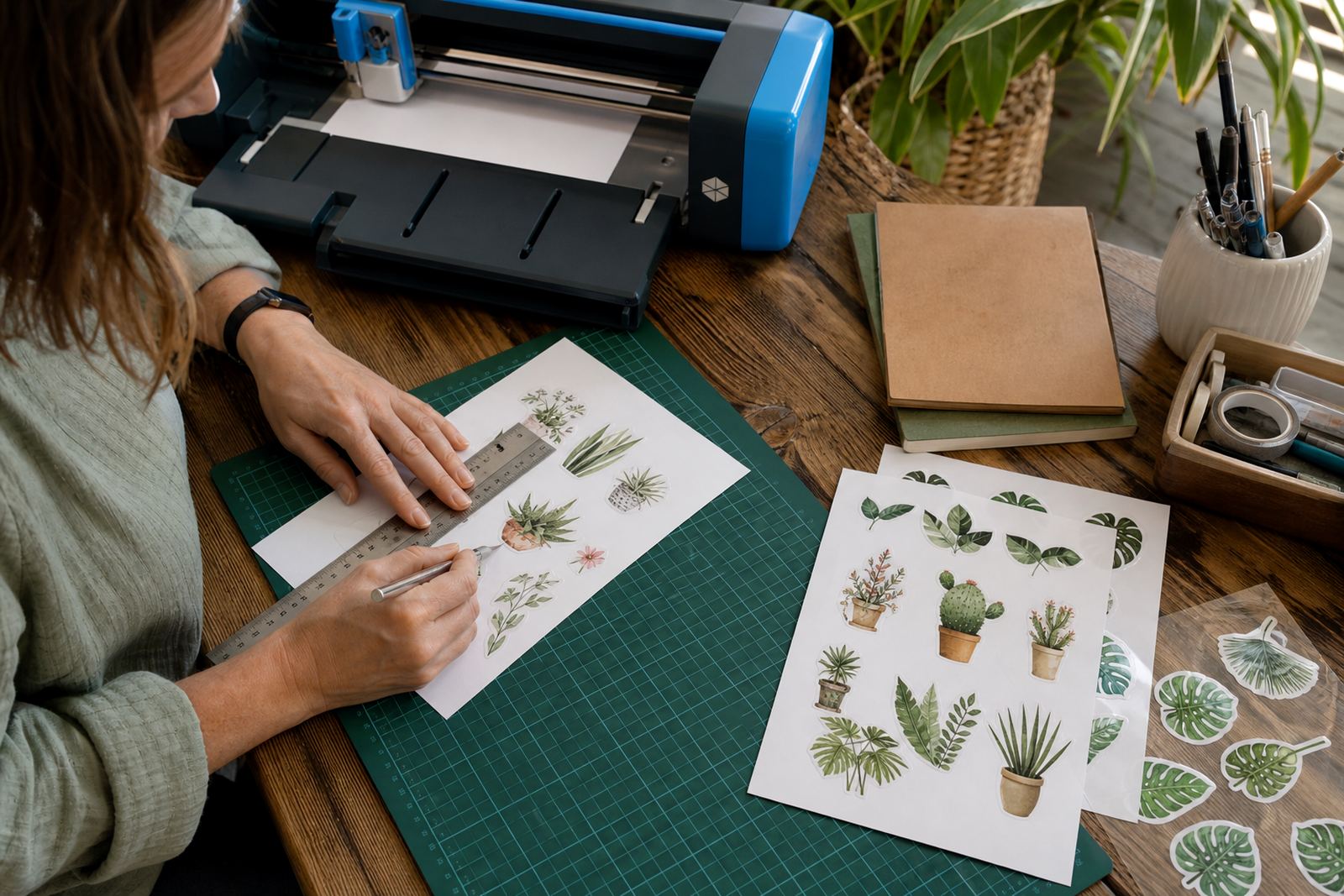
Clear and gloss sheets can both be cut by hand, but the finish changes how the cut line appears. Clear paper can be harder to see on the cutting mat, so a simple pencil note at the corner helps with orientation. Gloss paper is easier to spot, but the shine can hide faint cut lines until the light shifts.
Craft cutters handle repeated shapes, circles and name labels neatly, provided the sheet is fed straight and the cut setting suits the material. Hand cutting is often better for one-off labels, irregular shapes and short craft runs at home. A ruler, scissors or craft knife can be enough if the design is simple.
- Use a fresh blade or sharp scissors
- Keep the sheet flat on the mat
- Leave a small border around detailed artwork
- Check the cut setting before doing a full sheet
For both finishes, clean edges matter more than speed. A neat cut helps the sticker lift from the backing paper without tearing, and it keeps the label looking tidy on jars, folders and storage containers.
Picking the finish for real home projects
The best finish depends on the job in front of you. Clear works well where the surface underneath should stay visible. Gloss works well when the printed design should do more of the talking. If the label is for pantry jars, cleaning bottles or storage tubs, the choice often comes down to whether you want the item to blend in or stand out.
A simple checklist can help before you print:
- Will the label sit on glass, plastic or paper?
- Does the background need to show through?
- Should the artwork look bright and shiny?
- Will you cut it by hand or with a cutter?
- Is the printer inkjet or laser?
In coastal homes, where humidity can be part of daily life, the handling of printed labels matters too. Sheets should be kept flat, dry and away from damp corners, especially if you are storing them in a kitchen or laundry area. That helps the paper feed smoothly and keeps the finish ready for use when a project needs it.
For crafters in Cape Town, Johannesburg, Durban, Pretoria and Bloemfontein, the practical answer is often to keep both finishes on hand. Clear handles subtle jobs cleanly. Gloss brings more visual impact when the label should feel brighter and more decorative.