
Start with a clean sheet and a steady table
Lay the sticker sheet flat on a clean table with good light. If the sheet has been stored in a humid Durban room or a warm kitchen in Cape Town, let it settle for a little while before cutting so the corners do not curl while you work.
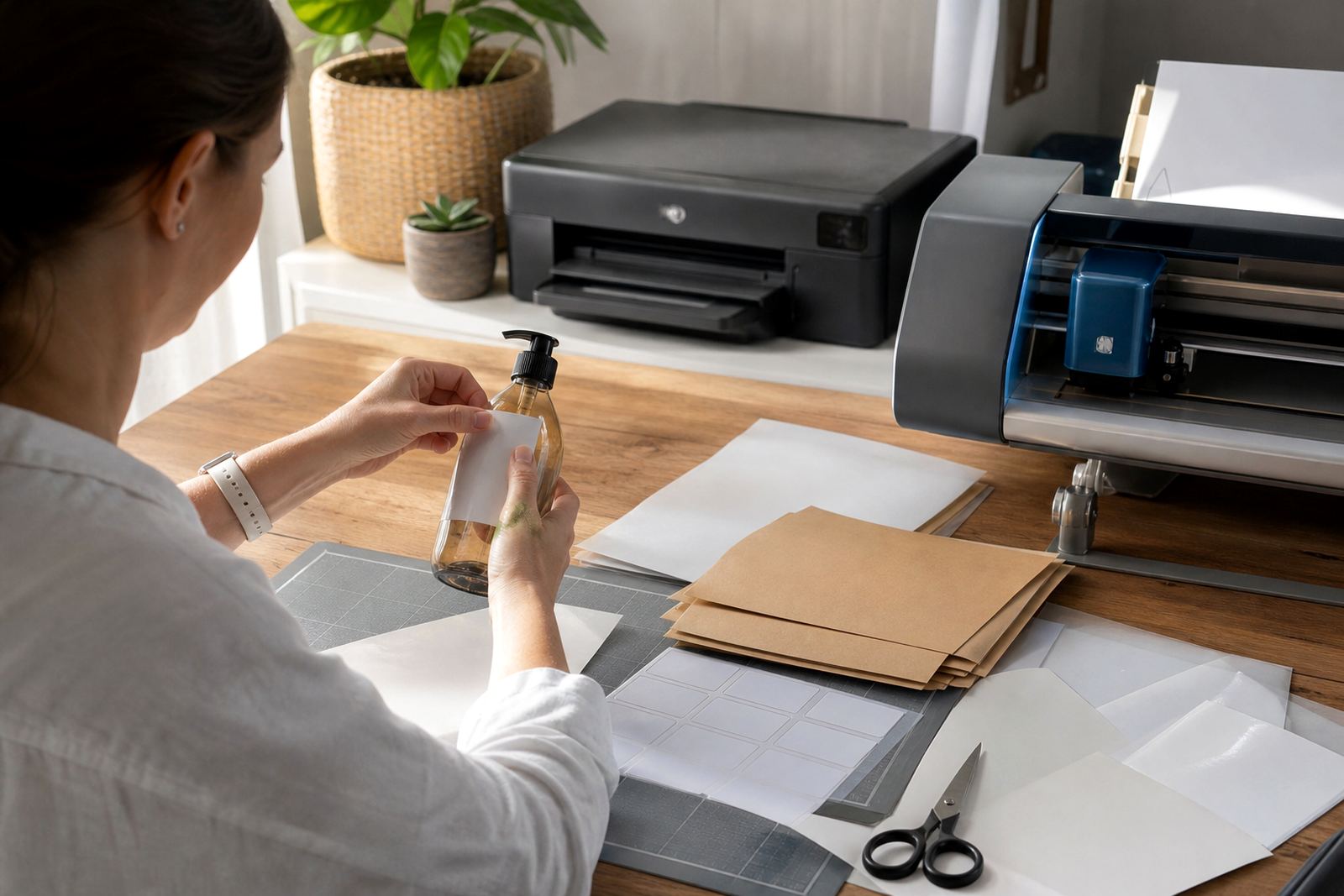
Use a hard surface that gives the blade or scissors support. A cutting mat helps protect the table and gives you a better line to follow. For labels that must sit neatly on jars, tins or folders, mark the shape lightly on the backing side first, then cut on the marked line. Keep fingers away from the blade path and do not rush the corners.
- Check that the sheet lies flat before cutting.
- Wipe away dust, flour, glue or ink smears first.
- Keep a scrap strip nearby for test cuts.
- Trim only one sheet at a time for better control.
Scissors work best for small, curved shapes
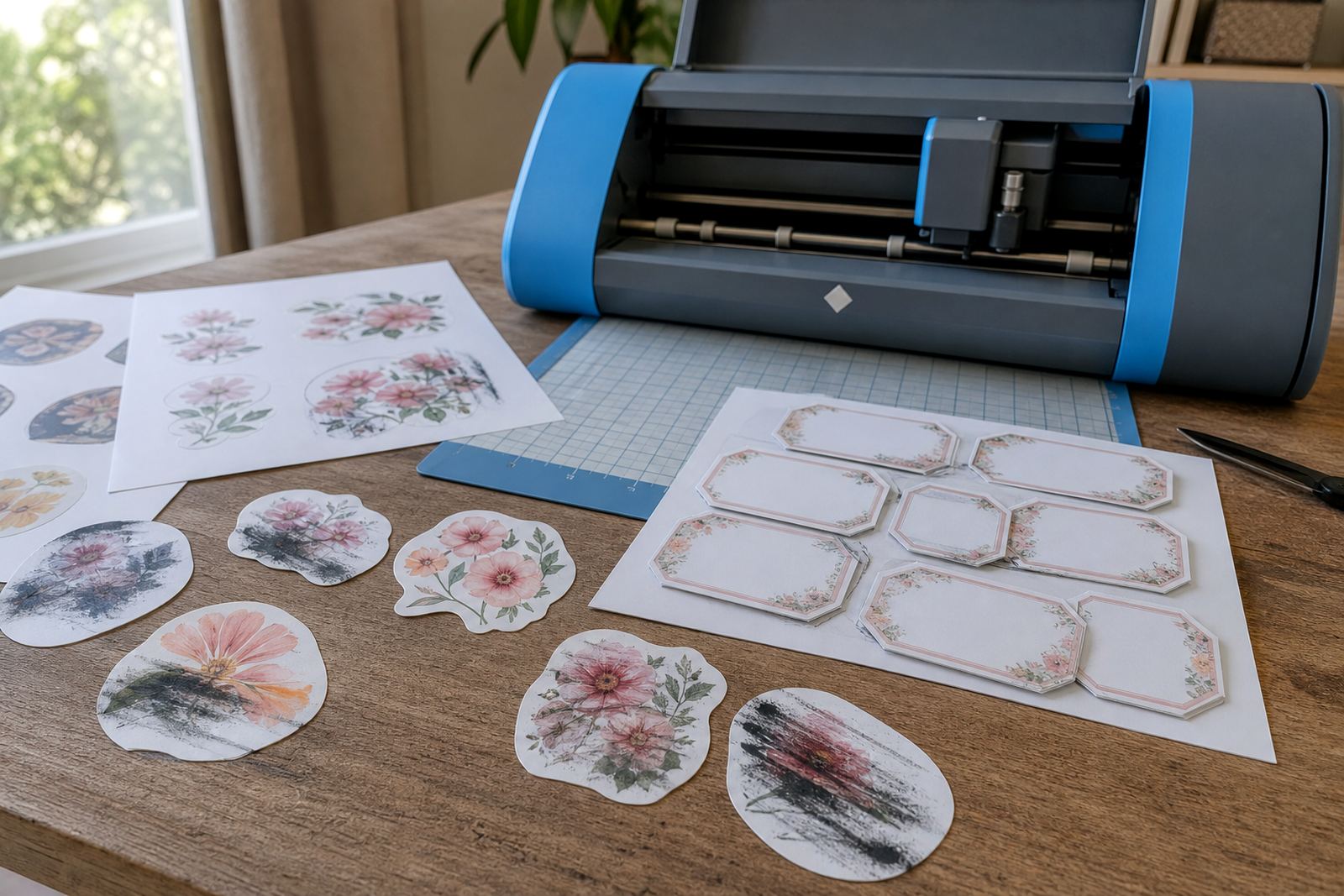
Scissors suit rounded labels, simple gift tags and quick trims around printed artwork. Choose a sharp pair with smooth action, because blunt blades can fray matte paper and leave a rough edge on glossy stock. Open and close the blades in one clean motion, then turn the sheet rather than twisting your wrist too much.
For curved shapes, cut outside the printed line first, then take a second pass for the final edge. This gives you more control on small pieces. Clear sticker paper can be trickier because the line is not always easy to see, so use a dark pencil mark or a fine pen on the backing side if the shape is detailed.
- Use longer blades for straighter edges.
- Use smaller scissors for tight curves.
- Do not chew through the sheet with short snips.
- Keep the cut line in view at all times.
Knife and ruler methods for straight edges
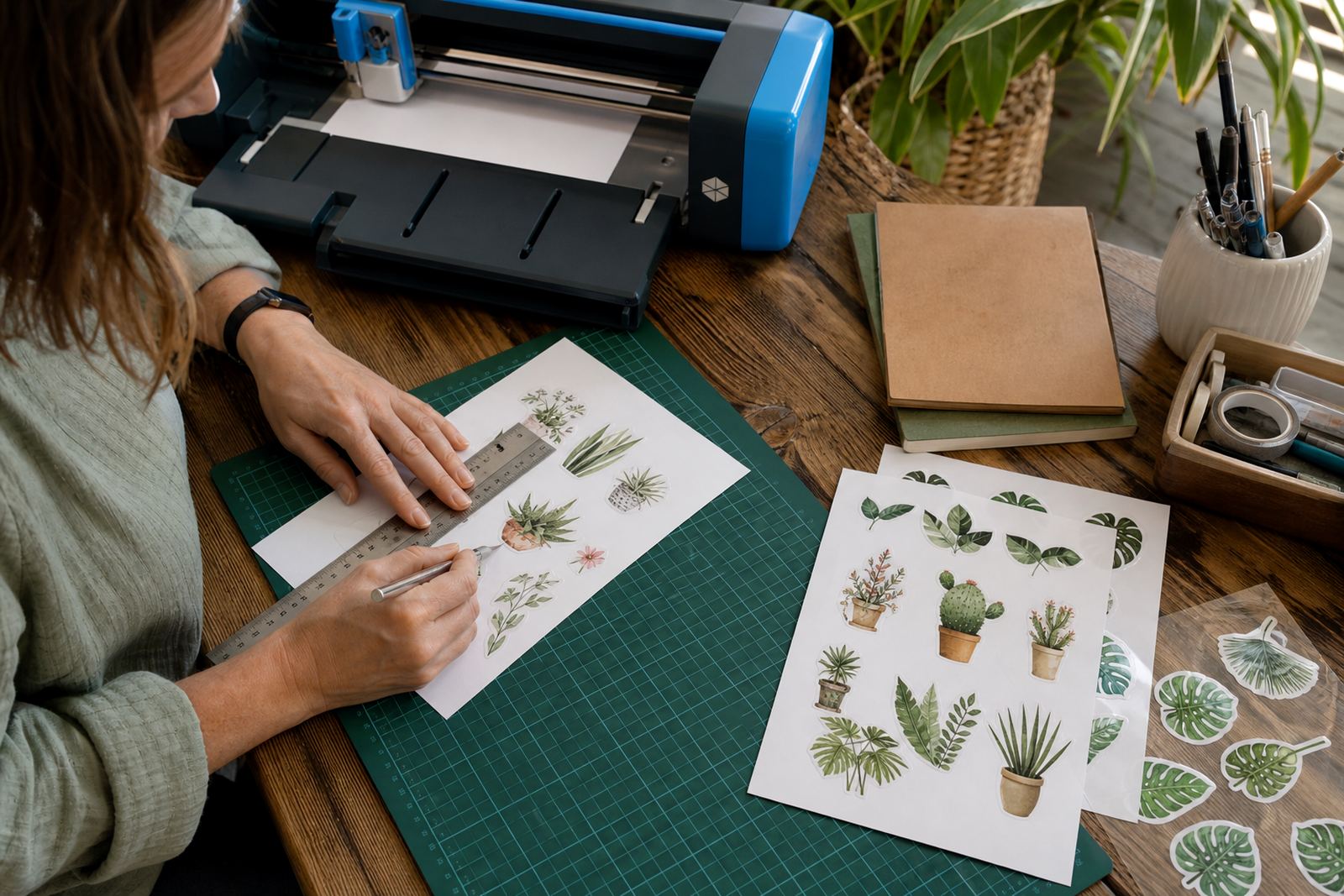
For long straight cuts, a craft knife and metal ruler usually give the neatest result. Press the ruler firmly so it does not slip, then draw the knife in one controlled stroke. Two light passes are often safer than one heavy cut, especially on thicker vinyl sheets or kraft sticker paper with a fibrous texture.
A fresh blade matters more than most people expect. If the knife starts dragging or lifting the top layer, change it before you spoil the sheet. Keep your free hand well away from the cutting edge, and never cut toward your fingers. A self healing mat or a similar cutting surface helps the blade move cleanly and protects the table underneath.
When cutting narrow strips for pantry labels or storage tubs, measure once and cut slowly. If the ruler slides, the cut line can wander, and then the label no longer sits square on the bottle or box.
Choosing the right approach for each sticker finish
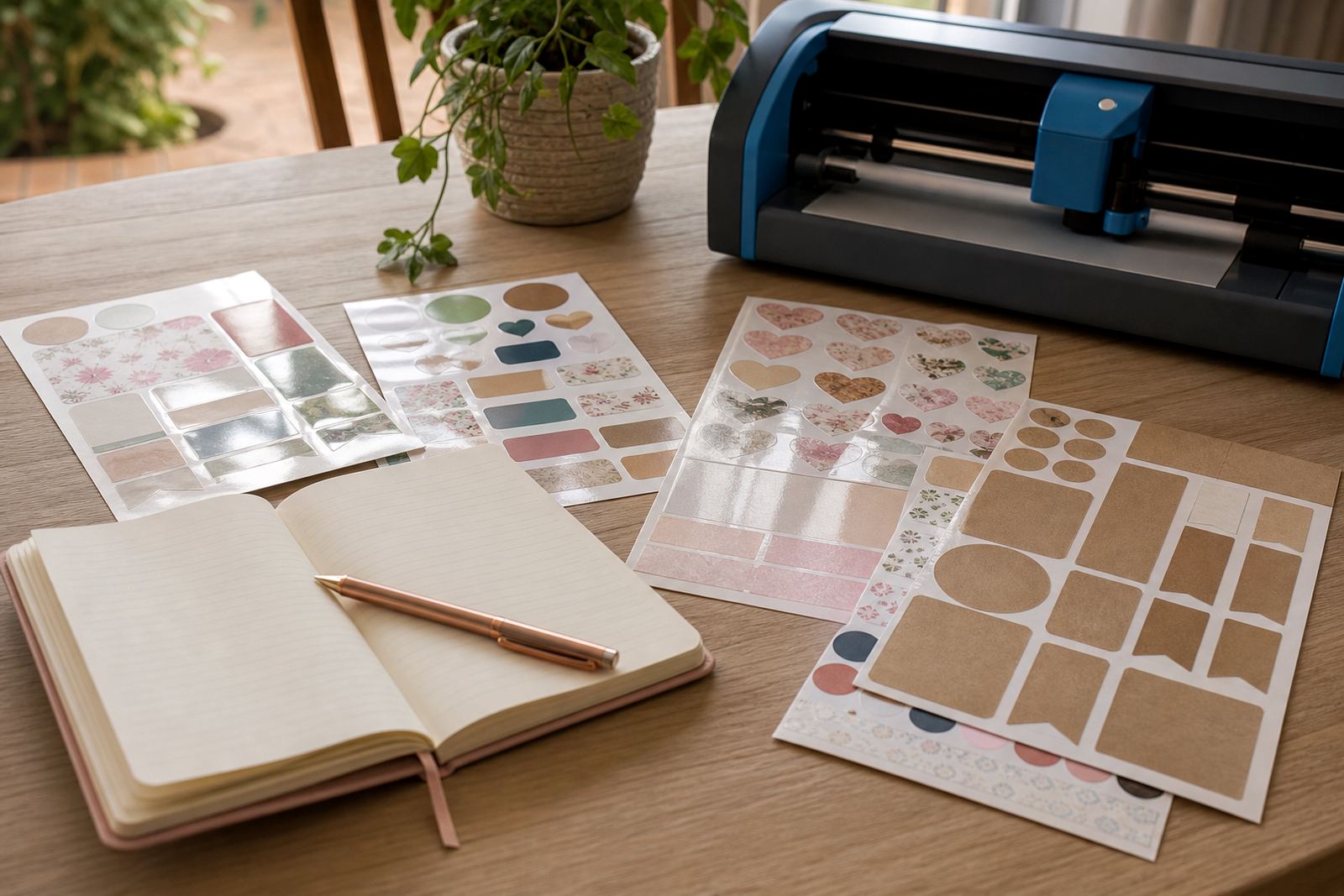
Different finishes cut in different ways, so the method should match the sheet. Matte paper usually cuts neatly with scissors and accepts pencil marks well. Gloss sheets can show blade scuffs more easily, so use a sharper knife and lighter pressure. Clear sheets need careful line marking, while vinyl sheet can handle cleaner knife cuts and holds its edge well for outdoor style labels and home organisation.
Kraft sticker paper has a warm, natural look and often benefits from a slower hand cut, because the fibre texture can tear if the blade is blunt. If you are making many repeats for jars, spice tins or classroom labels, cut one sample first and inspect the edge before doing the rest. That small test can save a full sheet from being wasted.
- Matte: easy to mark and trim.
- Gloss: keep pressure light and even.
- Clear: plan the line before you cut.
- Vinyl: use a sharp blade for crisp edges.
- Kraft: slow down on textured corners.
Safe habits that keep the job tidy
Safe cutting habits protect both the sheet and your hands. Keep children away from knives and blades, even for a short task at the kitchen table. Work in a quiet area where the sheet will not shift when someone bumps the table or reaches past you. A ruler with a non slip backing helps, but if yours does not have one, hold it down firmly at both ends.
When you finish a cut, set the knife down with the blade covered or parked safely. Do not leave scraps scattered around, because small pieces can stick to hands and end up on the back of the next label. If the sheet curls after cutting, store the finished labels flat in a sleeve or envelope so the adhesive side stays clean.
- Keep blades covered when not in use.
- Clear scraps from the table straight away.
- Store cut pieces flat and dry.
- Use good light to spot missed corners.
A short finishing check before you peel and stick
Before you peel off the backing, look over each edge for rough corners, hanging fibres or tiny cuts that may catch during application. Trim small flaws now, because once the sticker is on a jar or notebook, those loose bits are harder to fix neatly. If the shape is for a curved surface, round the sharpest corners slightly so the edge sits better.
Test one sticker on the intended surface first, especially for painted tins, coated folders or textured storage boxes. Press from the centre outward with dry fingers or a small card, then check whether the cut edge sits flat. If the piece is too large, trim it before the rest are applied.
For Durbanville homes, Cape Town studios and busy family kitchens across South Africa, neat hand cutting comes down to patience, a sharp tool and a calm table. A careful cut makes the printed sheet look finished, not rushed.